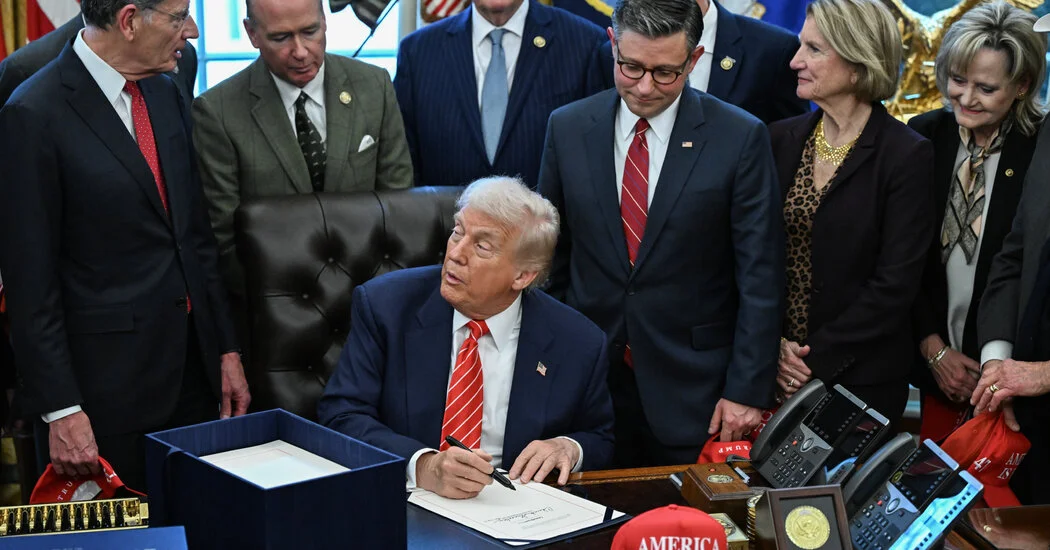
Donald Trump is expected to sign a comprehensive spending and tax bill that includes significant tax cuts favoring the wealthy, increased funding for immigration enforcement, and restrictions on Medicaid and food assistance programs, while also adding to the national debt and sparking criticism from Democrats and immigrant rights groups.
Pride flags have been banned from being flown at US embassies as a result of the $1.2 trillion spending package signed by President Biden, following a long-standing debate between Democrats and Republicans. The ban, included in the 1,012-page package, has sparked criticism from LGBTQ advocates and the Biden administration, with plans to seek a way to repeal the ban. This move comes after a history of back-and-forth decisions on the flying of pride flags at US embassies, with the latest ban not imposing limits on other displays of pride flags or LGBTQ+ events.
The Senate passed a $1.2 trillion spending package after a brief partial government shutdown, with the bill now heading to President Biden's desk for signing. The package, which completes the appropriations process for 2024, faced criticism from some Republican senators due to the last-minute release of the bill text and the short time given for review. The funding will keep the government fully funded until the Sept. 30, 2024 deadline, but concerns remain about potential funding disagreements in the future.
The House of Representatives passed six appropriations bills to fund the government until the end of the fiscal year, setting up a tight turnaround for the Senate to vote on the package before a midnight deadline to avoid a partial government shutdown. The $1.2 trillion package includes defense, homeland security, and other key areas. The vote could have consequences for House Speaker Mike Johnson, as GOP Rep. Marjorie Taylor Greene filed a motion to remove him. The bills needed two-thirds support to pass, and there were concerns about the vote being tighter than expected. The package has wins for both Republicans and Democrats, and Speaker Johnson's challenge deepens as the House will debate funding for Ukraine next month.
Senate GOP members are prepared to delay the $1.2 trillion spending package due to dissatisfaction with the legislative process and the content of the bills. Some senators expressed frustration with the lack of time to review the 1,012-page spending package before a potential partial government shutdown. They criticized the rushed voting process and the amount of spending in the bills. The second group of appropriations bills could face additional hurdles due to its late release, with some senators expressing uncertainty about the outcome but ultimately expecting the bills to pass despite their objections.
Congress is rushing to pass a $1.2 trillion funding bill before the shutdown deadline, facing backlash from conservatives over the high price tag and various expenditures. The bill covers funding for multiple federal departments and agencies, with Democrats highlighting investments in child care and domestic programs, while GOP leaders emphasize increased detention beds for ICE and cuts to diversity programs. Despite opposition, the bill is expected to pass the House with support from centrist Democrats and Republicans, and then head to the Senate to avert a shutdown and allow lawmakers to begin a two-week Easter recess.
Congress introduced a $1.2 trillion spending package to avert a federal shutdown and complete funding for key federal agencies through September. The package includes a 3% increase in defense spending, a 5.2% pay raise for service members, and provisions related to Israel and the LGBTQ community. Democrats were able to push back against some Republican policy mandates and budget cuts, while also securing increases in humanitarian assistance, Head Start programs, and research funding. The House is expected to vote on the package first, with the Senate needing to act quickly to avoid a shutdown.
US congressional leaders have released a $1.1tn bipartisan spending measure for defense, homeland security, and other programs, giving lawmakers less than two days to avert a partial government shutdown. The package covers about two-thirds of the $1.66tn in discretionary government spending for the fiscal year and includes investments in the American people, a stronger economy, national security, and global leadership. The compressed schedule raises the risk of a partial shutdown after a Friday midnight deadline, unless Senate Republicans and Democrats can reach an agreement to expedite the bill.
Congressional leaders have unveiled the final bipartisan package of six 2024 fiscal year appropriations bills, totaling $1.2 trillion and covering various sectors including defense, homeland security, and healthcare. With a looming Friday midnight deadline, lawmakers are racing to pass the bills, but concerns arise over the limited time for review before voting. Both Republicans and Democrats are highlighting their wins in the package, with provisions addressing border security, childcare programs, and visas for Afghans who assisted the U.S. during the war in Afghanistan.
Congressional leaders are working to approve a $1.2 trillion spending package before the funding deadline, with the bill expected to pass and wrap up Congress' work on spending bills for the year. The package includes about $886 billion for defense and funds various government agencies. House Republicans secured policy changes in the negotiations, while Democrats celebrated staving off most Republican policy mandates. The bill largely tracks with an agreement from 2023 and includes provisions such as a prohibition on funding for a United Nations relief program for Palestinian refugees.
US lawmakers have passed a government spending package, totaling $459bn, to avert a partial government shutdown. The bipartisan deal, passed by the Senate, faced opposition from some Republicans who wanted stronger measures to address immigration at the southern border. A larger fight looms ahead of a 22 March shutdown deadline as Congress must now find a way to agree on a budget for the Department of Homeland Security and the Pentagon's budget.
The House passed a package of six government funding bills, aiming to beat the shutdown deadline, with the Senate next in line to consider the measure. The bipartisan package, backed by top Democrats and Republicans, represents a breakthrough after months of stopgap bills. It includes funding for various government departments and programs, with Democrats emphasizing support for social safety net programs and infrastructure investments, while Republicans highlight conservative policy victories and cuts to certain agencies. The Senate aims to move quickly to get the bills to President Biden's desk before the looming deadline, with the State of the Union address further compressing the timeframe.
The House of Representatives is set to vote on a $460 billion government funding package encompassing six bills to avert a shutdown ahead of Friday's deadline. The legislation addresses funding for various departments and agencies, with the remaining bills tied to Congress expiring in March. GOP hardliners have caused division within the House, leading to a bypass of traditional mechanisms for bill passage. The decision guarantees that Democratic support will be necessary for passage, with frustration and criticism arising from members of every faction within the House GOP. If passed, the bill will proceed to the Senate and require President Biden's signature to prevent a partial shutdown.