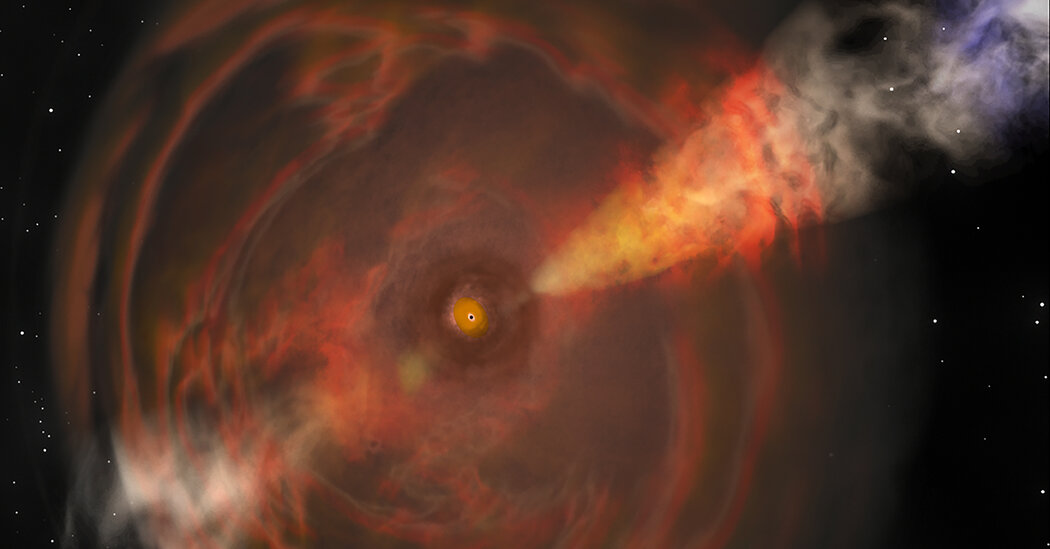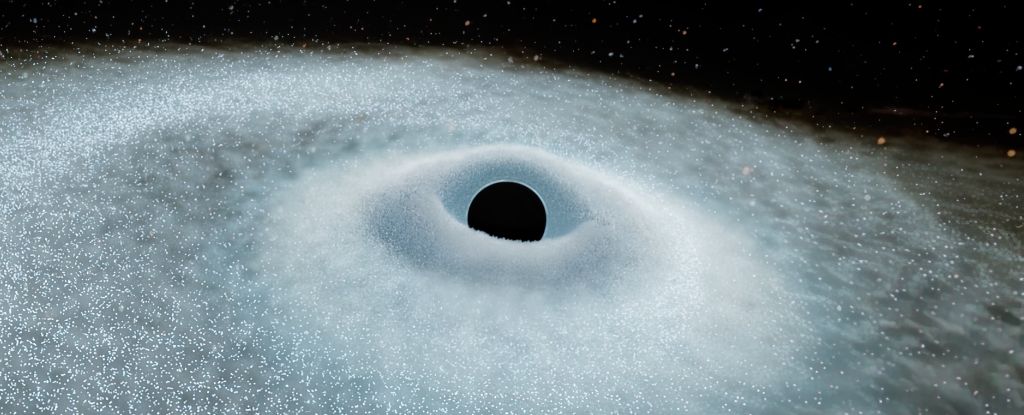
Astronomers using the Gaia space telescope have accidentally captured the biggest space explosions since the Big Bang, called extreme nuclear transients (ENTs), which are massive, long-lasting flares caused by stars being torn apart by supermassive black holes, providing new insights into black hole growth and galaxy evolution.
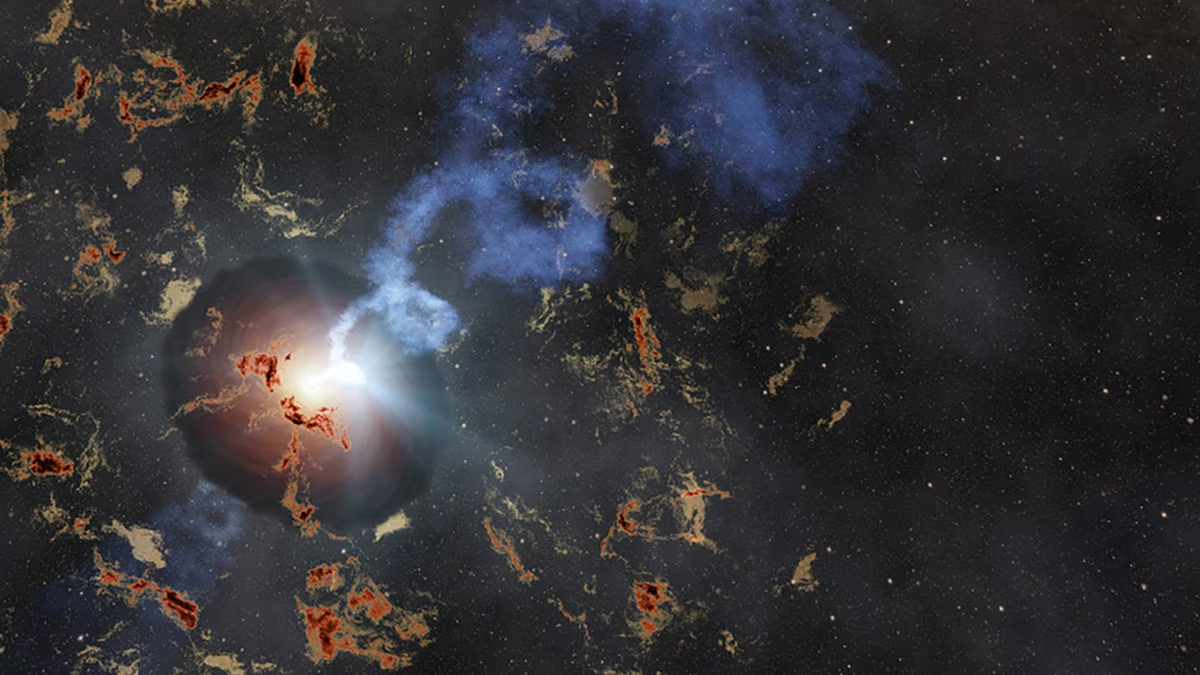
Astronomers have observed mysterious cosmic explosions known as luminous fast blue optical transients (LFBOTs), which are 10 billion times more powerful than the sun and occur in the aftermath of a celestial event. A recent study published in Nature suggests that these extraordinary blasts are driven by the presence of a dense stellar corpse, either a black hole or a neutron star left behind after the death of a large star. The discovery has left researchers worldwide captivated and motivated, as it stretches the understanding of violent phenomena in space. The exact cause of these explosions remains a mystery, but they represent the discovery of important astronomical phenomena.
Astronomers have discovered a class of space explosions called luminous fast blue optical transients (LFBOTs) that are brighter and hotter than supernovas. These explosions, nicknamed after animals, including the Cow, Koala, Tasmanian devil, and now the Finch, have raised questions about their origin. The latest discovery, the Finch, was found outside any galaxy, challenging current theories. Possible explanations include failed supernovas as black holes form, tidal disruption events caused by black holes consuming companion stars, or the merger of neutron stars. Astronomers hope that upcoming telescopes will provide more insights into these mysterious space explosions.
Astronomers have discovered a new class of objects called Fast Blue Optical Transients (FBOTs), with the prototype being the peculiar stellar explosion known as AT2018cow or simply "the cow". The explosion was found to be extremely flat, spreading through a thick disk, with a thickness about one-tenth of the radius of the disk a handful of days after the explosion was recorded. The polarization of light allowed the team to measure the shape of the explosion, revealing that the flat disk was roughly the size of the Solar System at that point. This discovery challenges our preconceptions of how stars might explode in the Universe and could help shed more light on these mysterious explosions.