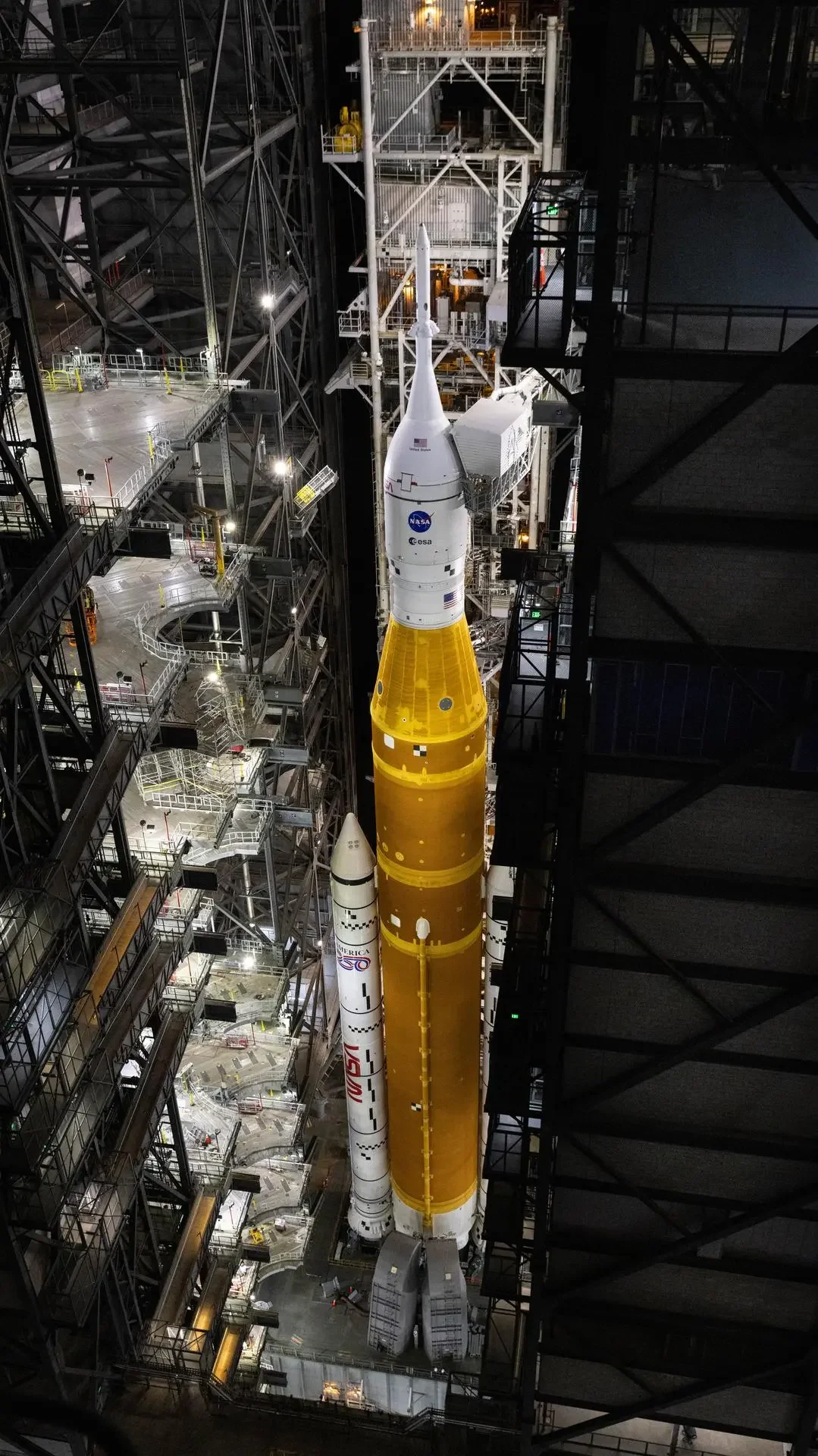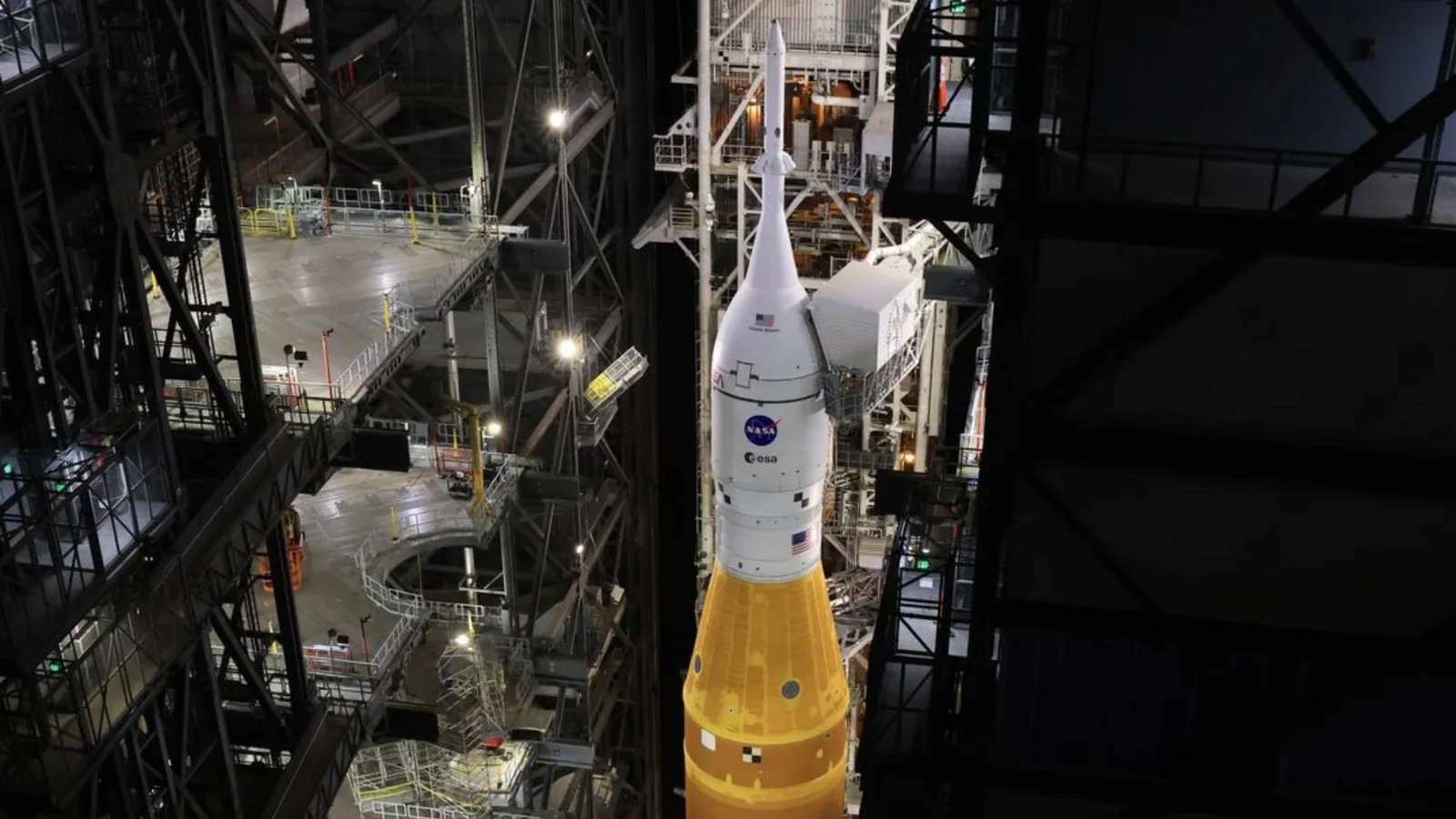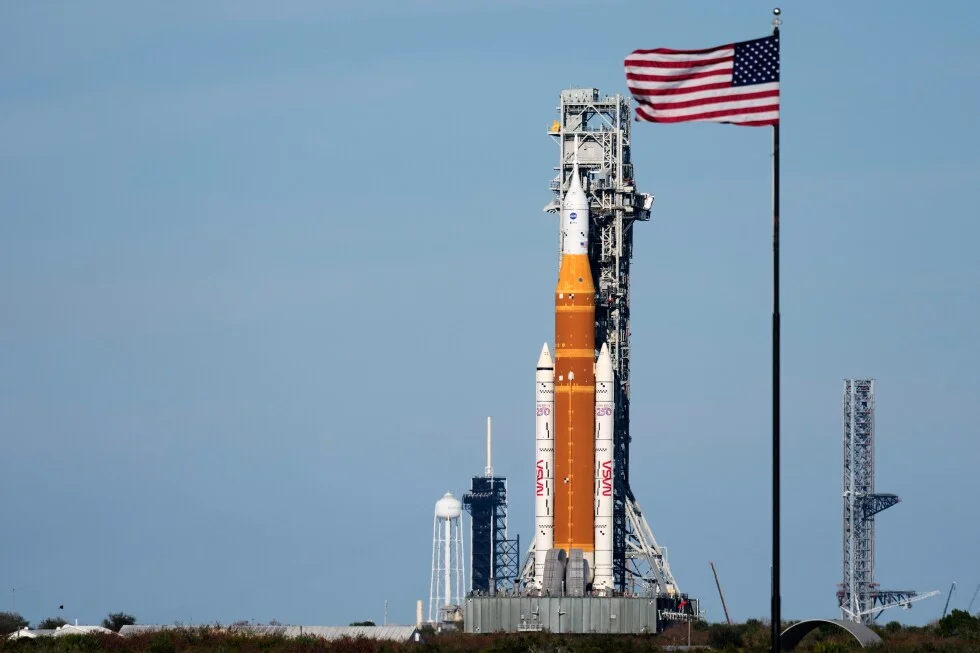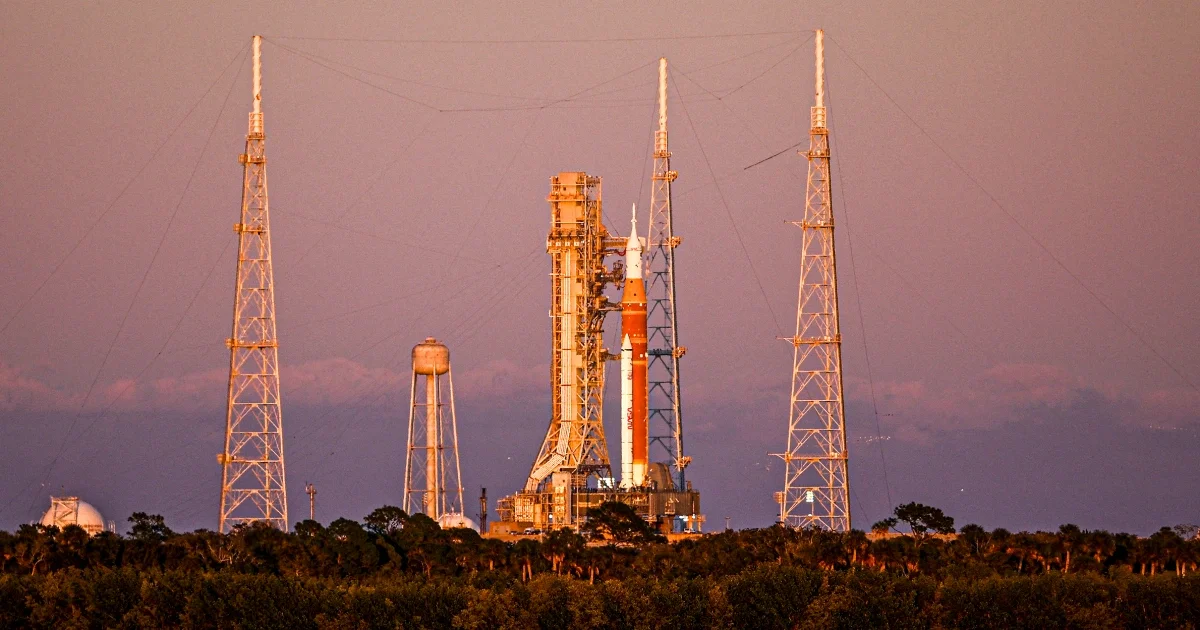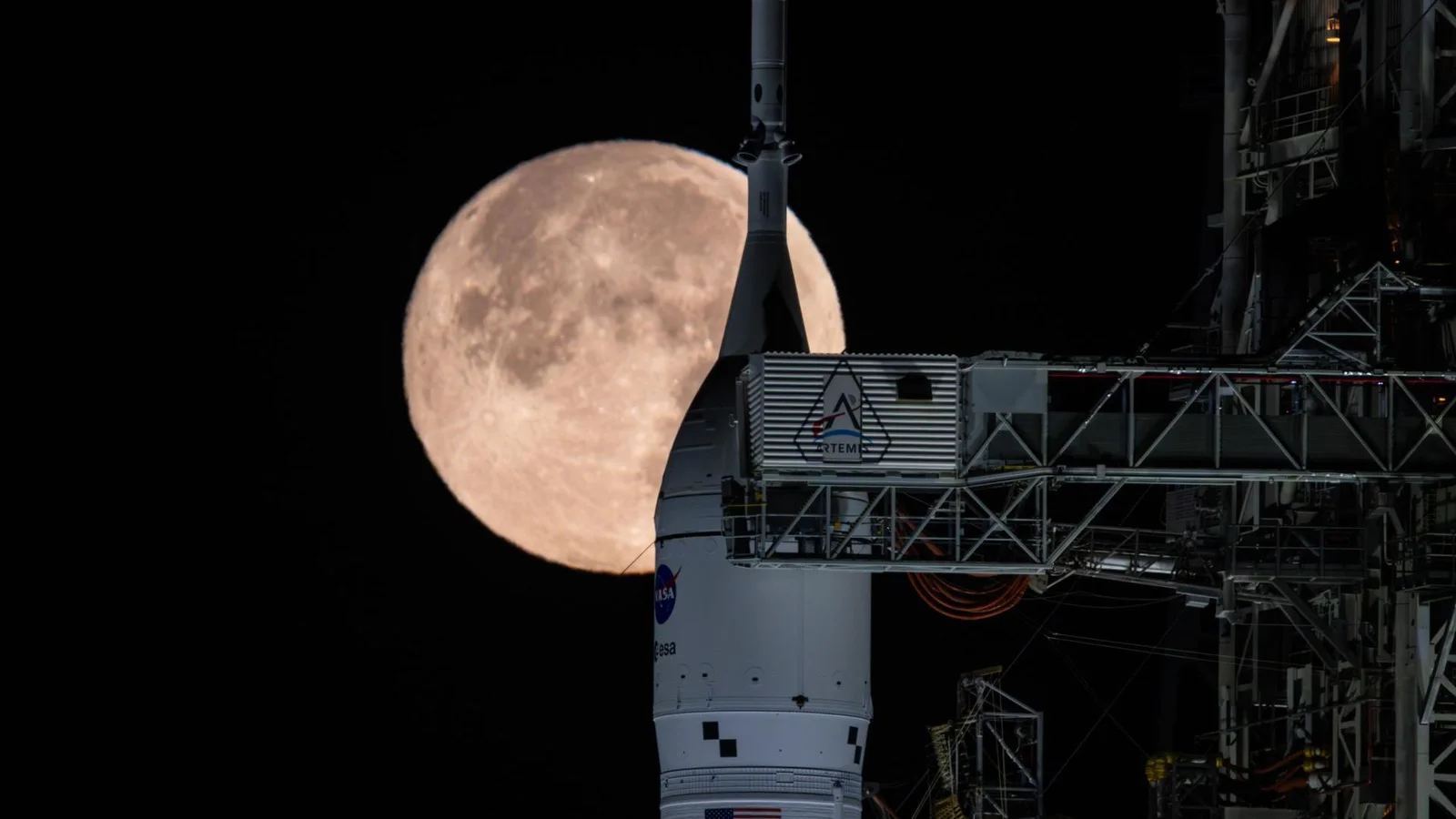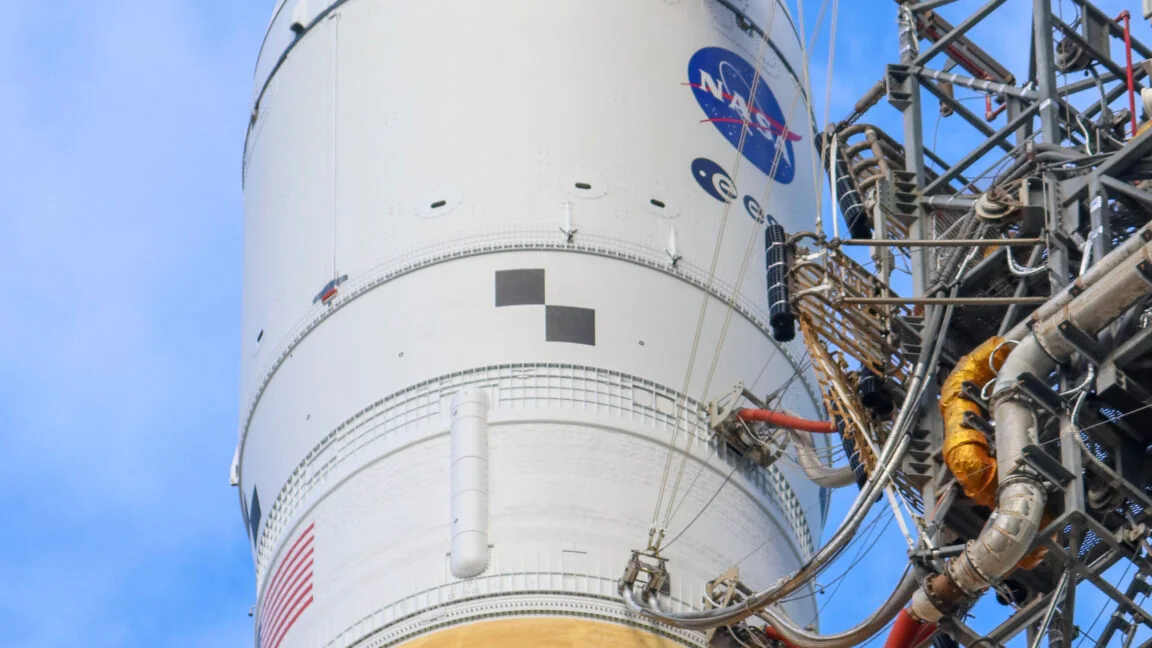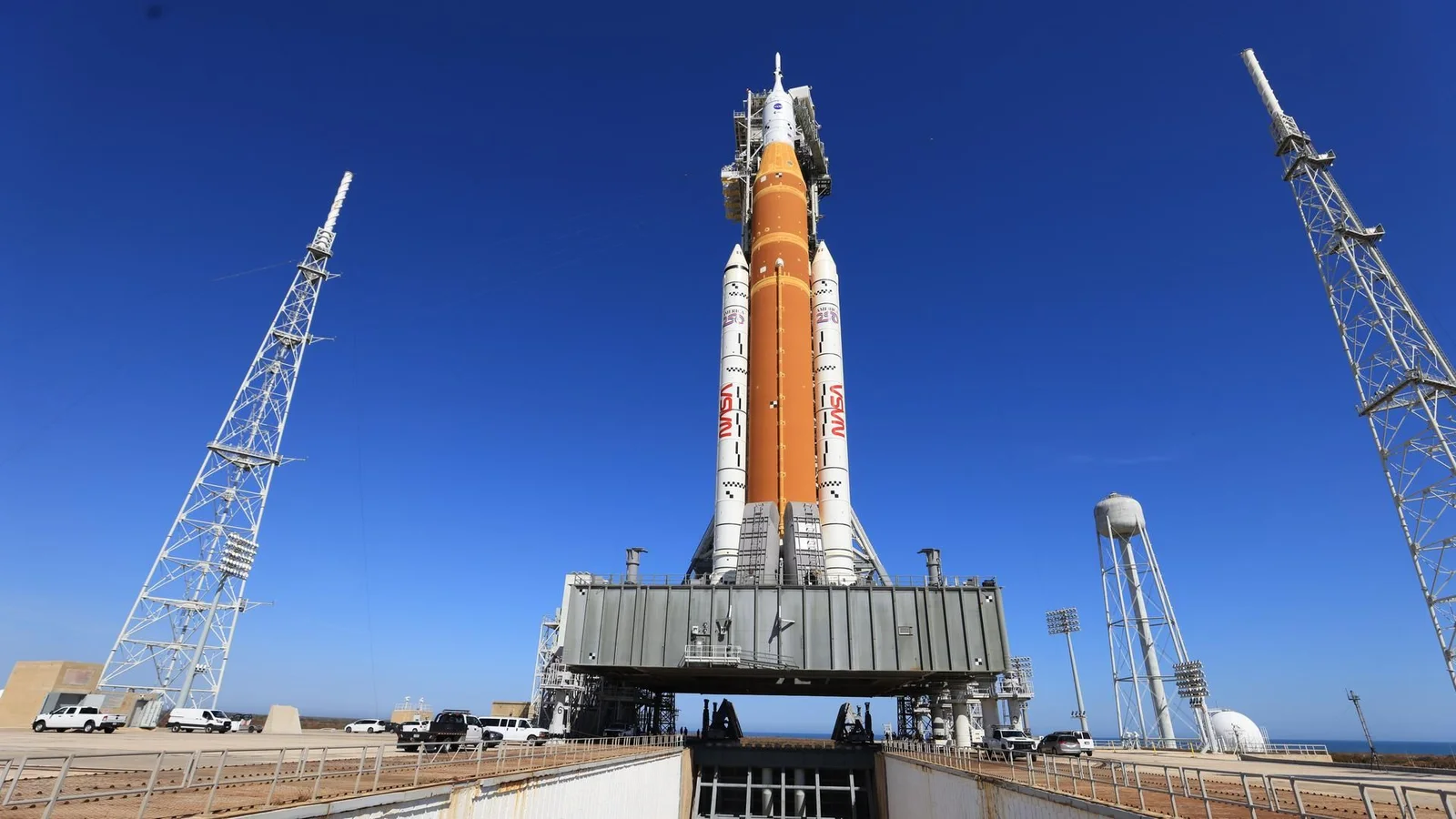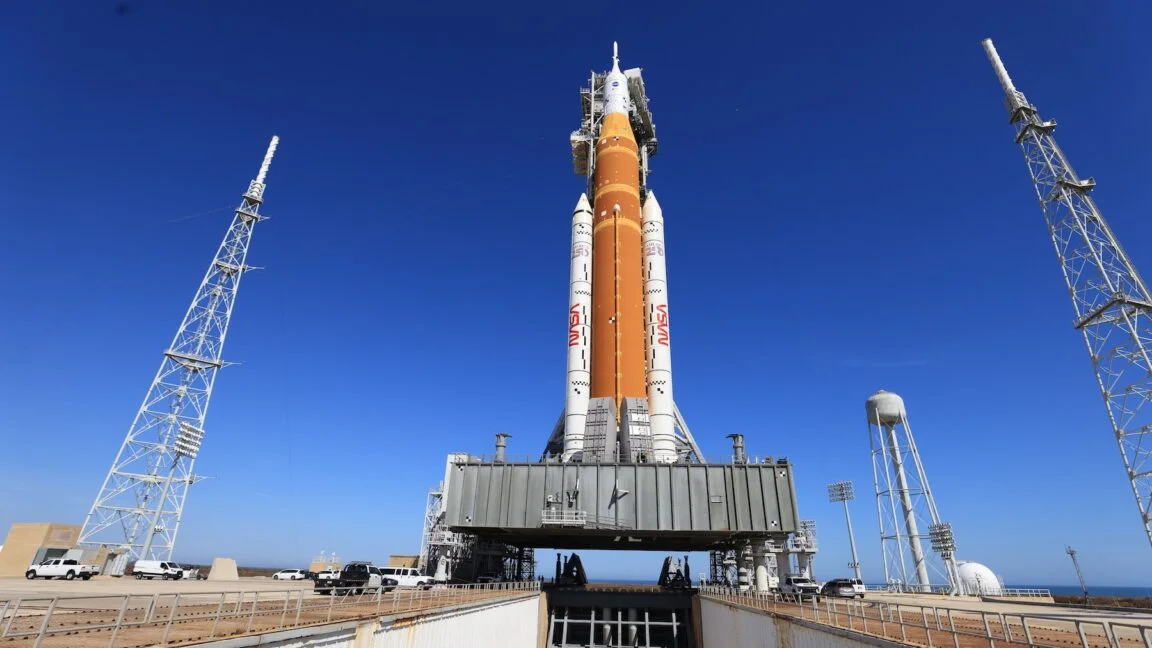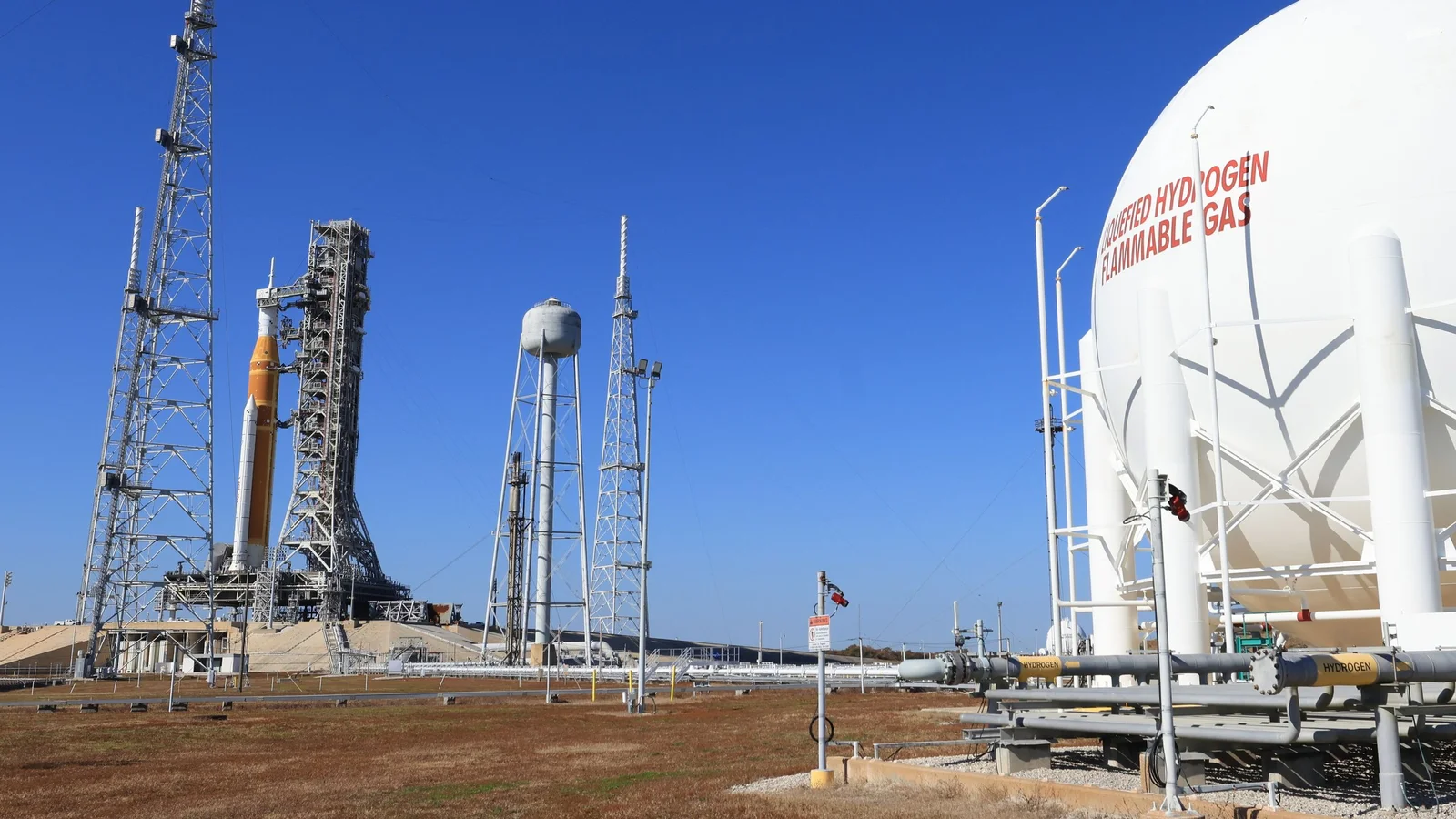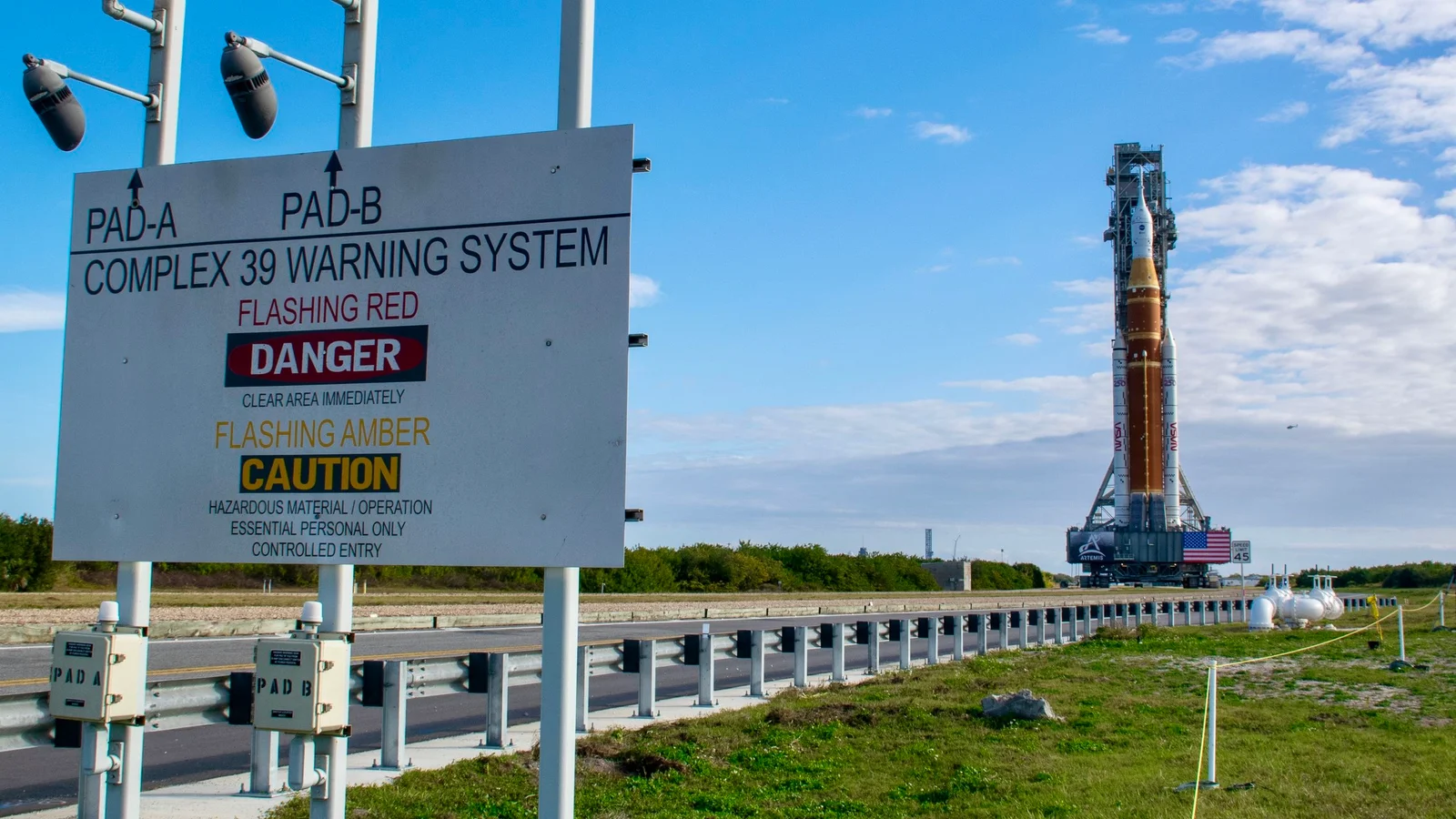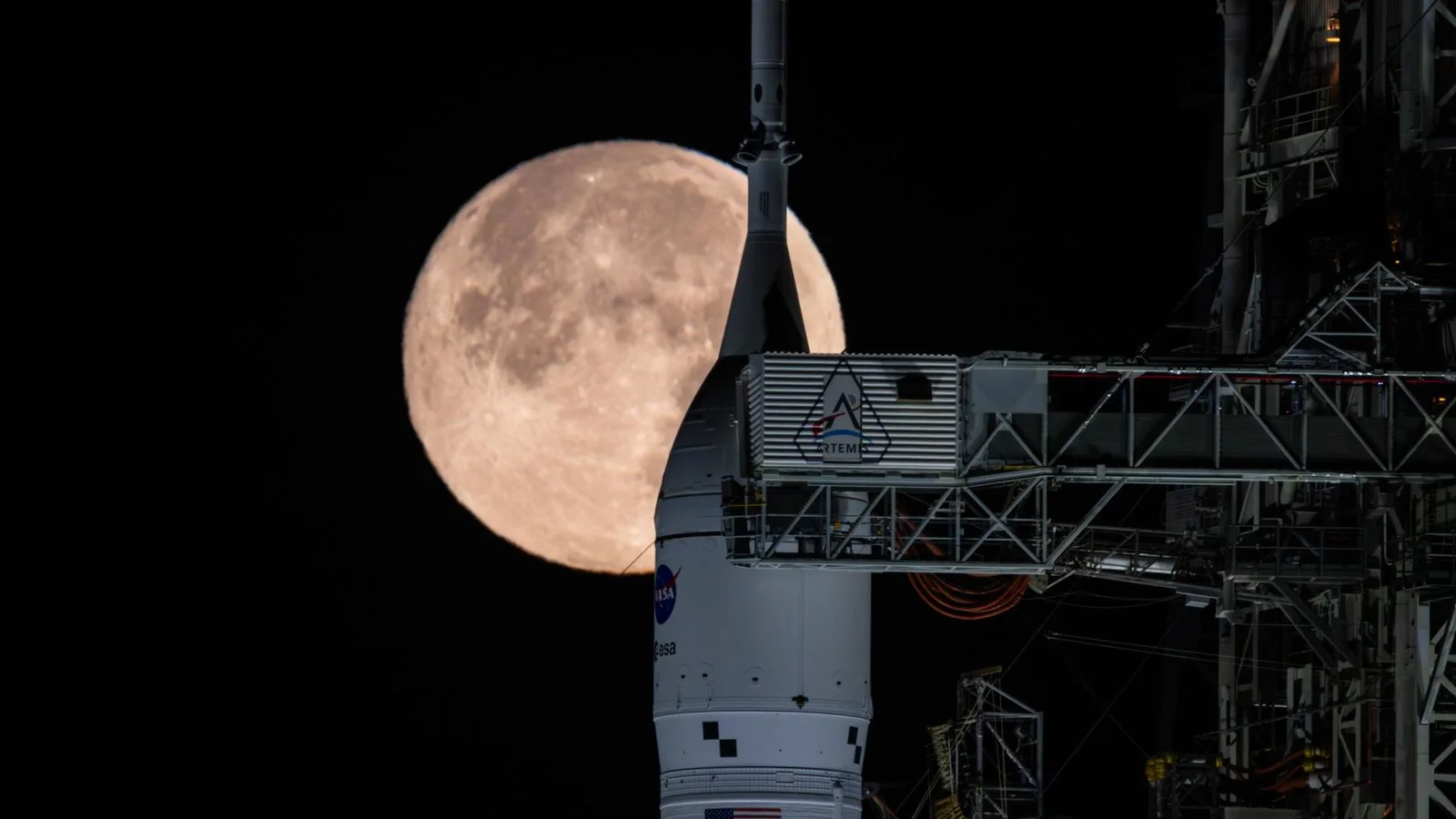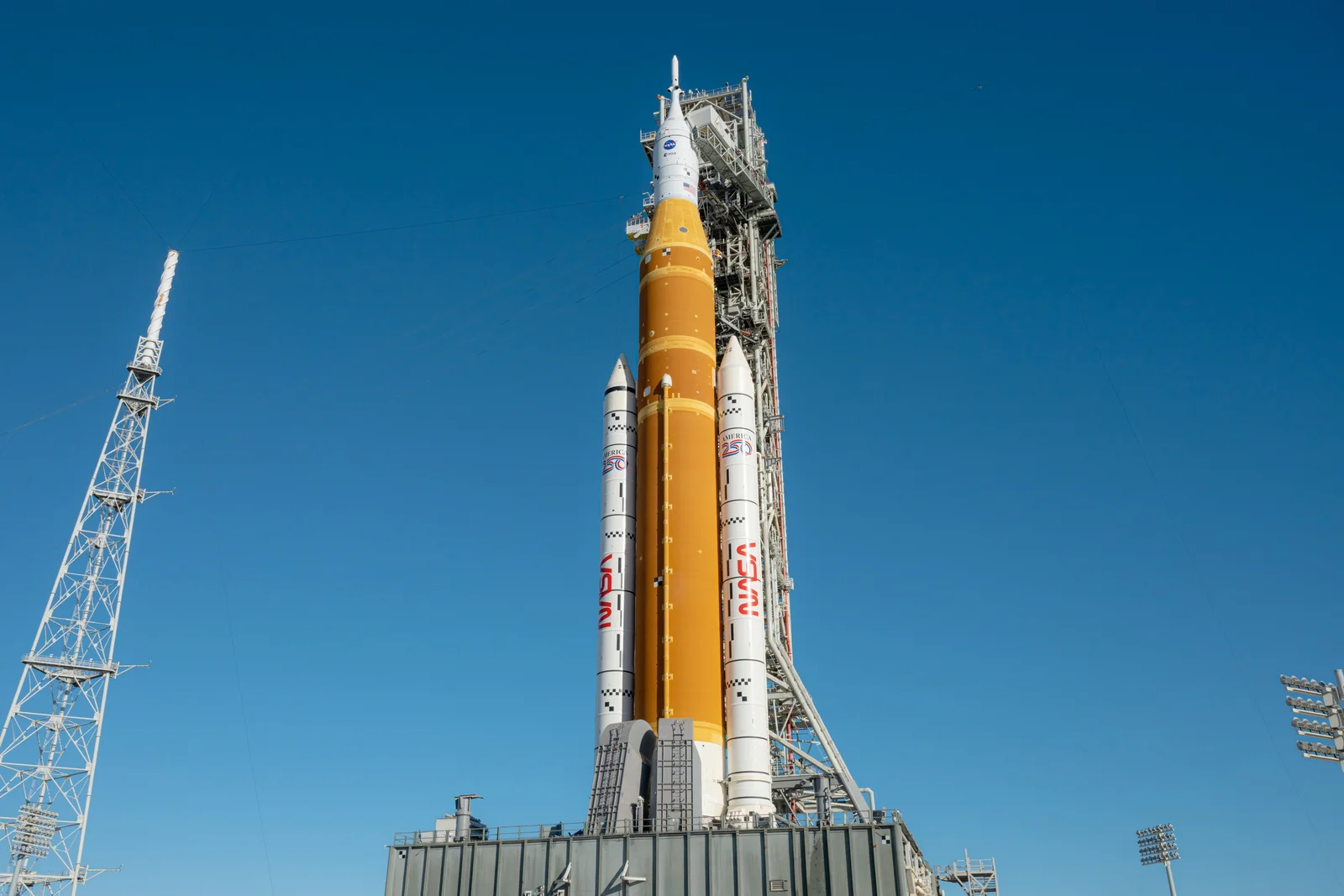
NASA is moving Artemis II toward its first crewed lunar mission by rolling the SLS/Orion stack to Launch Pad 39B for final integration and test rehearsals, including a wet dress rehearsal planned for late January. The eight-member crew will undergo countdown and life-support testing ahead of a flight readiness review and a series of launch opportunities from late January through April 2026. Engineers are addressing last-minute hardware fixes and weather constraints while aiming for a safe, on-time launch on a free-return trajectory to the Moon.
NASA's Artemis II SLS rocket, set to carry four astronauts around the Moon next year, has been upgraded with improvements in navigation, communication, safety systems, and vibration control based on lessons learned from Artemis I, enhancing performance, reliability, and safety for crewed lunar missions.
NASA and Northrop Grumman conducted a successful static-fire test of the five-segment SLS rocket booster, producing 3.9 million pounds of thrust, with some anomalies observed. The test aims to optimize booster design for NASA's Artemis program, which plans to use these boosters for future lunar missions.
A new version of the solid rocket booster for NASA's SLS experienced an anomaly during a test in Utah, with debris scattering from the nozzle, though the motor continued to burn. The BOLE booster aims to enhance payload capacity for Artemis missions, but its future is uncertain amid budget debates and previous nozzle issues. The test provided valuable data despite the anomaly.
US Senate responded to President Trump's proposed NASA budget cuts by emphasizing funding for large rocket projects like the SLS and lunar missions, while largely neglecting science programs, indicating a political preference for big rockets over scientific research.
The Trump administration is considering canceling NASA's Space Launch System (SLS) Moon rocket program, which could significantly impact the future of space travel and benefit private companies like Elon Musk's SpaceX. The SLS is a powerful rocket designed for deep space missions, including lunar exploration, but its high costs and delays have led to discussions about its viability. Canceling the SLS could shift focus and funding towards commercial space ventures, potentially accelerating advancements in space technology and exploration.
NASA has created a virtual fireplace for the 2024 holiday season, featuring the engines of its Space Launch System (SLS) rocket, which powered the Artemis 1 mission to the moon. The eight-hour-long video, available on YouTube, humorously highlights the rocket's power, comparing it to the Saturn V and noting its future collaboration with SpaceX's Starship for upcoming lunar missions. The SLS is set to fly again in 2025 for the Artemis 2 mission, with a crewed moon landing planned for 2026.
NASA is upgrading its Space Launch System (SLS) rocket to the more powerful Block 1B version, featuring a larger second stage and an adapter for large cargos, in preparation for future Artemis missions to the Moon. The upgraded SLS will have increased payload capability and enable more launch opportunities, supporting NASA's goal to land the first woman, first person of color, and its first international partner astronaut on the Moon under the Artemis program.
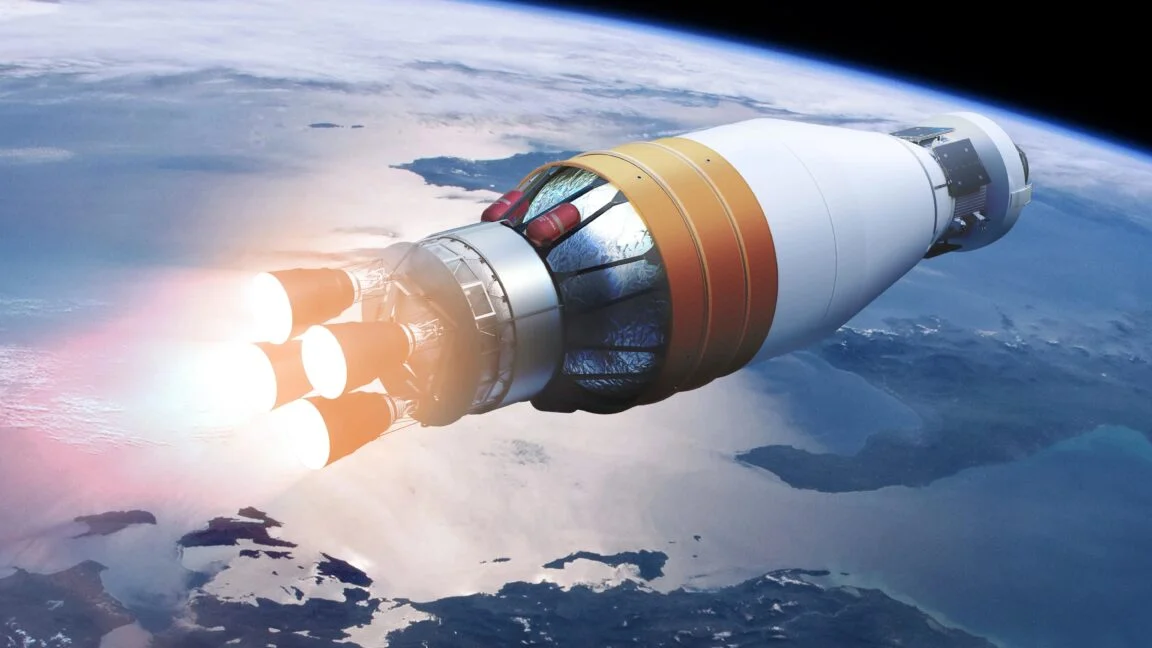
NASA's Space Launch System (SLS) rocket's first major upgrade, the Exploration Upper Stage (EUS), is moving into the qualification phase of development at the Michoud Assembly Facility in New Orleans. The EUS, part of the new SLS Block 1B configuration, is set to debut on the Artemis IV mission in 2028. Boeing, the prime contractor for the EUS, is working on validating weld schedules and assembly techniques, with the EUS employing new adapters and four RL10 engines. The development involves the use of advanced welding tools and aluminum-lithium alloy for weight savings. The EUS structural test article is being prepared for qualification, with plans for assembly and testing in preparation for the first EUS/Block 1B flight on Artemis IV.
NASA's inspector general has concluded that the planned 50% cost reduction for the Space Launch System (SLS) Block 1B through a services contract is "highly unrealistic." The report suggests that the cost of SLS will likely remain above $2 billion per launch, and efforts to find additional customers for SLS have been unsuccessful. The lack of competition and ongoing cost reduction efforts that have not achieved expected savings contribute to the skepticism. The report recommends that NASA keep its options open for alternative launch vehicles and continue monitoring the commercial development of heavy-lift space flight systems.
NASA's Space Launch System (SLS) is working to overcome supply chain issues and weld problems to complete the Core Stage for the Artemis II lunar flyby mission by mid-December. The installation of the four RS-25 core stage engines has been completed, and final assembly and testing are underway. However, delays in the completion of the liquid oxygen tank for the subsequent Core Stage-3 have pushed back its delivery. Despite these challenges, the SLS program aims to complete Core Stage-2 this year and Core Stage-3 by late 2024 or early 2025.
NASA's Office of Inspector General (OIG) has reported that the conversion of shuttle-era solid rocket boosters and engines for use on the Space Launch System (SLS) has cost the agency billions more and taken years longer than originally planned. The contracts, covering development and production of the boosters and engines, originally had a combined value of $7 billion over 14 years. The cost-plus contracts are now worth at least $13.1 billion over 25 years, of which $8.6 billion has been spent to date. The OIG reported that the overruns have the effect of increasing the cost of a single SLS mission through Artemis 4 by $144 million, to $4.2 billion each.