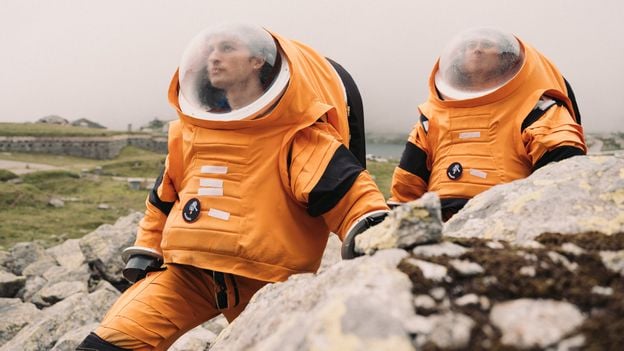
A group of international students, including aerospace engineering students like Katie Mulry, participated in a simulated lunar base inside a Swiss mountain as part of the Asclepios project, aiming to mimic life on the Moon and follow in the footsteps of the Apollo program.
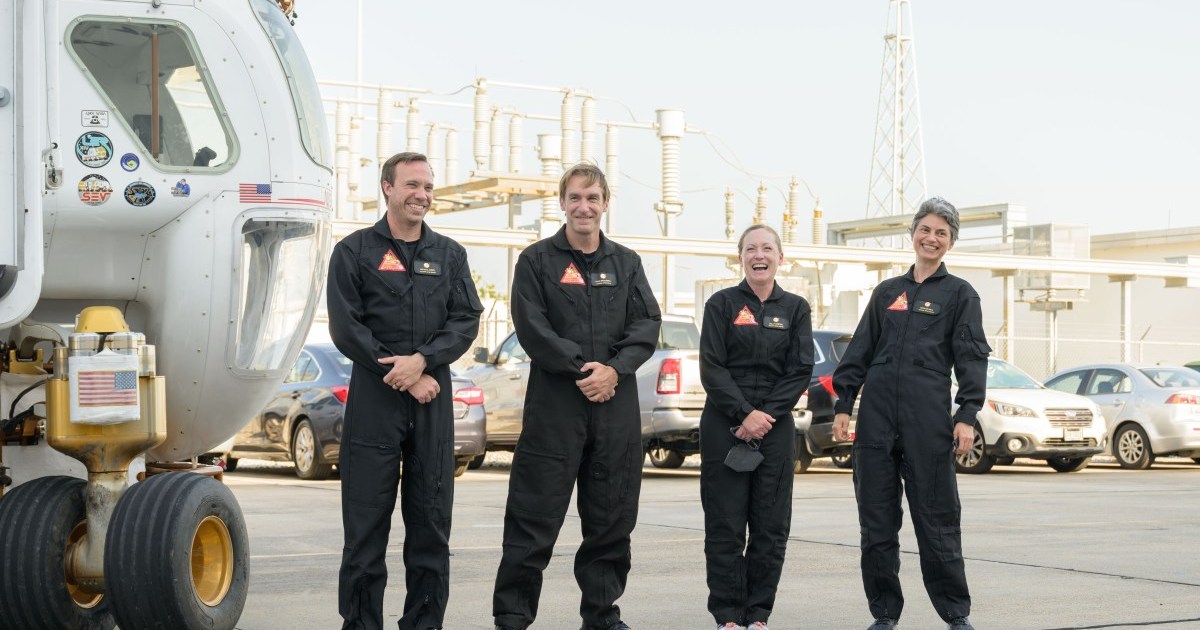
NASA has selected a new crew of four volunteers to participate in a 45-day simulated mission to Mars within a habitat at the agency’s Johnson Space Center in Houston. The crew will live and work like astronauts, carrying out scientific research and operational tasks, including a virtual reality "walk" on Mars's surface. The mission aims to study how crew members adapt to isolation, confinement, and remote conditions before NASA sends astronauts on deep space missions to the Moon, Mars, and beyond. This crew is the second group of volunteers to participate in a simulated Mars mission in HERA this year, with the final HERA crew slated to wrap up on Dec. 20.
NASA is seeking volunteers for a one-year simulated Mars mission at the Johnson Space Center in Houston, starting in spring 2025. The mission involves a four-person crew living and working in a 3D-printed, 1,700 square foot space called the Mars Dune Alpha, performing tasks such as spacewalks, operating robots, and maintaining the habitat. Eligible participants must be healthy U.S. citizens or permanent residents aged 30-55, proficient in English, and have a master's degree in a STEM field with professional experience, among other qualifications. The deadline to apply is April 2, 2024.
NASA is seeking volunteers for a year-long simulated Mars mission called CHAPEA to prepare for future crewed Mars missions, with the aim of studying psychological and health responses to conditions similar to those experienced on deep space missions. The agency is looking for healthy, motivated U.S. citizens or permanent residents aged 30-55, proficient in English, and with a master's degree in a STEM field or at least 1,000 hours of piloting experience. The selected volunteers will enter the simulated Mars environment in spring 2025 and will face challenges such as resource limitations, equipment failures, and communication delays while performing tasks like spacewalks, robotic operations, and crop growth. Applications are open until April 2.
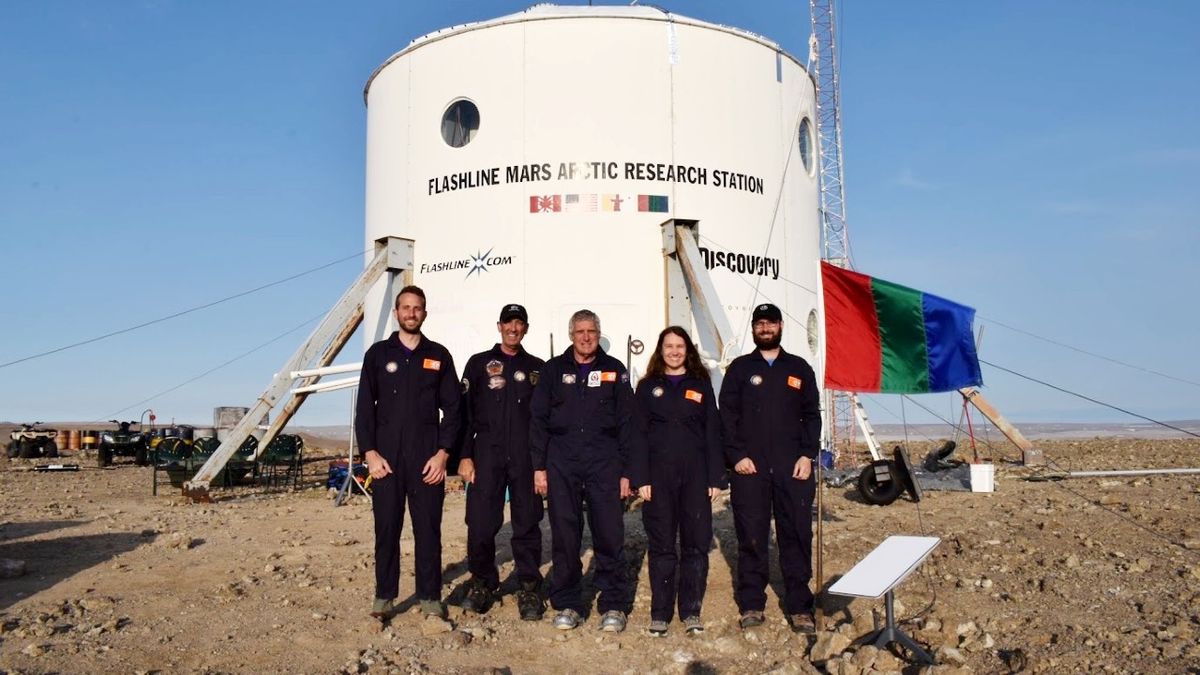
The Mars Society has begun its fifteenth simulated Red Planet analog mission in the remote Canadian Arctic. The multinational crew of five members from the UK, Australia, and the US arrived at the Flashline Mars Arctic Research Station (FMARS) on July 15 and have started conducting scientific tests and field studies. The crew will work under Mars mission constraints and carry out geological and microbiological exploration, following up on previous investigations. The FMARS station is located on Devon Island, which resembles Mars in many ways, and the crew will spend four weeks there.
NASA has locked four volunteers into a simulated Martian habitat for a one-year mission called CHAPEA (Crew Health and Performance Exploration Analog) to study the logistics and human psychology of long-term living on another planet. The crew will live, work, exercise, sleep, and perform experiments in the 1700 square-foot 3D-printed living space called Mars Dune Alpha. They will also engage in simulated spacewalks and follow a time-delayed communication system. The mission aims to gather insights on the physical and behavioral aspects of a Mars mission and prepare for future manned missions to the red planet.