Astronomers using the James Webb Space Telescope discovered that magnetic fields in Sagittarius C, near the Milky Way's center, shape its structure and inhibit star formation, explaining why this dense region contains fewer stars than expected despite abundant gas clouds.
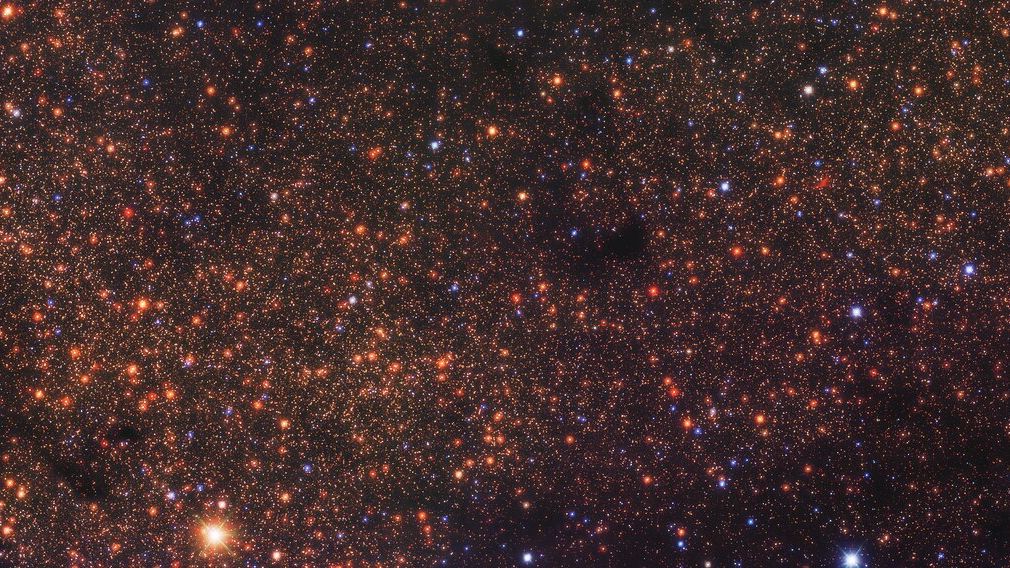
The European Southern Observatory's Very Large Telescope captured an infrared image of Sagittarius C, a star-forming region at the center of the Milky Way, revealing a densely packed population of stars. This region, located near the galactic center, is believed to be a prolific stellar nursery, with evidence suggesting the presence of many more young stars than currently observed. The VLT data indicates that Sagittarius C is rich in young stars, making it a promising candidate for hosting newly formed stars and providing astronomers with new regions to search for obscured young stars.
The European Southern Observatory's Very Large Telescope has captured a stunning infrared image of the star-forming region Sagittarius C at the center of the Milky Way, revealing thousands of distant stars. This region, located near the galaxy's central supermassive black hole, is believed to be a prolific stellar nursery, with evidence suggesting the presence of many more young stars than currently observed. Using the HAWK-I infrared camera, astronomers were able to peer through clouds of dust and gas to uncover the densely packed star population of Sagittarius C, making it a promising candidate for hosting newly formed stars.
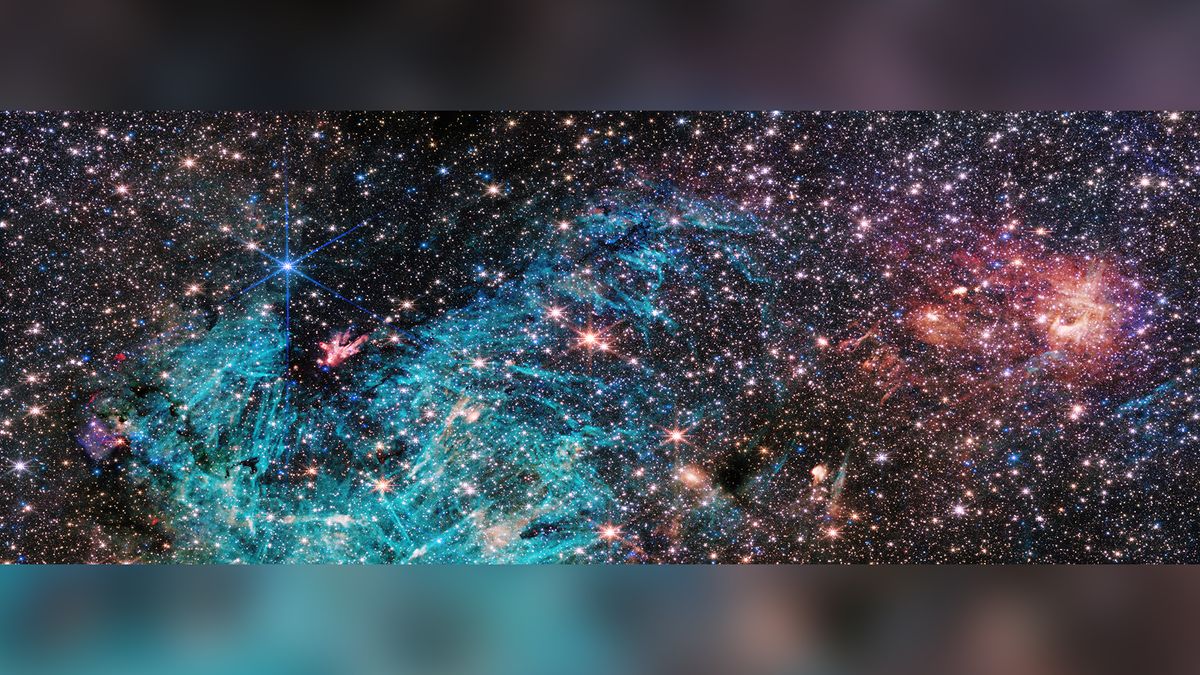
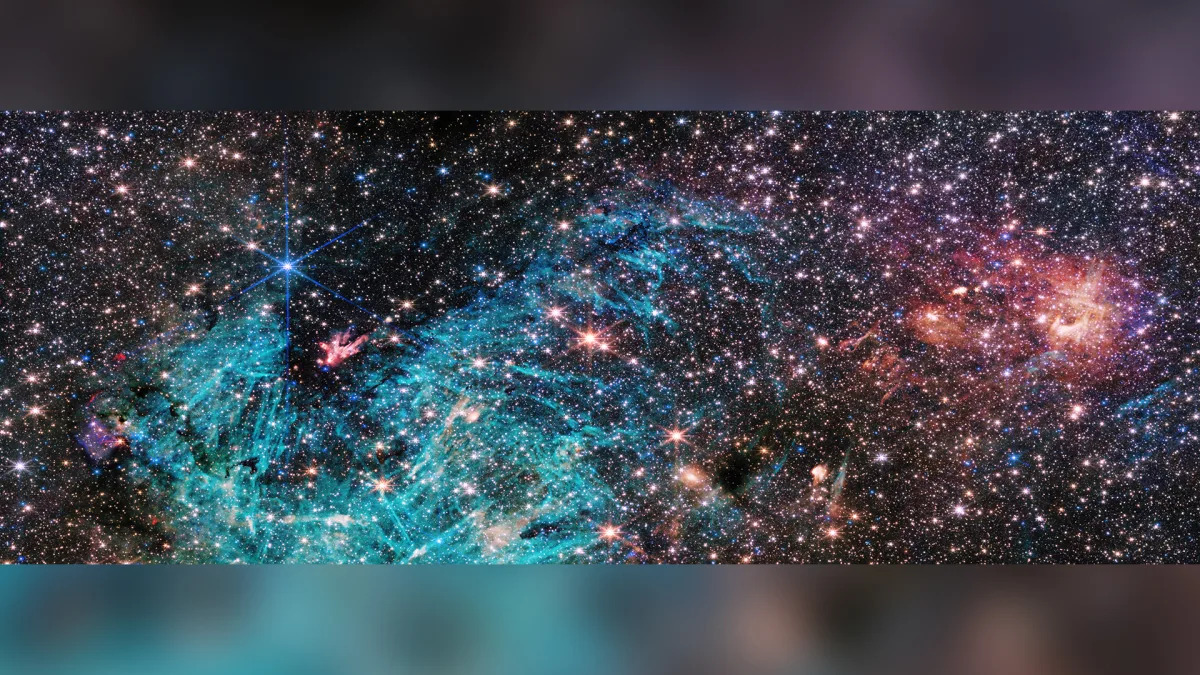
The James Webb Space Telescope has captured a stunning image of about 500,000 stars, including a cluster of newborn giant stars, in the chaotic heart of the Milky Way near the supermassive black hole Sagittarius A*. The image reveals a region of ionized hydrogen gas and protostars, shedding light on the extreme environment of the galactic center and providing valuable insights into star formation and the origins of the universe.
The James Webb Space Telescope has captured a stunning image of the Sagittarius C region near the chaotic heart of the Milky Way, revealing approximately 500,000 stars, including a cluster of newborn giant stars. This active star-forming region, located about 300 light-years from the supermassive black hole Sagittarius A*, offers scientists a unique opportunity to study star formation in extreme cosmic environments. The image also showcases a previously unseen region of ionized hydrogen gas with needle-like structures, illuminated by the ultraviolet light from massive young stars. The James Webb Space Telescope's Near-Infrared Camera has provided unprecedented detail, allowing researchers to better understand the origin of heavy elements and unravel mysteries of the universe.
NASA's James Webb Space Telescope has captured a detailed image of the Sagittarius C region near the Milky Way's core, revealing a dense star-forming area with numerous protostars and infrared-dark clouds. This observation offers new perspectives on star formation and the dynamics of our galaxy's center. The image shows never-before-seen features that astronomers are still trying to explain, including needle-like structures in ionized hydrogen and a surprising extent of the ionized region. The galactic center is an extreme environment where stars form, and studying it with the Webb telescope provides valuable insights into the origin of the universe and the formation of heavy elements.