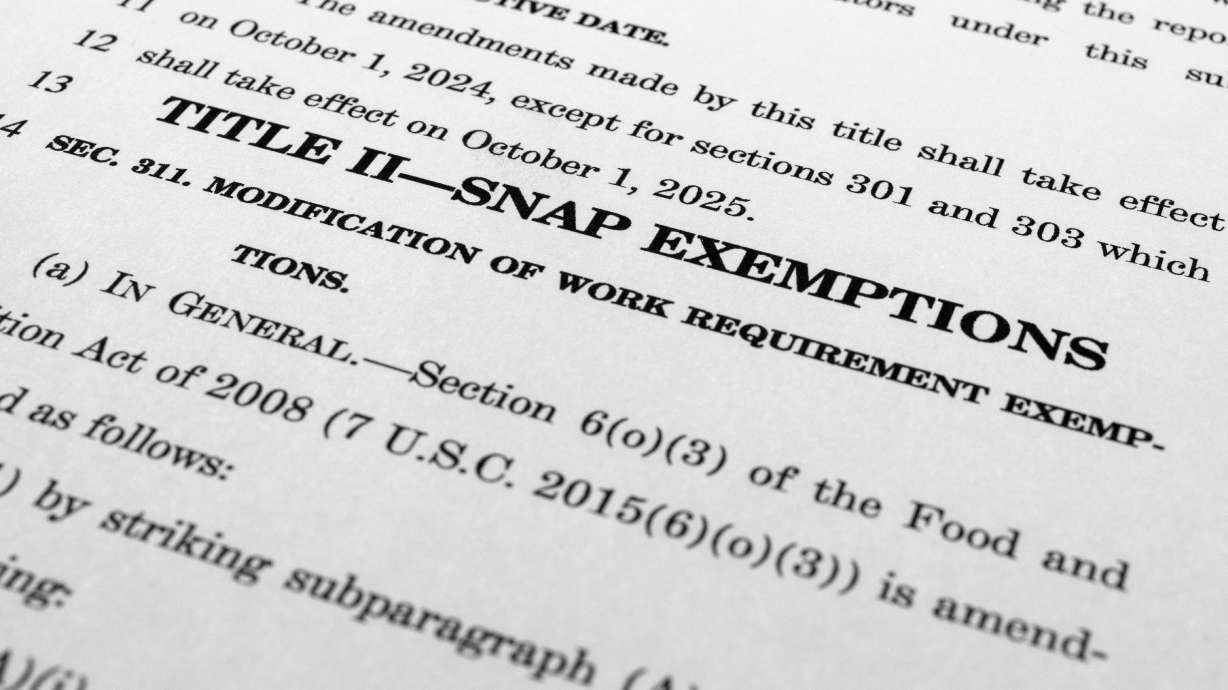
Democrats are conflicted about the new work requirements for food aid that President Joe Biden negotiated as part of the debt ceiling deal, fearing damage has been done to safety net programs that will be difficult to unravel in the years ahead as Republicans demand further cuts. By 2025, new requirements will apply to able-bodied adults from age 49 to 54 without dependents — an increase of five years. Those individuals will be required to work or attend training programs for at least 80 hours a month if they want to receive more than three months of SNAP benefits within a three-year period.
Work requirements in two safety net programs for low-income Americans are set to change under the compromise debt ceiling package negotiated by President Joe Biden and House Speaker Kevin McCarthy. The number of people subject to the mandate will be broadened in phases so that by 2025, it will apply to those between the ages of 18 and 54. Veterans and people experiencing homelessness of all ages, as well as adults under age 25 who were previously in foster care, will be exempt under the debt ceiling bill. The legislation also tightens the share of unused exemptions states can carry over from year to year.
House Republicans defend their expansion of work requirements for safety net programs in the debt ceiling bill, arguing that it would help people escape poverty and assist employers looking to hire. They also challenge the Congressional Budget Office's analysis of the package, which showed enrollment in the food stamps program would increase by 78,000 people in an average month when fully implemented, as well as grow spending by $2.1 billion over the decade. The compromise package would also tighten the current work requirements in the TANF program, primarily by adjusting the work participation rate credits that states can receive for reducing their caseloads.
President Biden has agreed to stricter work requirements for safety net programs and a minor rollback of a key part of the Democrats' signature legislative accomplishment in order to avoid a catastrophic economic default and raise the debt limit for the next two years under a deal negotiated with House Speaker Kevin McCarthy. The deal would hold non-defense spending flat for 2024 and impose limits for 2025, which Republican leaders are touting as big wins in the negotiations. The compromise also includes a version of the Republican proposal to tighten the existing work requirement in the Supplemental Nutrition Assistance Program, which provides food benefits to more than 20 million households.