In response to the unprecedented events in Venezuela involving U.S. military actions and political charges, investors are advised to consider safe-haven assets like gold and cash, monitor oil prices and oil company stocks, but generally maintain a long-term, steady investment approach without making drastic changes.
Gold and silver prices rose following the US's capture of Venezuelan President Maduro, increasing geopolitical concerns and prompting investors to seek safe-haven assets. Despite the political turmoil, regional stock markets in Asia showed gains, and oil prices remained relatively stable, with analysts suggesting limited immediate impact on energy prices.
Gold prices reached record levels this week, marking their biggest weekly gain since 2020, driven by global trade tensions, rate-cut expectations, and economic uncertainty, with analysts warning of potential bubbles or continued rises depending on future economic policies.
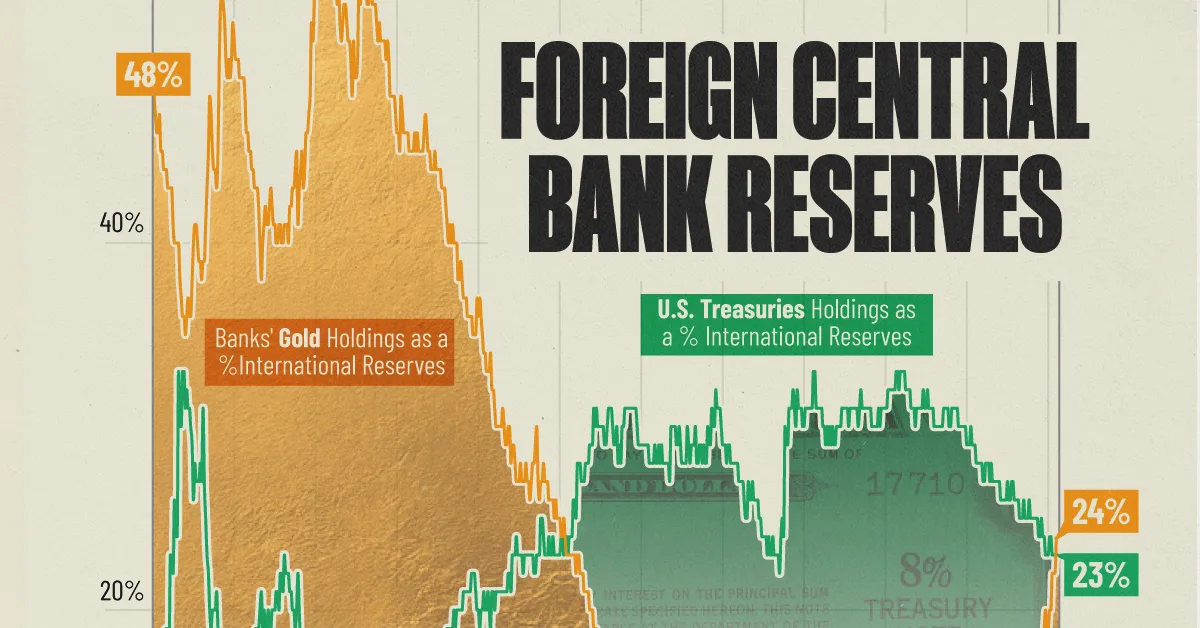
For the first time since 1996, central banks hold more gold than U.S. Treasuries, reflecting a shift towards hard assets amid geopolitical risks and a move away from dollar-denominated securities, with gold's share of reserves rising to about 18% in 2024.
Amid the US government shutdown delaying key economic data releases, investors are exhibiting a mix of optimism and fear, driving gold and Bitcoin prices to new highs as they seek safe assets and momentum trading fuels the rally.
Bitcoin reached a new all-time high of over $125,000 amid a macroeconomic shift where safe-haven assets like gold and precious metals are also surging, while the US dollar is on track for its worst year since 1973 due to inflation, interest rate cuts, and political instability, signaling a significant change in monetary policy and investor behavior.
A global selloff in long-dated bonds continues, with yields reaching record highs in Japan, UK, and the US, driven by concerns over government debt and inflation, prompting a surge in gold prices to an all-time high as investors seek safe-haven assets.
Following US strikes on Iran, global markets are experiencing increased risk aversion, with the dollar strengthening, gold and oil prices rising, and cryptocurrencies declining, as investors await Iran's response and potential escalation in regional tensions.
Stocks declined and safe-haven assets like gold and the yen rose following Israel's attack on Iran's nuclear sites, escalating Middle East tensions and causing a surge in oil prices, with markets reacting to geopolitical risks and potential disruptions.
The dollar approached a 2025 low amid rising Middle East tensions and concerns over the US-China trade truce, leading to a risk-off mood that boosted safe-haven assets like gold, the Swiss franc, and the yen. Stocks paused their rally, and oil prices fluctuated due to regional security concerns. US inflation data showed contained price pressures, supporting the possibility of a Fed rate pause, while geopolitical risks and US tariff policies continue to influence markets.
Stock futures fell as Russian President Vladimir Putin expanded the country's nuclear doctrine, increasing geopolitical risks. The S&P 500, Nasdaq 100, and Dow Jones futures all declined, while gold futures rose as investors sought safe-haven assets. Russia's new doctrine considers attacks by non-nuclear countries supported by nuclear powers as joint attacks, lowering the threshold for a nuclear response. This development follows reports of Ukraine using U.S.-made long-range missiles against Russia, escalating tensions further.
Investors are turning to safe-haven assets like government bonds, the Japanese yen, and gold amid rising US-Russia tensions over Ukraine. The 10-year US Treasury yield fell to a three-week low, while the yen and gold prices rose. European shares and US stock futures declined, reflecting market concerns over Russia's updated nuclear doctrine and Ukraine's missile attack inside Russia. The Swiss franc and the dollar also saw gains as part of the safe-haven trade.
Gold prices hit a new record high, driven by expectations of a Federal Reserve interest rate cut in September following comments from Fed Chair Jerome Powell. Spot gold prices rose to $2,482.29 per ounce, with futures also climbing. The optimism stems from signs of slowing inflation and weak economic data, making gold more appealing compared to fixed-income assets. The metal's appeal as a safe-haven asset amid global tensions and central bank purchases has also contributed to its rise. Analysts predict prices could exceed $2,500 per ounce by year-end.
The Israel-Hamas war has not led to a rush into traditional safe-haven assets, leaving analysts and investors puzzled. Market volatility has increased, but the lack of pronounced volatility and subdued inflows into safe havens may reflect a sense of paralysis due to an overwhelming array of worries. Gold and the Swiss franc have rallied as the only two havens benefiting from the conflict, while U.S. Treasuries have suffered. Rising Treasury yields and geopolitical concerns have contributed to a rough October for stocks. The Japanese yen, typically a haven beneficiary, has been left on the sidelines. Investors are not buying US Treasuries due to uncertainty about inflation, expectations of more Federal Reserve rate hikes, and concerns about increasing federal debt. The laundry list of worries, including the Mideast conflict, Ukraine war, US political issues, China's property problems, and US-China tensions, will likely lead to more unsettled trading conditions.
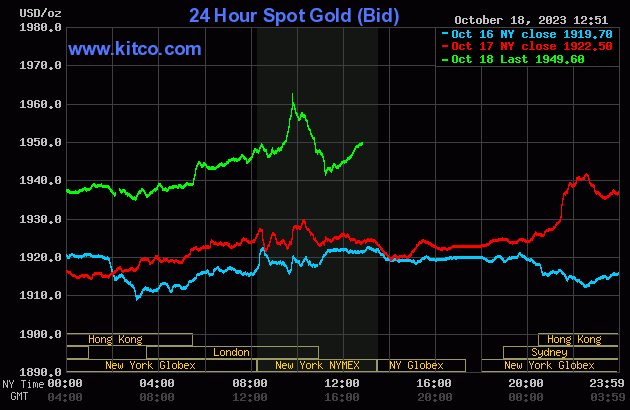
Gold and silver prices have surged to six-week and three-week highs, respectively, as increased risk aversion due to escalating violence in the Middle East has led traders and investors to seek safe-haven assets. Gold is up $26.70 at $1,962.40, while silver is up $0.016 at $23.04. U.S. stock indexes are lower, and the U.S. dollar index is higher. China's third-quarter GDP came in at 4.9%, below the second quarter's reading of 6.3%, with property investment contracting and home sales declining.