Tag

Rotation Curve

All articles tagged with #rotation curve

astronomy1 year ago

"Unraveling the Mystery of the Milky Way's Dark Matter Halo and Star Movements"

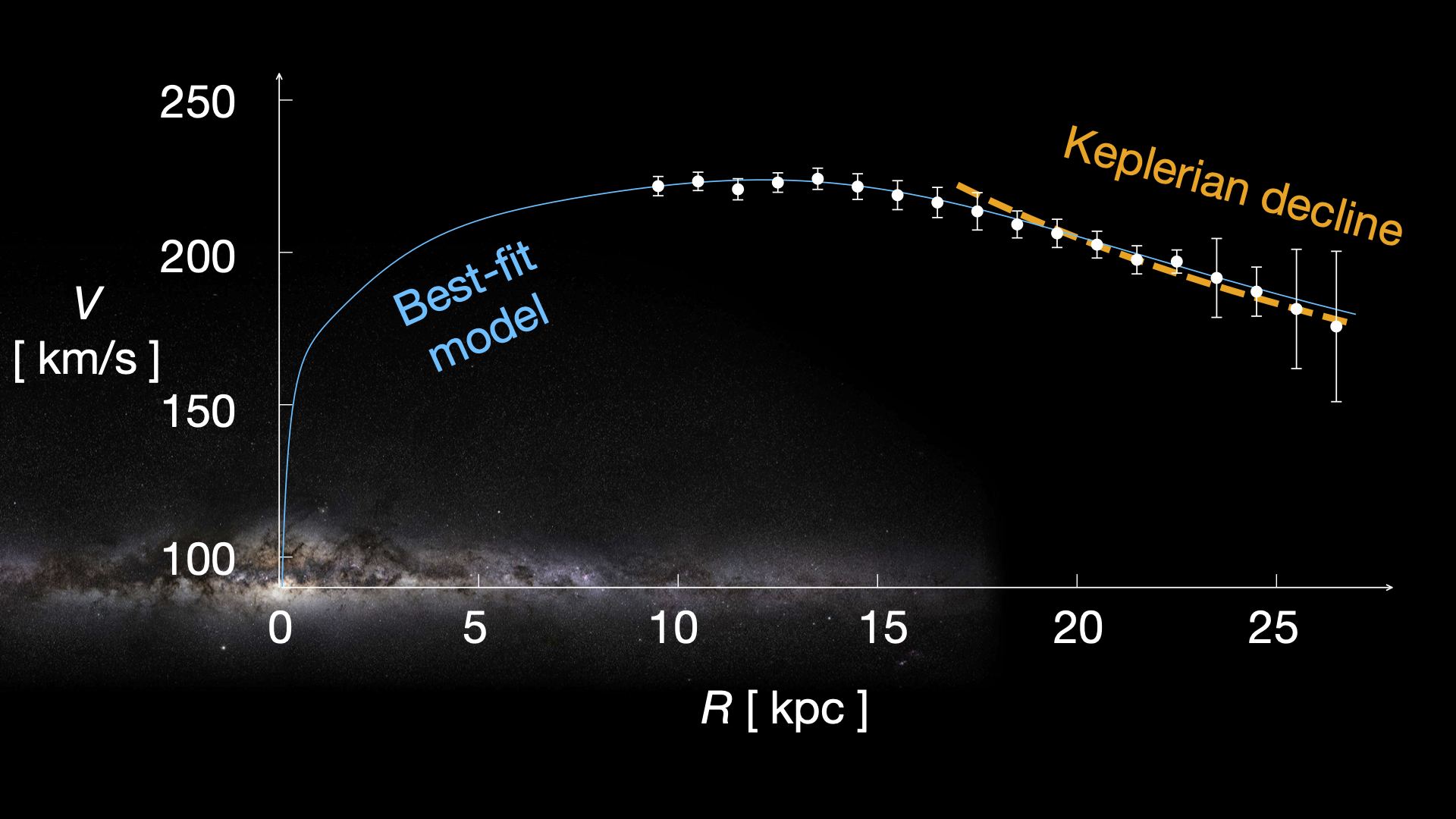
Scientists have observed stars moving more slowly than expected at the outskirts of the Milky Way, suggesting a potential discrepancy in the galaxy's dark matter distribution. Recent measurements combining data from the Gaia spacecraft and ground-based telescopes indicate a decline in orbital velocity for stars at distances of about 100,000 light years, implying less dark matter in the galaxy's center than previously thought. This challenges existing models of galaxy formation and calls for further research and simulations to understand the Milky Way's unique dark matter distribution.
astronomy1 year ago

"Mysterious Activity Detected in the Milky Way's Dark Matter Halo"

Scientists have observed that stars on the outskirts of the Milky Way are moving more slowly than expected, indicating a potential discrepancy in the distribution of dark matter within the galaxy. Recent measurements using the Gaia mission and APOGEE telescope suggest that the galaxy's dark matter halo may be "cored," with less dark matter in the center than previously thought. This challenges existing models of galaxy formation and raises questions about the nature of dark matter and its influence on the movement of stars within the Milky Way.

astronomy1 year ago

"Revisiting Dark Matter: New Insights into the Milky Way's Core and Edge"

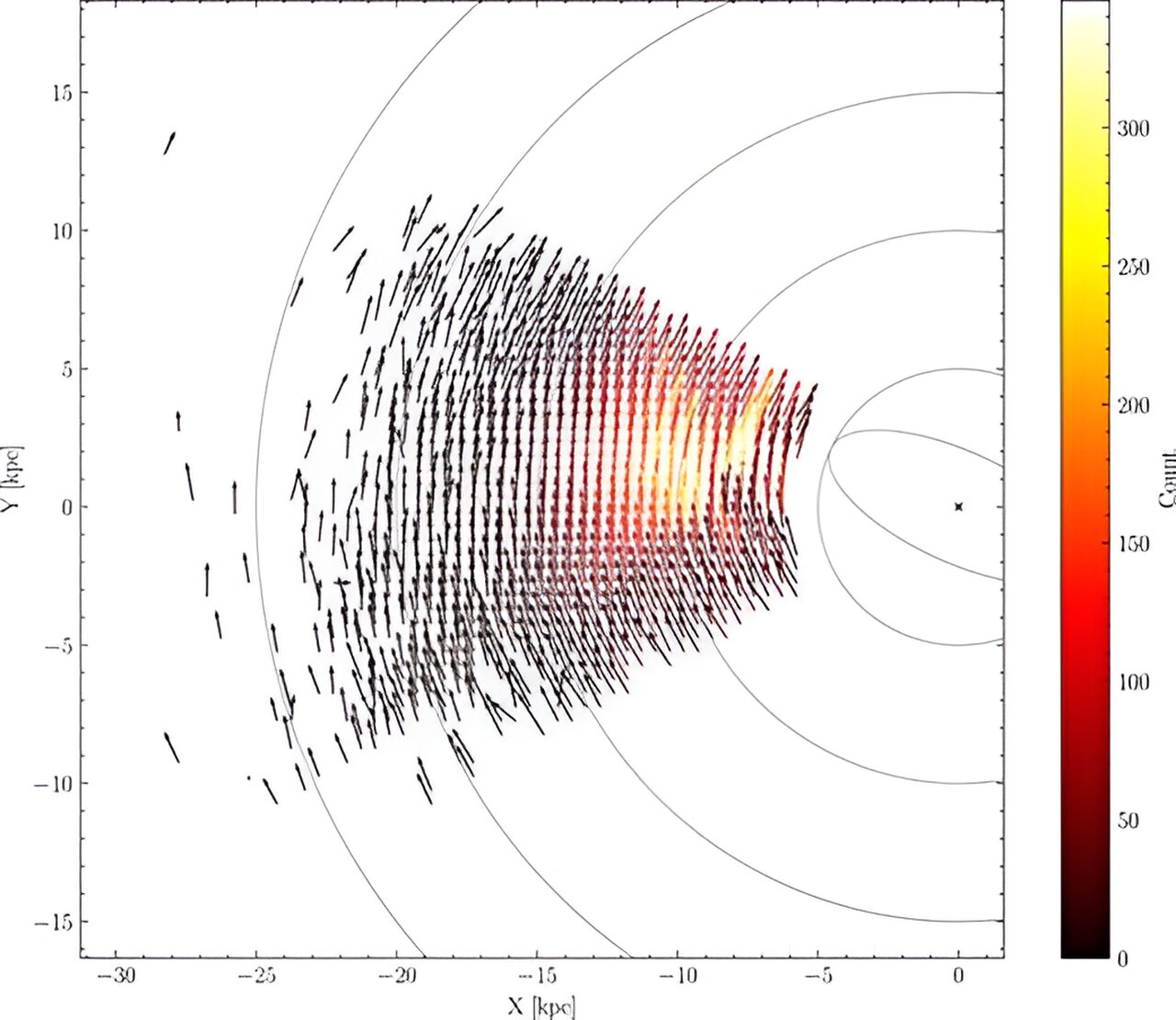
A new study by physicists at MIT suggests that the Milky Way's gravitational core may contain less dark matter than previously thought, as stars at the galaxy's edge were found to be traveling more slowly than those closer to the center. Analyzing data from the Gaia space telescope and the Apache Point Observatory Galactic Evolution Experiment, researchers plotted the rotation curve of over 33,000 stars, revealing a surprising decline in velocity at farther distances, indicating a lower density of dark matter at the galaxy's center. This challenges previous assumptions and raises questions about our understanding of the Milky Way's composition.

science1 year ago

"Revealing the Slow Travel of Stars at the Milky Way's Edge"

MIT physicists have found a surprising twist in the Milky Way's rotation curve, suggesting a potential deficit of dark matter at the galactic core, challenging previous understanding. Dark matter, a hypothetical substance in the universe, is believed to be responsible for galaxies' rotation due to its gravitational effects on visible matter, despite being impossible to see directly.

astronomy1 year ago

"Galactic Core's Reduced Dark Matter Leads to Slower Star Travel at Milky Way's Edge"

MIT physicists have found that stars further out in the Milky Way galaxy are traveling more slowly than expected, suggesting that the galaxy's gravitational core may contain less dark matter than previously estimated. By analyzing data from the Gaia and APOGEE instruments, the team observed a surprising dip in the rotation curve at the galaxy's outer edge, indicating a lighter galactic core. These findings challenge previous assumptions and may lead to a reevaluation of the distribution of dark matter within the Milky Way.

astronomy2 years ago

"Slower Star Travel at Milky Way's Edge Suggests Lower Dark Matter in Galaxy's Core"

Physicists at MIT have found that stars further out in the Milky Way galaxy are traveling more slowly than expected, suggesting that the galaxy's gravitational core may be lighter in mass and contain less dark matter than previously thought. The findings are based on analysis of data from the Gaia and APOGEE instruments, and the team's study has been published in the Monthly Notices of the Royal Society Journal. This unexpected result may lead to a reconsideration of the state of equilibrium of our galaxy and could have deep repercussions in understanding the distribution of dark matter in the Milky Way.

astronomy2 years ago

"Surprising Discovery: Milky Way Weighs Only a Fifth of Previous Estimates"

New research using data from the Gaia telescope suggests that the Milky Way may be only a fifth as heavy as previously thought, indicating a potential absence of dark matter. The estimated total mass of our galaxy is around 200 billion times that of the sun, significantly lower than previous estimates. The study also found that the Milky Way's rotation curve is different from other large spiral galaxies, with stars orbiting slower than expected, suggesting a lack of gravitational pull from dark matter. This discovery challenges previous studies and could impact our understanding of the galaxy's history and collisions with other galaxies.

astronomy2 years ago

Revised Estimate: Milky Way's Mass Half of Previous Beliefs

A new study using data from the Gaia spacecraft has calculated a more accurate mass of the Milky Way, revealing that it is only about half as heavy as previously estimated. By analyzing the rotation curve of the galaxy, the researchers found that the Milky Way has a mass of approximately 200 billion solar masses, significantly lower than the previous estimate of a trillion solar masses. This suggests that the galaxy contains less dark matter than previously thought.

astronomy2 years ago

Revised Estimate: Milky Way's Mass Lower Than Expected

A new study using data from the Gaia spacecraft has calculated a more accurate mass for the Milky Way, revealing that it is smaller than previously estimated. By analyzing the rotation curve of the galaxy, the researchers found that the Milky Way has a mass of about 200 billion solar masses, which is a fifth of previous estimates. This suggests that the galaxy has significantly less dark matter than previously thought.