Tag

Ranis

All articles tagged with #ranis

Early Homo sapiens Reached Icy Northern Europe 45,000 Years Ago
archaeologyanthropology1 year ago

Early Homo sapiens Reached Icy Northern Europe 45,000 Years Ago

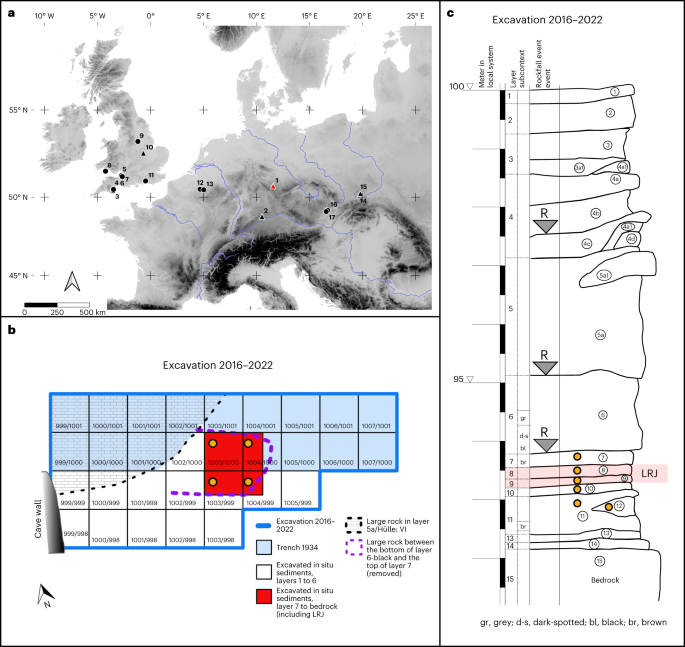
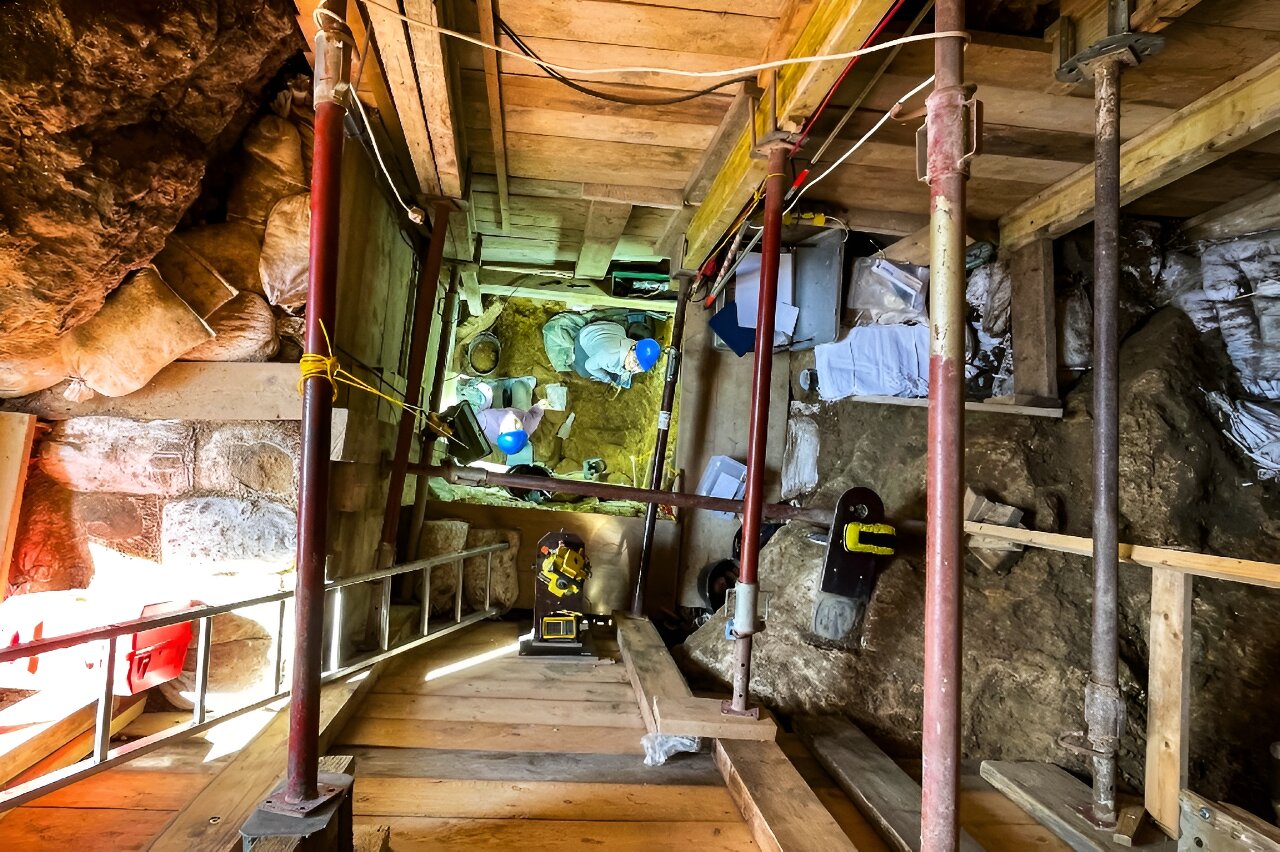
Researchers discovered human bones and tools in a German cave, indicating that humans settled in northern Europe over 45,000 years ago, potentially coexisting with Neanderthals. The findings challenge previous assumptions about human migration and the replacement of Neanderthals by Homo sapiens. The discovery suggests that humans repeatedly populated Europe in smaller excursions, living in extreme cold conditions and adapting to hostile environments, ultimately outlasting the Neanderthals.
"45,000-Year-Old Human Dispersal into Cold Steppes of Central Europe Revealed"
science1 year ago

"45,000-Year-Old Human Dispersal into Cold Steppes of Central Europe Revealed"

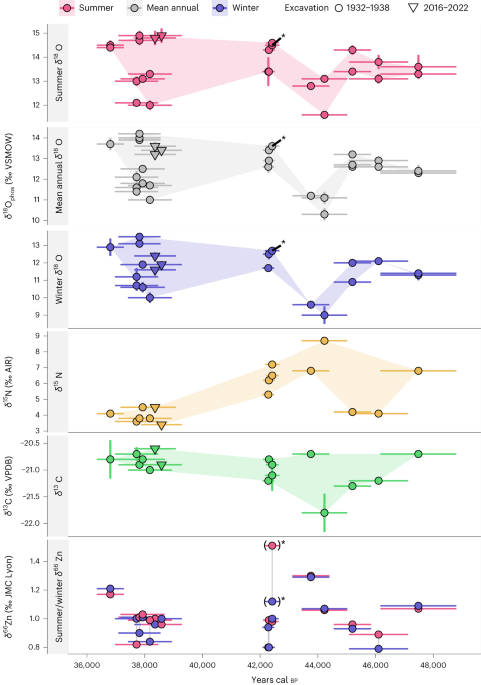
Stable isotope analysis of faunal remains from Ilsenhöhle in Ranis, Germany, provides evidence of the climatic and environmental conditions encountered by Homo sapiens during their dispersal into central and northwestern Europe around 45,000 years ago. The analysis reveals a temperature decline and open steppe environments during this period, coinciding with the presence of H. sapiens and indicating their adaptation to cold subarctic conditions. This study contributes to understanding the complex patchwork of archaeological and biological turnovers during the Middle to Upper Palaeolithic transition.

"Early Human Presence in Northern Europe: Insights from 45,000-Year-Old Bones"
archaeology1 year ago

"Early Human Presence in Northern Europe: Insights from 45,000-Year-Old Bones"

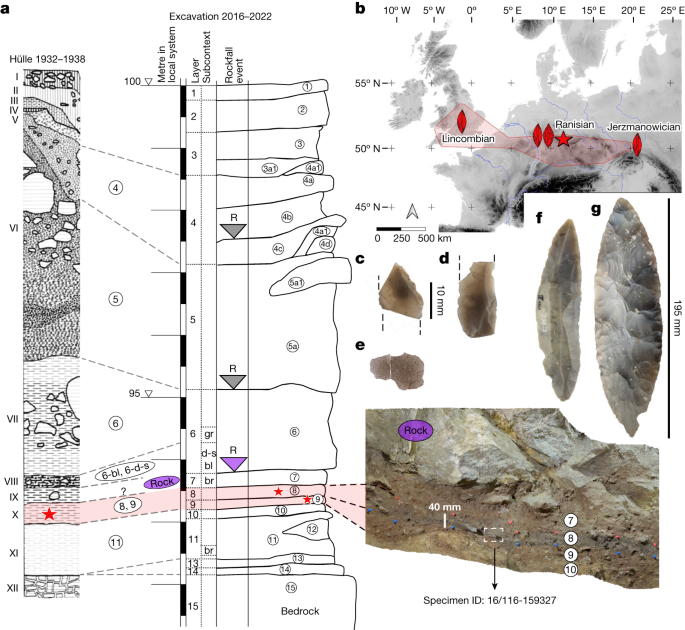
Human remains associated with the LRJ technocomplex at the site Ilsenhöhle in Ranis, Germany, have been identified as some of the earliest directly dated Upper Palaeolithic Homo sapiens remains in Eurasia, dating back to 47,500–45,770 years ago. This discovery suggests that Homo sapiens reached the higher latitudes of Europe long before the extinction of late Neanderthals in southwestern Europe, strengthening the understanding of a patchwork of distinct human populations and technocomplexes present in Europe during the transitional period from the Middle to Upper Palaeolithic.

"Insights into the Ecology and Diet of 45,000-Year-Old Homo sapiens in Central Europe"
archaeology1 year ago

"Insights into the Ecology and Diet of 45,000-Year-Old Homo sapiens in Central Europe"

Recent excavations at Ranis, Germany, have revealed the presence of early Homo sapiens in Europe around 45,000 years ago. The faunal assemblages indicate a cold climatic environment with a predominance of large terrestrial mammals in the human diet. The study integrates zooarchaeology, palaeoproteomics, sediment DNA, and stable isotopes to reconstruct the ecology, subsistence, and diet of these early humans, suggesting their expedient visits in small, mobile groups. The findings shed light on the behavioral adaptations and survival strategies of early Homo sapiens populations during their expansion into Northern European Plains.