Tag

Radical Chemistry

All articles tagged with #radical chemistry

science-and-technology2 years ago

Revolutionary Water Splitting Method Simplifies Hydrogen Production

German chemists have discovered a new process of water splitting that allows for easier production of hydrogen. The breakthrough method involves a photocatalytic process using triaryl phosphines, which activate water in a reaction accelerated by light energy. This discovery could lead to advancements in chemistry, including the synthesis of compounds using hydrogen atoms. The ease of hydrogen production is significant as it is considered a potential energy solution for the future and plays an active role in the formation of essential compounds. The research findings open up possibilities for applications in material sciences, agriculture, and pharmaceutical research.

science-and-technology2 years ago

Advancements in Water Splitting: Efficient Catalysts and Spectral Microscopy

Chemists from Münster University have developed a new photocatalytic process using triaryl phosphines to activate water, making hydrogen production easier. This innovative approach utilizes light energy to drive the reaction and shows potential for exploring new chemical processes using hydrogen atoms in synthesis. The process involves the activation of water through a phosphine-water radical cation, allowing for the easy splitting of hydrogen atoms and their transfer to other compounds. This research opens up possibilities for investigating unresearched chemical processes and has implications for pharmaceutical research, the agrochemical industry, and materials sciences.

science-and-technology2 years ago

"Breakthrough Method Enhances Drug Potency and HIV Inhibition"

Researchers from Penn State have developed a safe and efficient method for creating cyclopropanes, which are important chemical structures found in many drugs. The traditional methods for creating cyclopropanes are limited and require highly reactive ingredients. The new method uses a previously undescribed chemical process that utilizes visible light and common chemical ingredients, including oxygen. It bypasses the need for unstable ingredients and produces cyclopropanes on a wide variety of molecules. This breakthrough could have significant implications for drug development and creation.

science-and-technology2 years ago

Revolutionary Approach Boosts Drug Potency with Ease

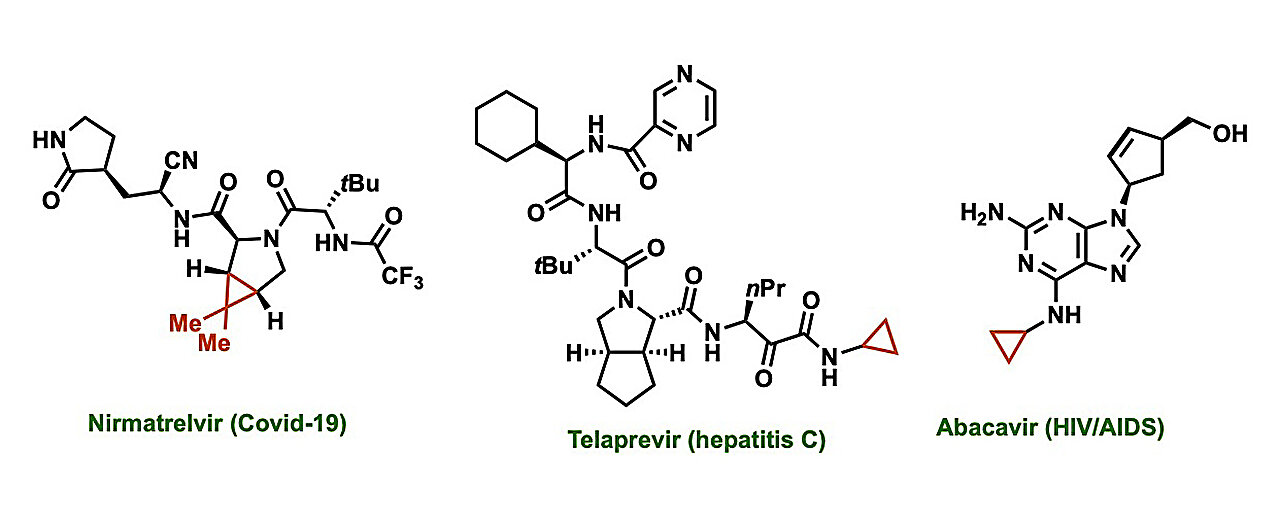
Researchers at Penn State have developed a safe and practical method to create cyclopropanes, a chemical structure that increases the potency of drugs. Cyclopropanes are found in many FDA-approved drugs, including those used to treat COVID-19, asthma, hepatitis C, and HIV/AIDS. The traditional methods for creating cyclopropanes are limited and require reactive ingredients, but the new method uses visible light and common chemical ingredients, making it accessible and efficient. The researchers successfully transformed a variety of compounds into cyclopropanes, including pharmaceutically relevant ones. The method has the potential to revolutionize drug development and creation.