
Company Launches Revolutionary Quantum Processor with 100x Density Boost
A company has announced a new quantum processor that is 100 times denser than any existing technology, marking a significant advancement in quantum computing capabilities.

All articles tagged with #quantum processor
A company has announced a new quantum processor that is 100 times denser than any existing technology, marking a significant advancement in quantum computing capabilities.

This week in science, advancements include a longer-lasting quantum processor, the departure of interstellar comet 3I/ATLAS, AI tackling complex math problems, pumas exhibiting new behaviors after conservation efforts, and a record-breaking gamma-ray burst, highlighting significant progress and discoveries across various fields.
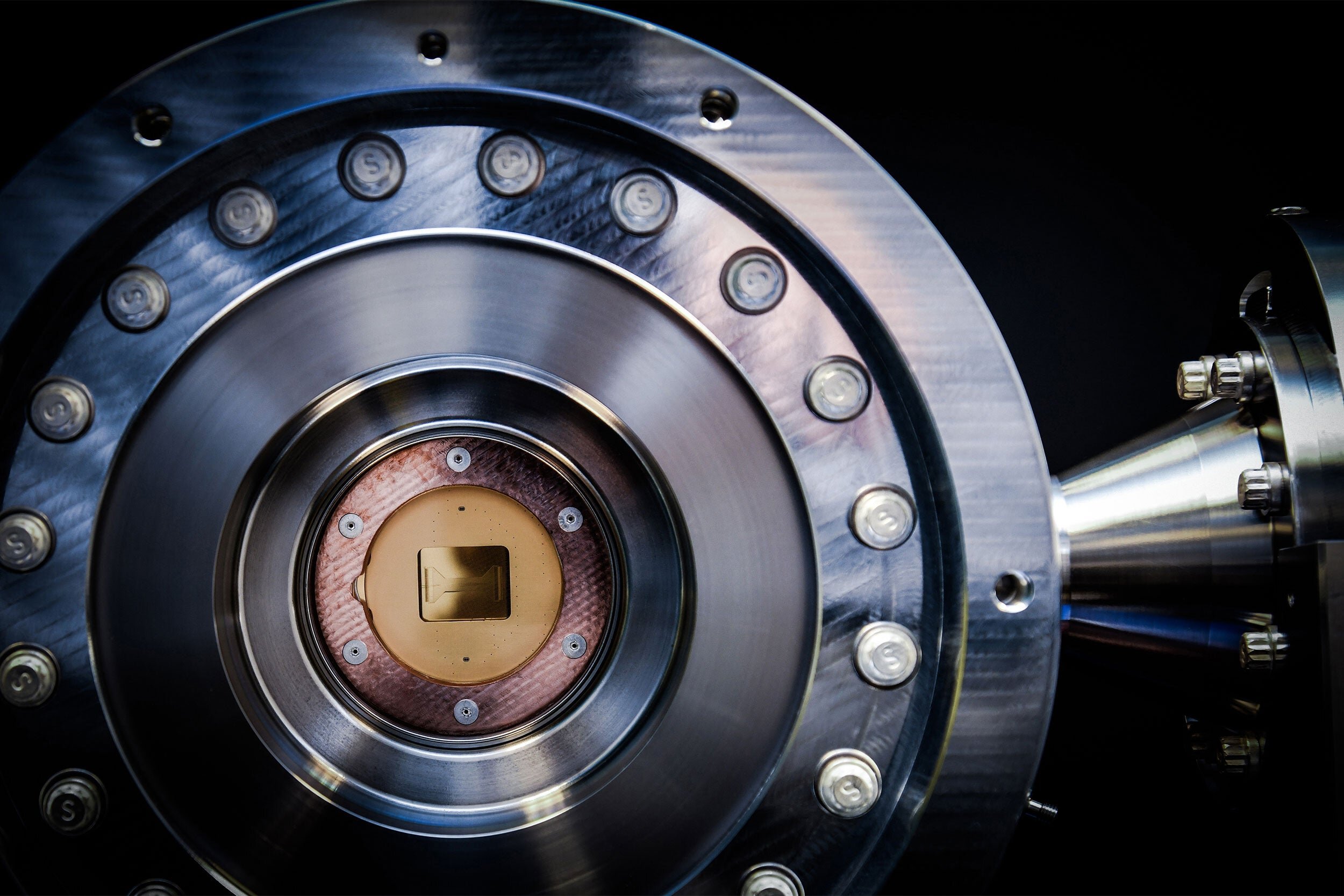
Physicists have achieved the first demonstration of non-Abelian anyons, a new phase of matter, in a quantum processor. This breakthrough, published in Nature, marks the synthesis and control of exotic particles that could potentially revolutionize quantum computing due to their stability and memory-carrying capabilities. The team used a trapped-ion processor to create a lattice of 27 ions and employed targeted measurements to sculpt the quantum state of interest, showcasing the practical application of theoretical physics in the field of quantum mechanics.

Iran's Imam Khomeini University of Marine Sciences and Technologies has officially retracted its claim of unveiling a "quantum processor" after it was revealed to be a $600 dev board available on Amazon. The university's research vice chancellor admitted that the board was not a quantum processor and clarified that it was meant to address the disturbance of surface vessels' positioning systems for maritime security. The incident highlights the need for better understanding and verification of technological claims before making public announcements.

IBM researchers have used a technique called "error mitigation" to overcome the problems with today's quantum processors and produce an accurate result despite the noise in the system. They intentionally amplified and then measured the processor's noise at different levels to estimate a function that produces similar output as the actual measurements. This function can then have its noise set to zero to produce an estimate of what the processor would do without any noise at all. The researchers tested this system using an Ising model and found that it outperformed similar calculations on classical computers.
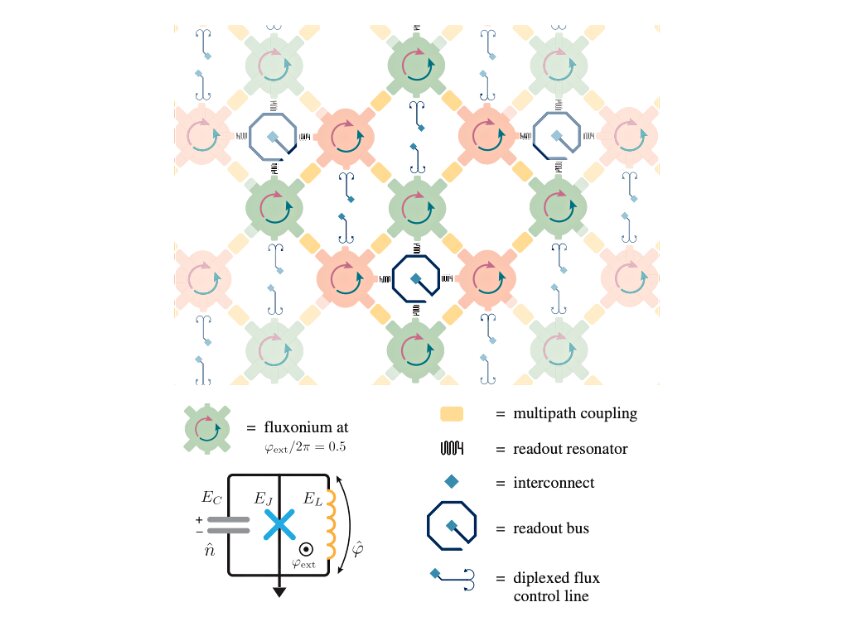
Researchers at the AQT at Berkeley Lab developed a blueprint for a novel quantum processor based on "fluxonium" qubits, which can outperform the most widely used superconducting qubits, offering a promising path toward fault-tolerant universal quantum computing. The team focused on the scalability and adaptability of the processor's main components, with a set of parameters that researchers can tune to increase the runtime and fidelity of quantum circuits. The proposed fluxonium blueprint provides a potential path towards building fluxonium processors with standard, practical procedures to deploy logic gates with varying frequencies.