The article discusses how much silver investors should consider holding in their portfolios in 2026, suggesting allocations based on risk tolerance: 2-4% for conservatives, 5-8% for moderate investors, and 10-15% for aggressive investors, emphasizing the importance of balancing opportunity and risk while considering physical silver, ETFs, or a hybrid approach.
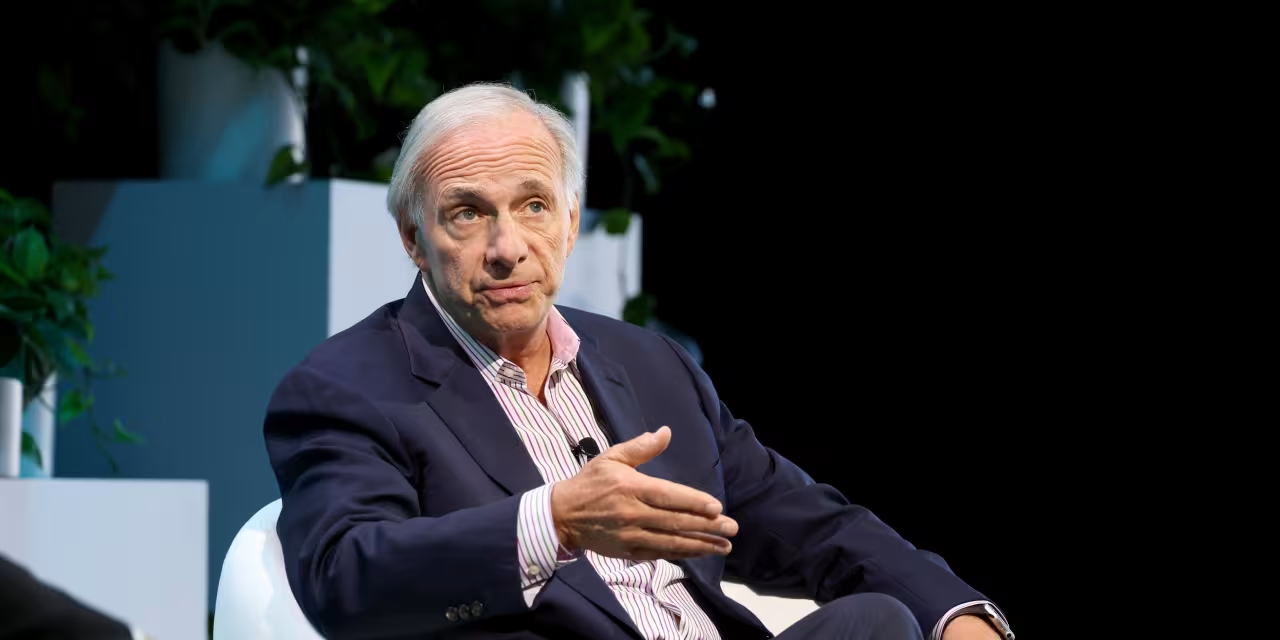
Ray Dalio recommends that investors allocate about 15% of their portfolios to gold, citing its effectiveness as a hedge during economic downturns similar to the 1970s, though many financial experts suggest a much smaller allocation, typically around 2-5%. Gold prices have surged over 55% in 2025, driven by economic uncertainties, but opinions on the appropriate gold exposure vary among financial professionals.
As the Federal Reserve cuts interest rates, cash yields are expected to decline, prompting investors to consider alternative investment options and rethink their portfolio allocations to maintain income and growth.
ARK Invest's annual Big Ideas report for 2024 suggests that an optimal portfolio allocation for Bitcoin in 2023 was 19.4%, highlighting its potential as a diversifier and counterbalance to traditional assets. The report emphasizes Bitcoin's unprecedented growth potential and its low correlation with traditional assets, indicating its diversification benefits. While institutional demand has contributed to Bitcoin's recent outperformance, a potential bearish downturn is signaled, and the crypto winter crises of 2022-2023 are said to be coming to a close.
The 60-40 portfolio, which allocates 60% to stocks and 40% to bonds, has made a comeback in 2023, delivering over 11% returns so far this year. However, despite its historical popularity, many financial advisors rarely use this strategy. The 60-40 portfolio is seen as a generic option that may not suit individual investors' specific needs and goals. Wealth managers often tailor portfolios based on factors such as age, income, risk tolerance, and investment objectives. While the 60-40 portfolio remains a solid starting point, professionals suggest spicing it up with alternative investments like private credit and municipal bonds to enhance returns and reduce risk.
The normalization of interest rates presents a rare opportunity for retirement-minded investors to build meaningful income-producing portfolios. The prolonged period of declining interest rates is now reversing, creating compelling income investment opportunities that have not been attainable for decades. The article suggests reallocating from a traditional 60/40 stock-bond allocation strategy to a shorter duration, more inflation-tolerant portfolio allocation of 25% cash, 25% commodities, 25% stocks, and 25% bonds. It also highlights five high-yielding investments, including Antero Midstream Corporation, Energy Transfer LP, Kayne Anderson, GAMCO Global Gold, Natural Resources & Income Trust, and Templeton Emerging Markets Income Fund. The author argues that the overvaluation of the S&P 500 and the inverted yield curve make the traditional 60/40 strategy appear overly aggressive in today's market.