A study published in PNAS reveals that scientific fraud is increasing rapidly, doubling every 1.5 years since 2010, posing a serious threat to the integrity of scientific research.
Leading origin-of-life researcher Gerald Joyce's recent paper in PNAS, "RNA-catalyzed evolution of catalytic RNA," has been lauded as a breakthrough in understanding life's origin through natural processes. However, critics argue that the results only demonstrate the necessity of intelligent agency in life's origin. Joyce's experiment required investigator intervention at every step, using conditions and procedures that could never have occurred on the early Earth. The research challenges the plausibility of the RNA World hypothesis and demonstrates that evolving systems of RNAs could not have existed without constant intervention.
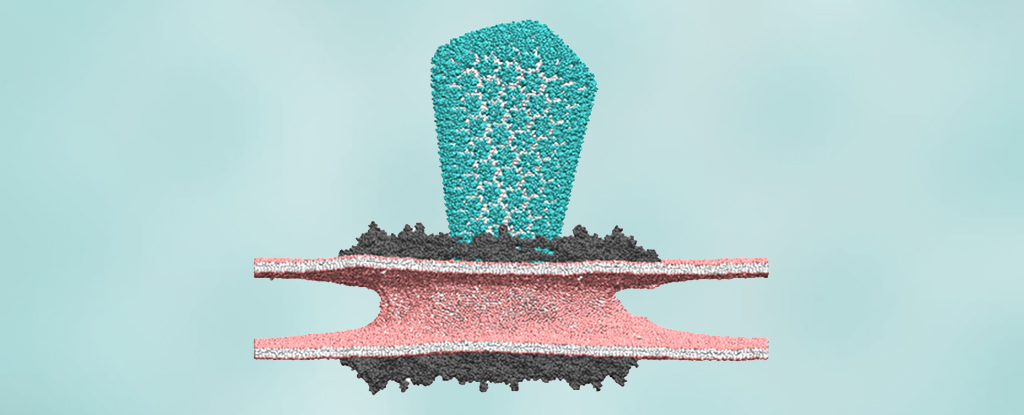
Scientists from the University of Chicago have discovered how the HIV virus infiltrates the nucleus of a host cell, a crucial step in its replication and spread. Using simulations, they found that the virus capsid employs an electrostatic ratchet to squeeze through the cell's nuclear pore complex, with flexibility and deformation playing key roles. Understanding this process could lead to better treatments and potentially a cure for HIV, as disrupting this mechanism could hinder the virus's survival.