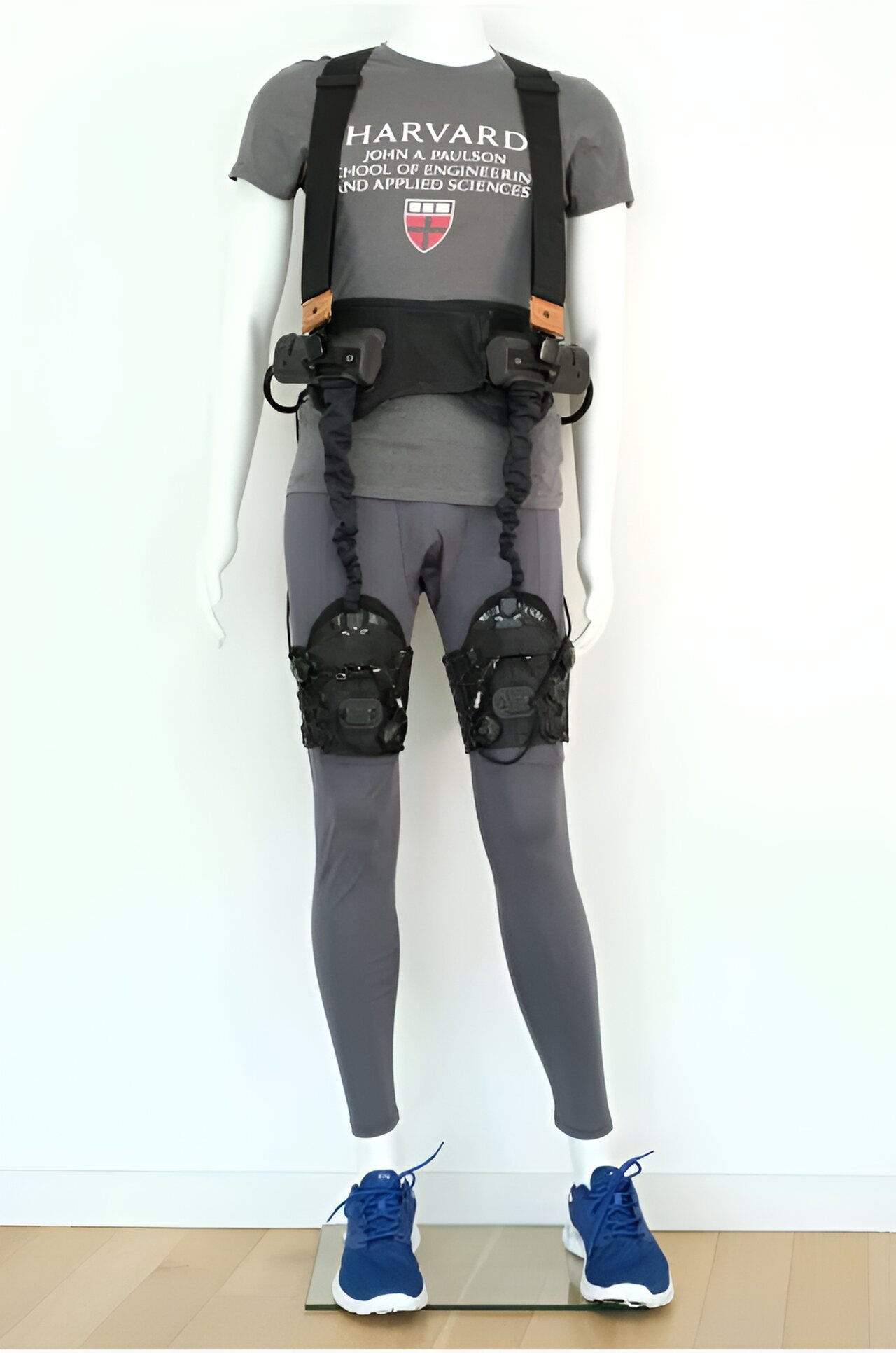
Harvard and Boston University researchers have developed a soft robotic exoskeleton designed to help individuals with Parkinson's disease overcome "freezing" episodes during walking. The wearable technology uses sensors and algorithms to assist with gait and has shown promising results in a study published in Nature Medicine. A 73-year-old participant experienced a significant reduction in freezing episodes and improved walking ability both indoors and outdoors. This innovation could lead to commercialization, similar to a previous exosuit developed for stroke patients by Harvard's Biodesign Lab.
Researchers from Harvard SEAS and Boston University have developed a soft, wearable robotic device that helps individuals with Parkinson's disease overcome freezing of gait, a common and debilitating symptom. The device, which is worn around the hips and thighs, provides mechanical assistance that aligns with the wearer's leg movements, resulting in improved walking ability and longer strides. The technology has shown immediate effects, allowing a 73-year-old participant to walk without freezing indoors and with reduced episodes outdoors. This innovation offers a new approach to treating gait freezing and could enhance mobility and independence for those living with Parkinson's disease. The study is published in Nature Medicine.