A Sunday Times Magazine feature follows Kristi Ambrose, born intersex and surgically raised as a girl; discovering the truth in college, he becomes Jim and advocates against infant gender-change surgeries, highlighting medical ethics and parental decisions that shaped his life.
The U.S. Supreme Court declined to hear an appeal from Montana seeking to enforce a 2013 law requiring minors to obtain parental consent for abortions, with the Montana Supreme Court having previously struck down the law for violating minors' rights under the state constitution.
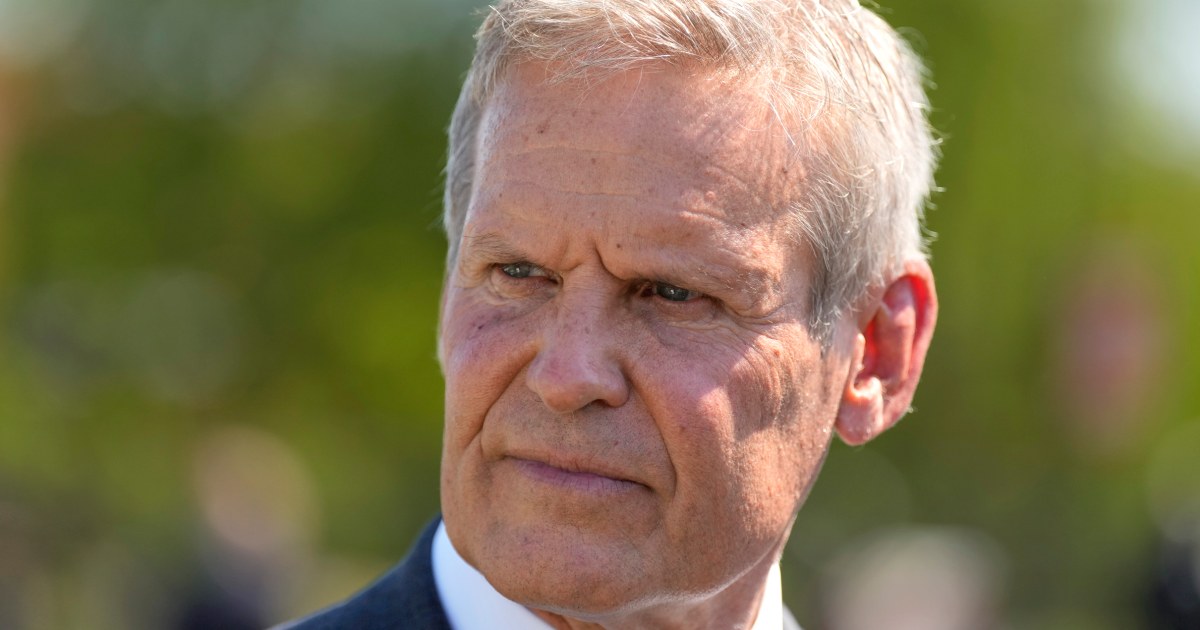
Tennessee Governor Bill Lee has signed legislation penalizing adults who help minors obtain abortions or gender-affirming care without parental consent, effective July 1. The laws, which are expected to face legal challenges, make Tennessee the second state to enact such abortion-related restrictions and the first to target gender-affirming care in this manner. Critics argue the laws are vague and unconstitutional, while supporters claim they protect parental rights.
Tennessee has passed the "Meet Baby Olivia Act," requiring students to watch a pro-life video on fetal development in sex education classes, sparking criticism for potential medical misinformation. Democrats attempted to add amendments for parental consent and addressing controversial nature of the video, but all failed. Critics argue that curriculum decisions should be left to school districts and parents, not the state, and that the video is designed by a political website. The bill, brought by staunch conservatives, passed the Senate and House on party lines and now awaits Gov. Bill Lee's signature.
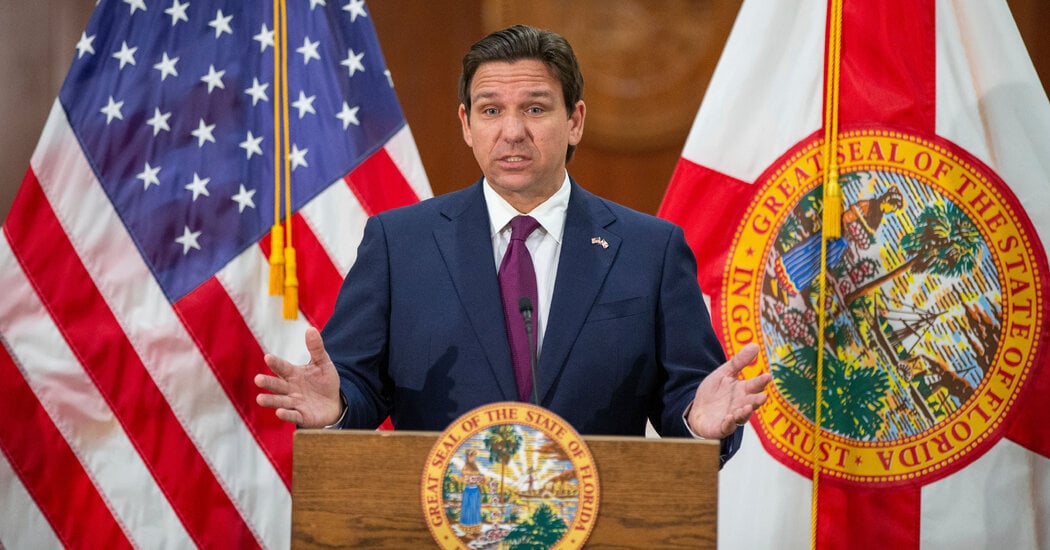
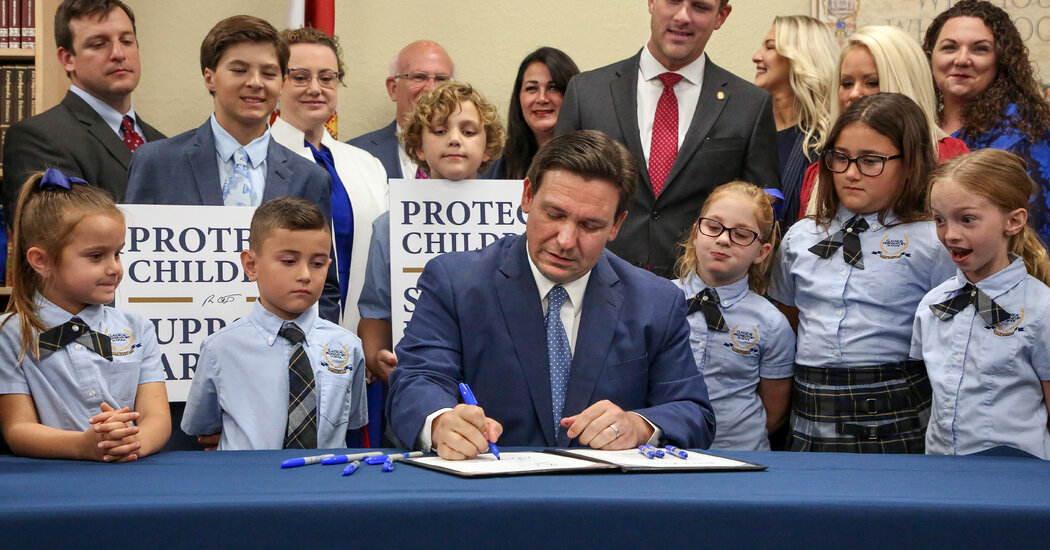
Florida Governor Ron DeSantis signed a new law that prohibits children under 14 from having social media accounts on platforms like TikTok and Instagram, and requires parental consent for 14- and 15-year-olds. The law aims to protect young people from potential mental health and safety risks on social media platforms, but is likely to face constitutional challenges. Additionally, the statute also requires online pornography services to use age-verification systems to keep minors off their platforms.
Florida Governor Ron DeSantis signed a bill that restricts children under 14 from using social media and requires parental consent for 14- and 15-year-olds, aiming to protect them from online risks to their mental health. The measure mandates social media platforms to terminate accounts of those under 14 and those under 16 without parental consent, and to use a third-party verification system to screen out underage users. Critics argue that the bill violates free speech protections and infringes on parental rights, while supporters believe it will mitigate the harmful effects of excessive social media use on children's well-being.
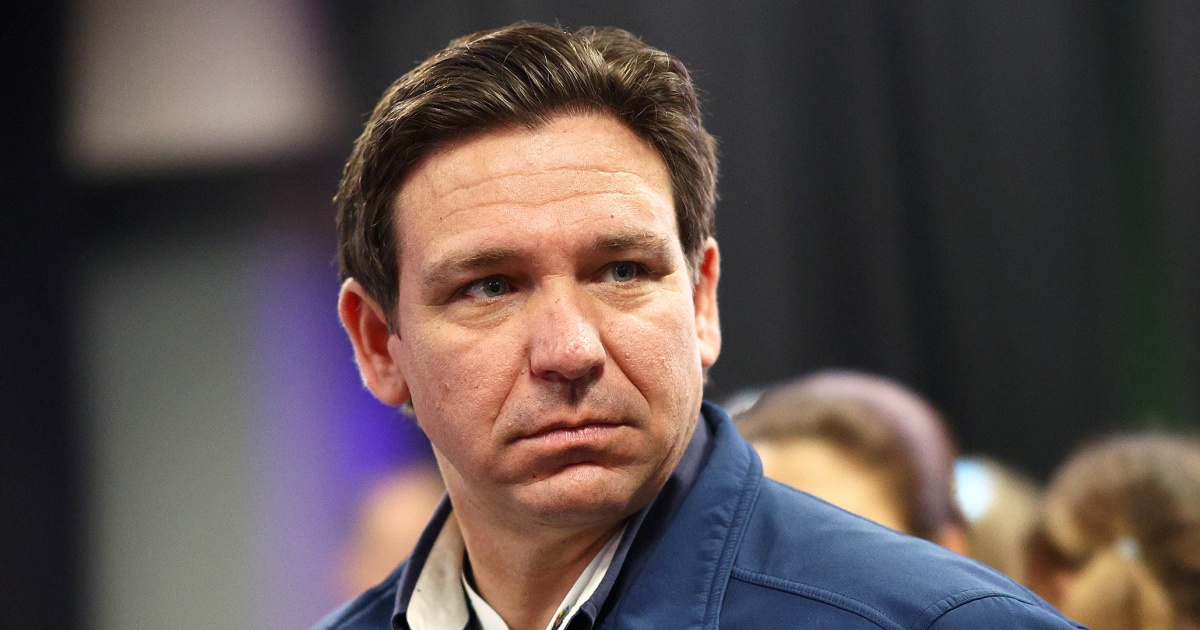
Florida Governor Ron DeSantis vetoed a bill that would have banned minors under 16 from popular social media platforms, citing concerns about privacy issues and parental rights. Lawmakers are now proposing a new bill that would allow 14- and 15-year-olds on social media with parental consent and ban access for younger children. The issue is a top priority for Republican House Speaker Paul Renner, who believes social media is causing psychological damage to children. The new proposal is expected to go before the Senate and is seen as a compromise that will have broader public support.
Recent education laws and regulations in Florida, including the Parental Rights in Education Act, have led to an increase in bureaucracy for schools, requiring permission slips for routine activities such as vision tests, using nicknames, and accessing health services. The laws, intended to prioritize parental rights, have resulted in confusion and difficulty for schools in providing necessary services to students, with some districts interpreting the rules broadly and others requiring extensive consent forms. The impact includes delays in accessing health screenings, limitations on library book access, and increased paperwork for mental health services, ultimately affecting the well-being and academic performance of students.
UK schools will not be required to use students' preferred pronouns and must inform parents when a pupil requests to change their gender, according to new guidelines. The guidelines emphasize a parent-focused approach to gender transitioning and state that schools do not have a general duty to allow students to socially transition. Restrooms, changing rooms, and some sports will be separated based on birth sex, and single-sex schools will have the right to refuse admission to those who are gender questioning. The guidelines are now open for public consultation and have raised concerns about potential legal risks for schools.
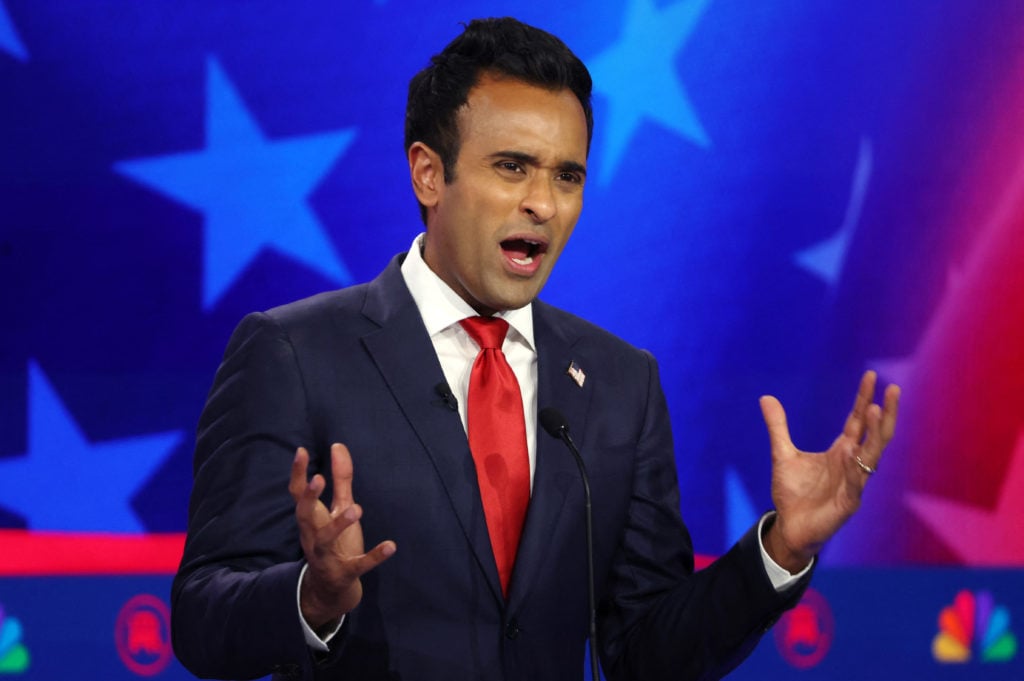
During the third GOP presidential debate, Vivek Ramaswamy claimed that Ohio's new abortion amendment allows abortion up until the moment of birth without parental consent. However, the amendment does not change Ohio's existing parental notification and consent law, which still requires minors to have parental permission or a judicial exception for an abortion. The law would have to be challenged in court and struck down by the conservative majority state Supreme Court to be overturned. Medical experts also dispute the claim of abortions "until the moment of birth," as terminations later in pregnancy involve medication that induces early birth, which is different from surgical abortion.
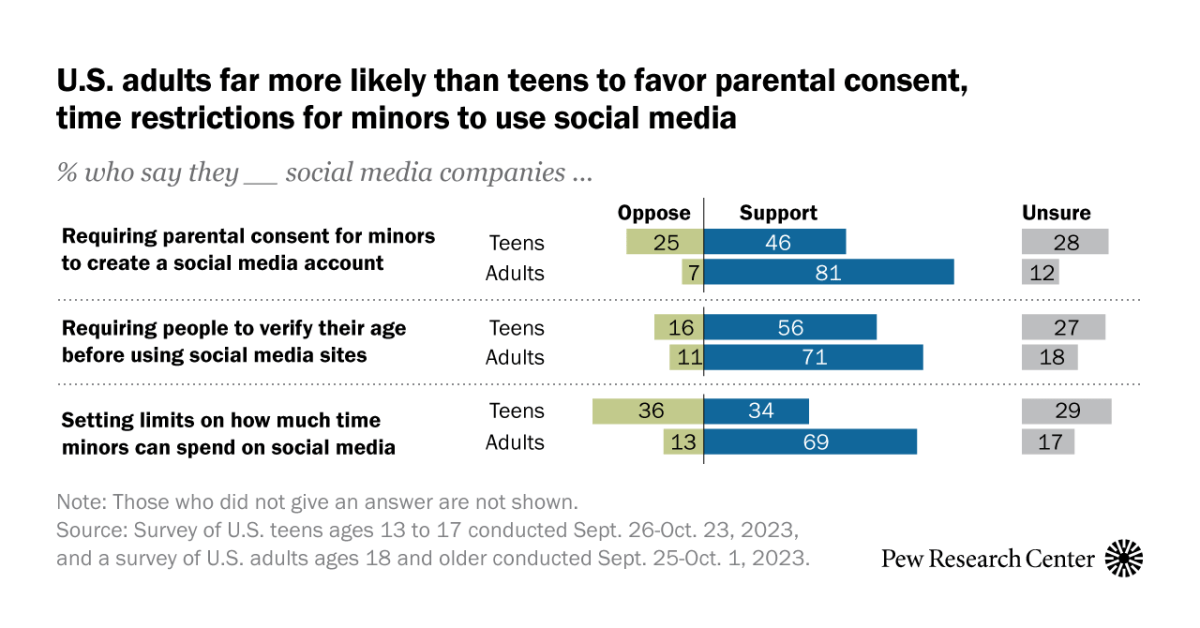
A pair of surveys conducted by Pew Research Center found that 81% of U.S. adults support requiring parental consent for minors to create social media accounts, while only 46% of teens are in favor. The surveys also revealed that adults are more likely than teens to support age verification and setting time limits for minors on social media platforms. The findings highlight the growing bipartisan support for measures aimed at protecting children's mental health and ensuring parental oversight on social media use.
New York State officials have introduced a bill that would require parental consent for anyone under 18 to access algorithm-based social media feeds on platforms like TikTok and Instagram. The legislation aims to protect young people from potential mental health risks associated with problematic content and addictive effects of social media algorithms. If passed, the bill would target feeds like TikTok's "For You" feed but not affect access to chronological feeds. The bill would also allow parents to limit their children's screen time and block access to social media apps overnight. Tech industry groups have raised objections, citing concerns about free speech and privacy. The bill is likely to face resistance but has the support of Governor Kathy Hochul, indicating a potential for success in the State Capitol.
A Wisconsin court ruled in favor of parents who sued a school district for violating their parental rights by affirming their daughter's transgender identity without their consent. The court found that the school district's policy of allowing students to transition without parental notification or consent violated fundamental parental rights. The judge issued an order preventing the district from using names or pronouns at odds with a student's biological sex without express parental consent. The parents' lawsuit alleged that the district pushed their daughter toward a significant life decision she was not prepared to make and caused increased anxiety and depression. The court's decision is being hailed as a groundbreaking legal victory for parental rights.
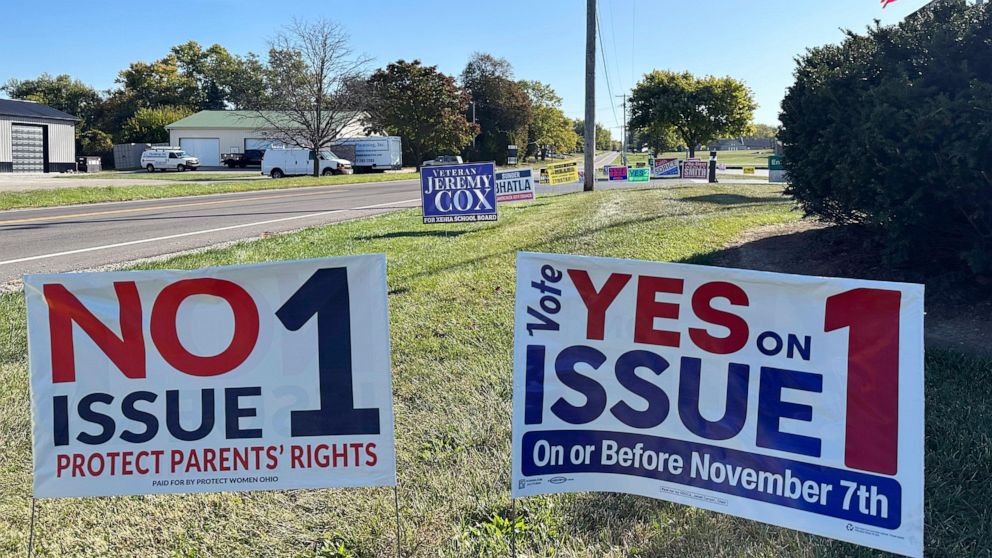
Ohio is set to vote on a November ballot measure that aims to guarantee access to abortion rights, but misinformation about the proposal is already spreading. Supporters argue that the amendment would restore commonsense abortion protection, while opponents claim it would allow for abortions "up to birth" and protect abusers. However, medical and legal experts clarify that the amendment would still allow Ohio to restrict abortions beyond the point of fetal viability, abortions "up to birth" are exceedingly rare and involve inducing birth early, the amendment does not protect abusers, infanticide is already illegal, and it is a stretch to claim that the amendment is about gender-related health care. The amendment also does not invalidate Ohio's existing parental consent law, although opponents argue it could be challenged in court.
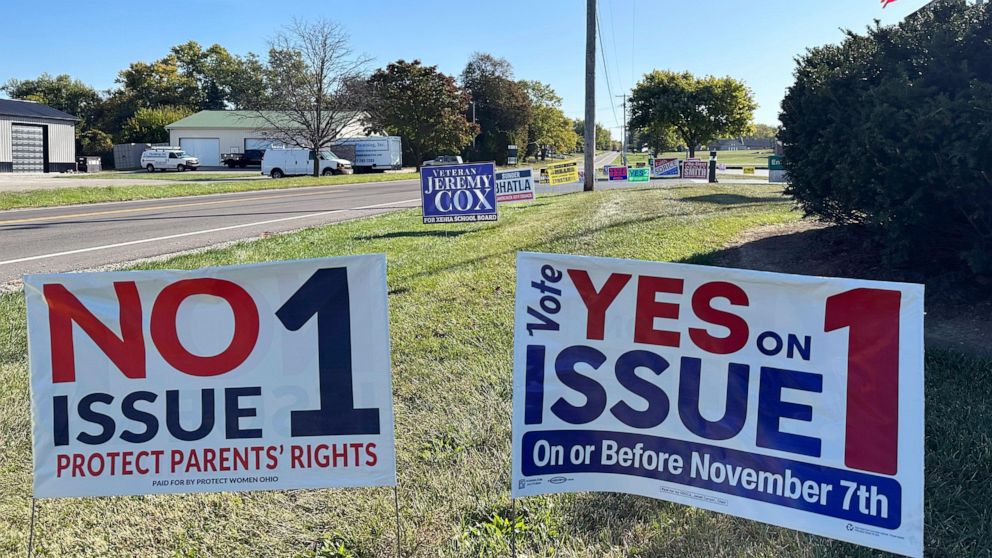
Ohio is set to vote on a November ballot measure that aims to guarantee access to abortion rights, but misinformation about the proposal is already spreading. Supporters argue that the amendment would restore commonsense abortion protection, while opponents claim it would allow for abortions "up to birth" and protect abusers. However, medical and legal experts clarify that the amendment would still allow Ohio to restrict abortions beyond the point of fetal viability, abortions "up to birth" are exceedingly rare and involve inducing birth early, the amendment does not protect abusers, infanticide is already illegal and the amendment doesn't change that, and it's a stretch to claim that the amendment includes gender-related health care. The amendment also does not invalidate Ohio's existing parental consent law, although opponents argue it could be challenged in court.