Scientists discovered a specific brain cell group in mice linked to persistent pain, which could lead to new treatments for chronic pain in humans, by manipulating neuropeptide Y signaling to reduce pain perception.
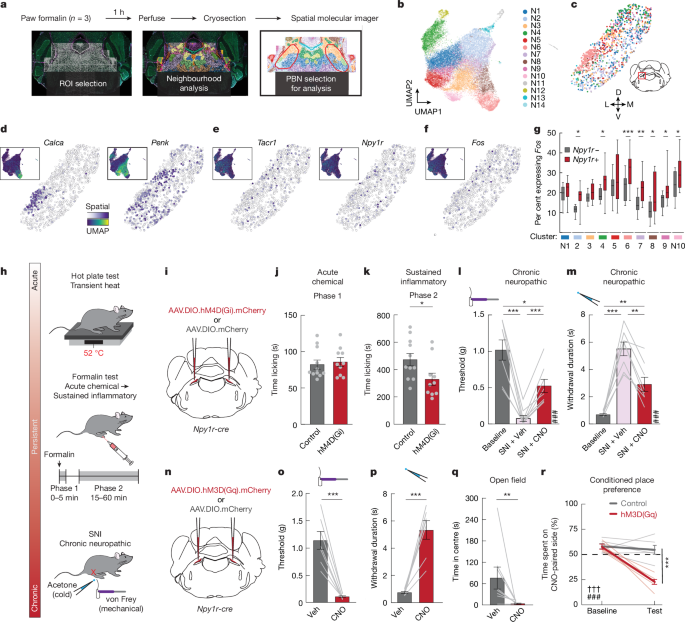
The study identifies Y1 receptor-expressing neurons in the lateral parabrachial nucleus as key modulators of long-term pain, showing that their activity correlates with persistent pain states and can be suppressed by need states like hunger and thirst through NPY signaling, which gates nociceptive input to promote survival.
Researchers have identified two distinct neuron populations in the parabrachial nucleus (PBN) that respond to water and salt intake, shedding light on how the brain regulates thirst and salt appetite. Activation of these neurons reduces water and salt consumption, even in deprived conditions, providing crucial insights into brain mechanisms controlling fluid balance and related disorders. This research has significant implications for understanding disorders caused by excessive water and salt consumption.