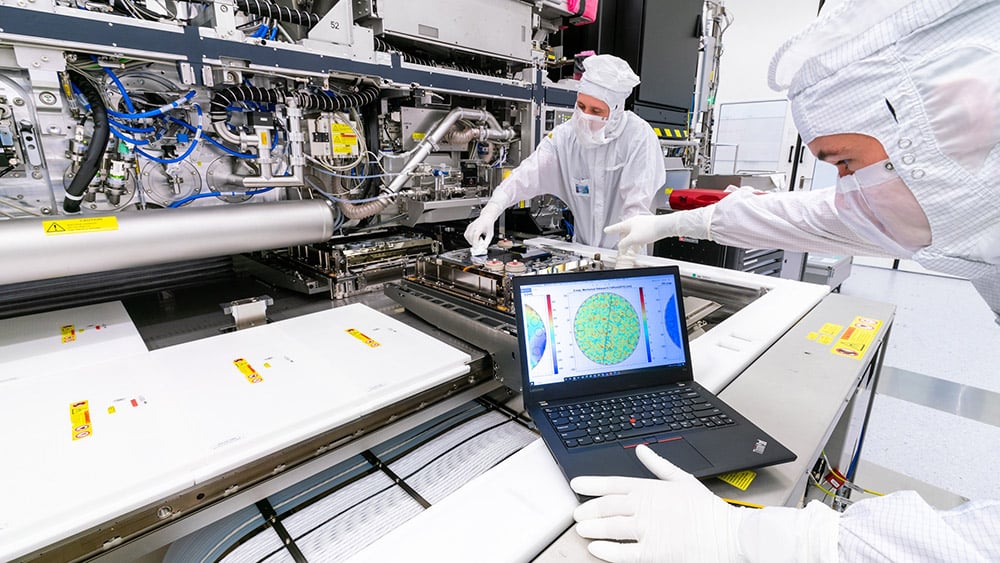
ASML reported strong third-quarter orders and provided an optimistic outlook for 2026, leading to a 2.7% rise in its stock price. Despite mixed quarterly earnings, the company's net bookings surged 105% year-over-year, and it expects sales to at least match 2025 levels in 2026, although sales in China are expected to decline. ASML's advanced lithography equipment is crucial for cutting-edge chip manufacturing, especially for AI applications.
Airbus announced nearly $10 billion in orders at the Paris Air Show, overshadowed by the recent Air India crash involving Boeing, which led to reduced Boeing presence at the event. Major deals included orders from Saudi Arabian leasing company AviLease, Riyadh Air, and Polish airline LOT, highlighting ongoing industry challenges such as supply chain issues and the impact of recent aviation accidents.
ASML Holding NV, Europe’s most valuable technology firm, experienced a 61% drop in orders in the first quarter, missing analyst estimates, as major chipmakers like TSMC and Samsung held off on purchasing the Dutch company’s advanced machines due to a slowdown in demand for hardware used in smartphones, computers, and cars. The decline in orders, particularly for its top-end extreme ultraviolet machines, led to a 4.1% drop in ASML shares. The company also forecasted sales below analyst expectations for the current quarter, citing a weaker industry outlook. Geopolitical pressures and export control measures targeting China's chip ambitions further impacted ASML's sales, while the incoming CEO faces the challenge of balancing these pressures and satisfying shareholders.
Despite frustrations with Boeing's safety crisis and delivery delays, airlines have limited alternatives in the tight market for large aircraft. Carriers are negotiating new plane orders to leverage Boeing's delays for better terms, using orders of one type of plane as a placeholder to possibly take deliveries of a different model. United Airlines is seeking better deals for other planes in light of Boeing's MAX 10 problem, while American Airlines secured options to convert MAX 10 orders into other models and financial compensation for delivery delays. Transitioning away from Boeing is challenging for airlines like Southwest, and Airbus' order book is full through 2030, leaving airlines with little choice but to stick with Boeing for now.
Boeing's airplane deliveries in February slipped to 27, down from 28 in the same month last year, as the U.S. planemaker faces production constraints due to the grounding of the 737 MAX 9 and supply chain stability issues. The company has delivered 54 airplanes so far this year, including 42 MAX jets, and received 15 new orders in February, bringing the gross total to 18 for the year. After accounting adjustments, Boeing reported adjusted net orders of 19 airplanes. Meanwhile, European rival Airbus posted 33 gross orders and 79 aircraft deliveries in the first two months of the year.
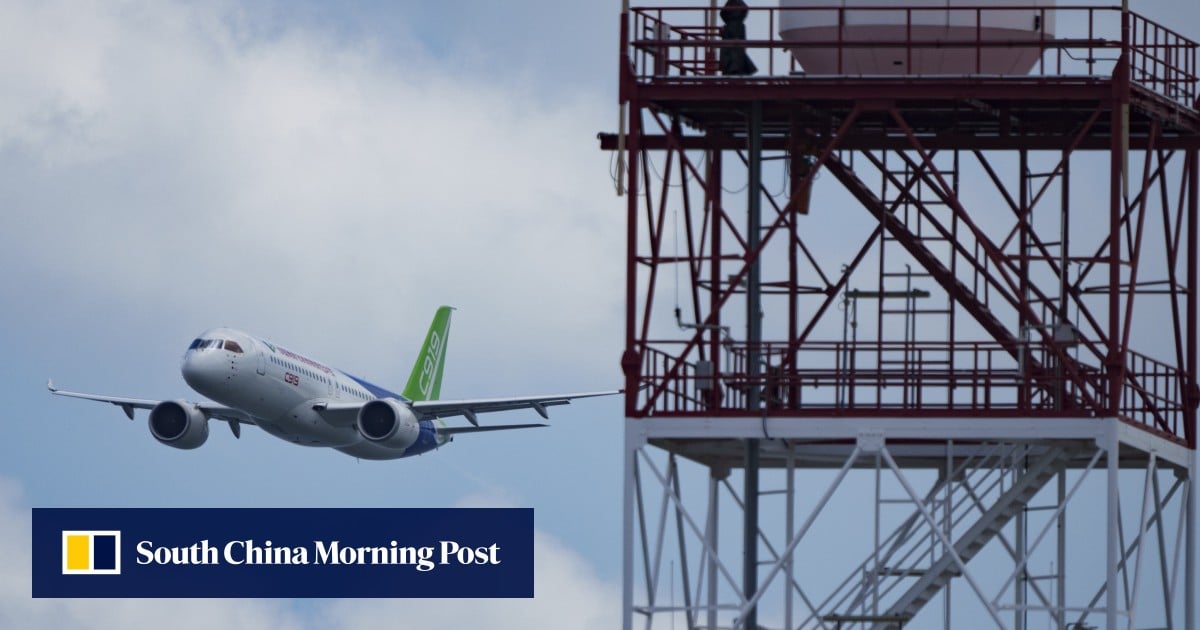
China's home-grown C919 passenger jet made its international debut at the Singapore Airshow, securing 40 orders from Tibet Airlines and Henan Civil Aviation Development Investment Group. The aircraft, designed to compete with Boeing's 737 and Airbus' A320, is part of China's efforts to increase self-reliance in commercial jet manufacturing. The C919's appearance at the airshow highlights the ongoing progress in the development of China's commercial aircraft, with the majority of orders coming from Chinese airlines.
Apple has reportedly reduced OLED iPad Pro orders by 20-30%, signaling a more cautious sales outlook. The company is expected to upgrade the iPad Pro to OLED from IPS LCD with miniLED backlighting, with a spring launch anticipated. The use of advanced OLED technology may lead to price increases. This decision is likely to impact suppliers in the supply chain such as LG Display, TSMC, Foxconn, and Novatek.
Durable goods new orders in the US fell by 5.4 percent in October, but the headline number is not as bad as it seems due to wild swings in aircraft orders. Excluding transportation, new orders were virtually unchanged, while shipments of durable goods decreased by 0.9 percent. Motor vehicles and parts, as well as core capital goods, were down for two consecutive months. Inflation, particularly in rent and food prices, continues to impact the economy.
Boeing shares surged 4% after reports suggested that China may lift its freeze on purchases of the 737 MAX aircraft, which has been in place for over four years. This news, combined with bumper jet orders from Middle Eastern airlines at the Dubai Airshow, boosted investor optimism. Boeing also secured orders for 125 widebody jets worth over $50 billion from Emirates and flydubai. The potential reopening of the Chinese market and the contracts at the Dubai Airshow are seen as positive signs for Boeing, which has underperformed in recent months.
According to a report, Hamas fighters have been given orders to "kill as many people as possible" during the recent conflict in the Middle East. The directive highlights the group's disregard for civilian lives and their intention to cause maximum harm.
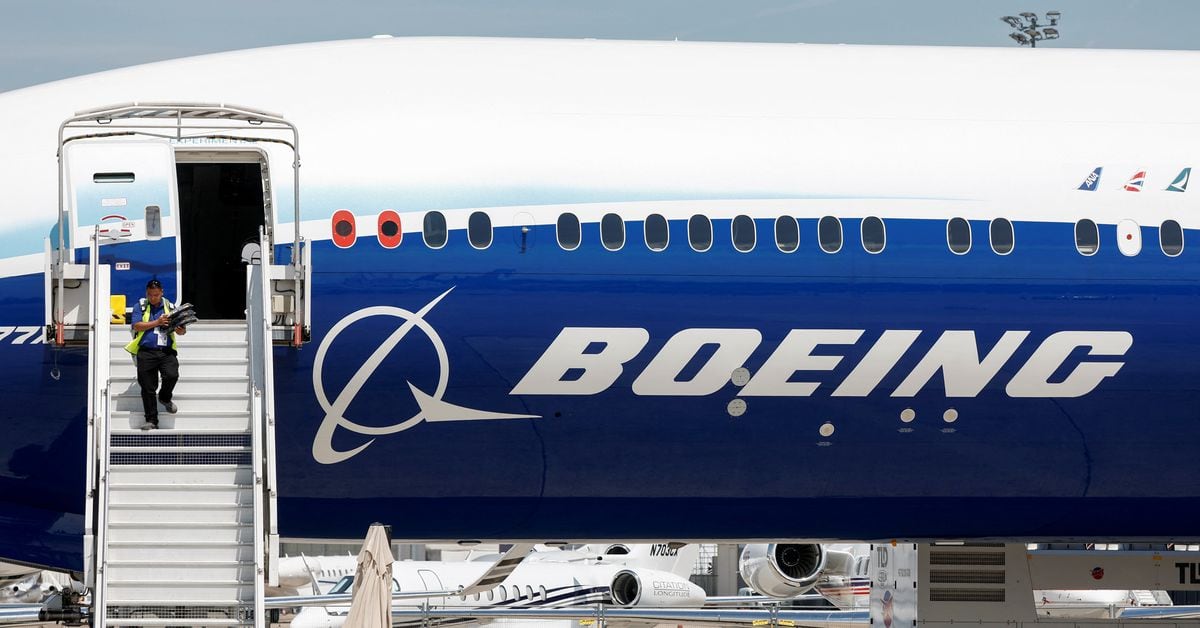
Boeing delivered 60 aircraft in June, the highest number since March, as it aims to boost production of its popular planes. The company has delivered a total of 266 aircraft this year, falling short of rival Airbus' 316 deliveries. Boeing received orders for 288 aircraft in June, including a significant order from Air India, split between Boeing and Airbus. The company's total net orders for the month reached 305 aircraft. Boeing is set to report its second-quarter results on July 26 and will provide updates on its plans to increase production of the 737 Max and 787 Dreamliners.
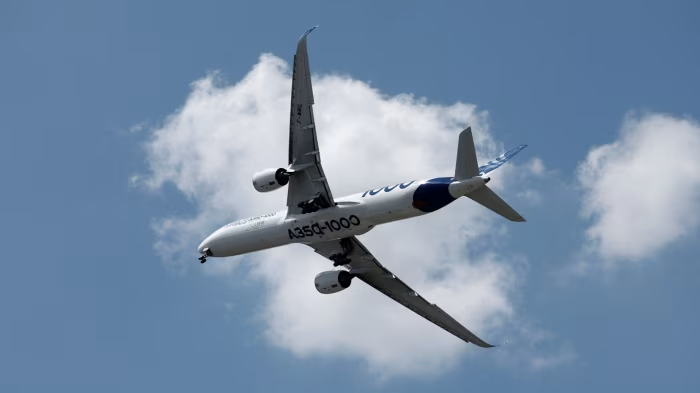
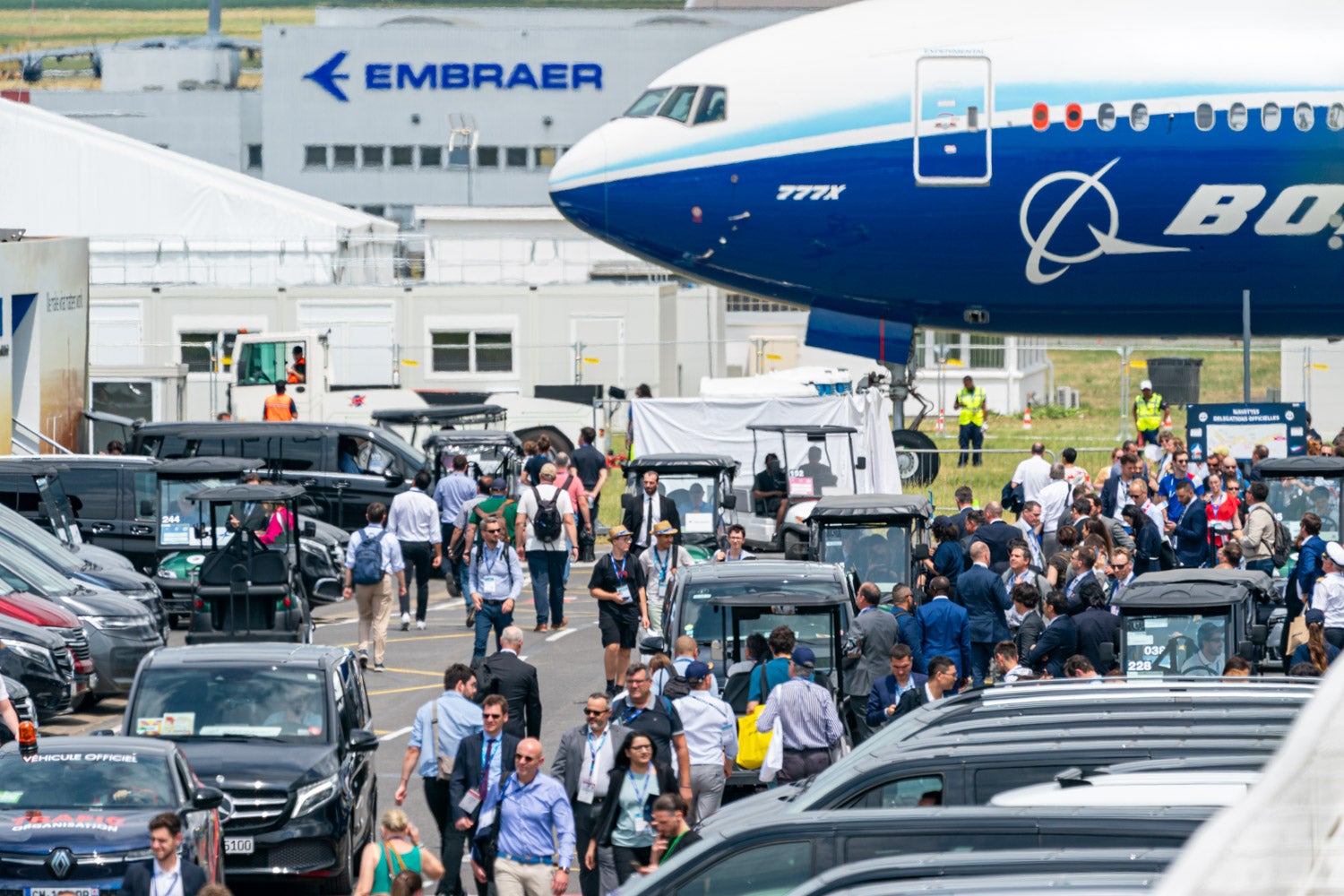
Day 2 of the Paris Air Show saw big orders from Boeing and Airbus, with China Eastern ordering eight 787-9 Dreamliners and converting six previous orders to the larger 787-10 variant, Air Algérie ordering eight 737 MAX 9 jets, and international lessor Avolon ordering 40 various 737 MAX narrow-bodies. Air India also finalized an order for up to 290 Boeing jets, including 190 737 MAX aircraft, 20 Dreamliners, and 10 of the new 777X. Airbus secured orders from Air India for 250 jets, Philippine Airlines for nine A350-1000s, and Qantas for nine additional A220-300s. The show also featured new suppliers for Boom Supersonic's jet project and a mock-up of the 777X cabin at Boeing's display.
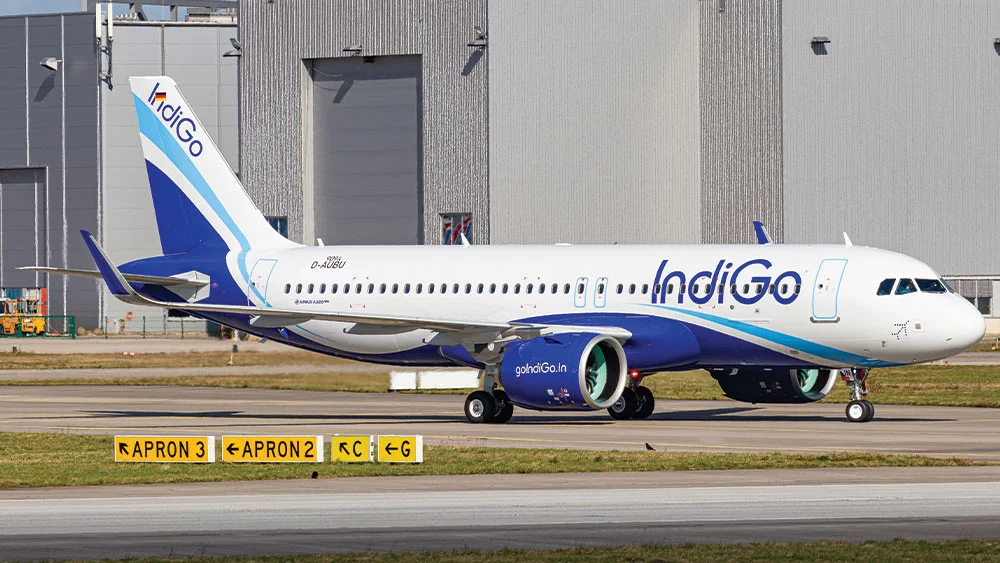
Boeing and Airbus continue to receive orders at the Paris Air Show, with Air India finalizing an order for up to 290 new Boeing jets and Airbus confirming an order for 500 A320 narrow-body jets from IndiGo, the largest plane deal ever. Despite strong demand, production and certification issues with key programs persist for both companies. Meanwhile, suppliers General Electric and RTX are working to fix durability problems with their respective Leap and GTF engines for the 737 Max and A320neo jets.
The Paris Air Show, one of the biggest events in the aviation world, is set to return for the first time since 2019. The show offers opportunities for companies to showcase their latest products and innovations, and for plane manufacturers to display aircraft and announce new products and developments. Boeing plans to return with its 777-9 and 737 MAX 10, while Airbus will display its in-demand A321LR and the hotly anticipated long-range A321XLR. The new eVTOL sector will take a more prominent spot at this year’s show than in the past. A run of orders remains possible as airlines scramble to secure delivery slots as travel demand grows following the pandemic.
The New York Fed's Empire State business conditions index, which measures manufacturing activity in the state, rose 35.4 points in April to 10.8, the first positive reading in five months. The index for new orders and shipments both saw significant increases, but employment and hours worked declined for the third straight month. Despite the improvement, firms expect little change in conditions over the next six months.