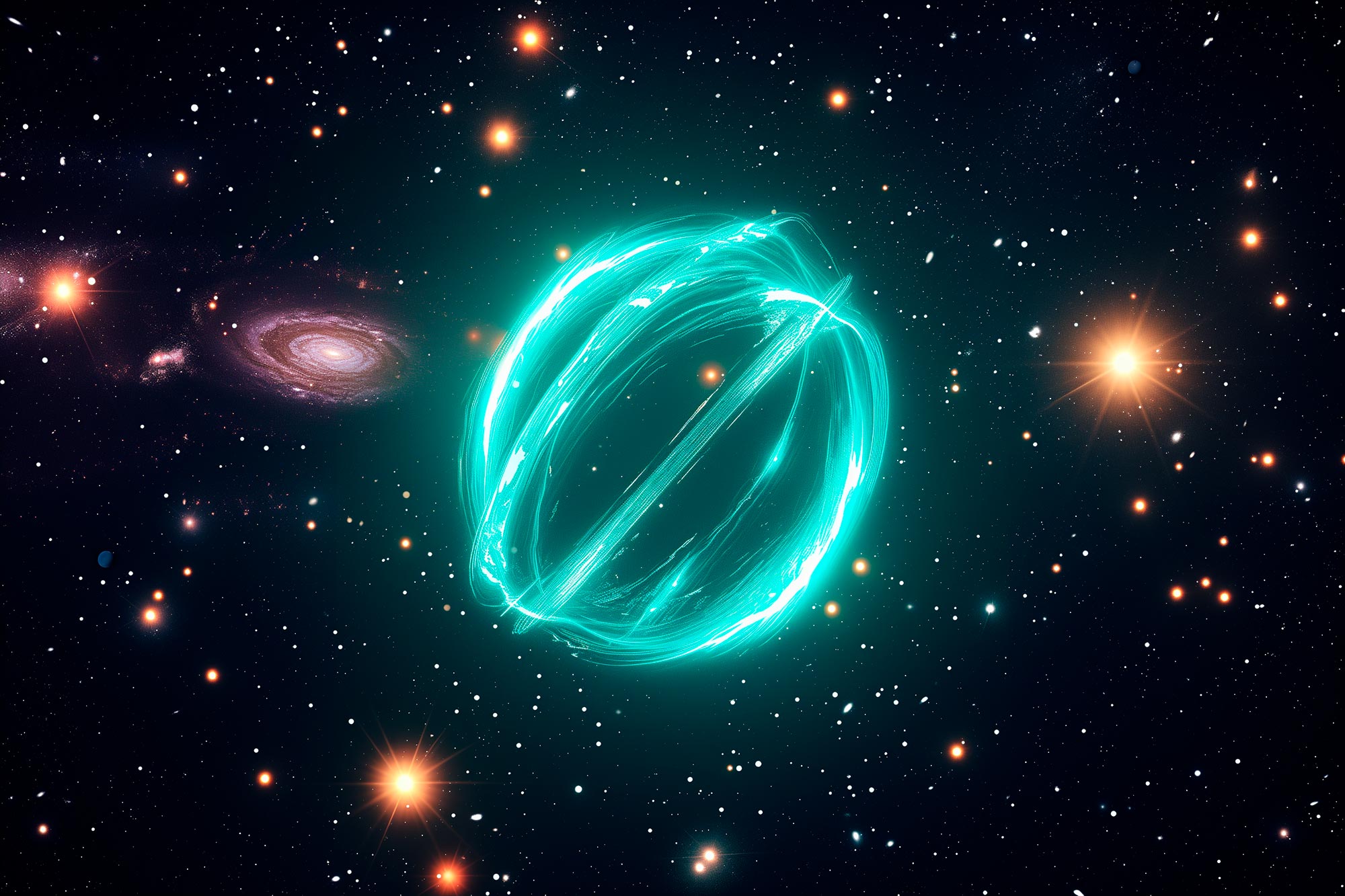
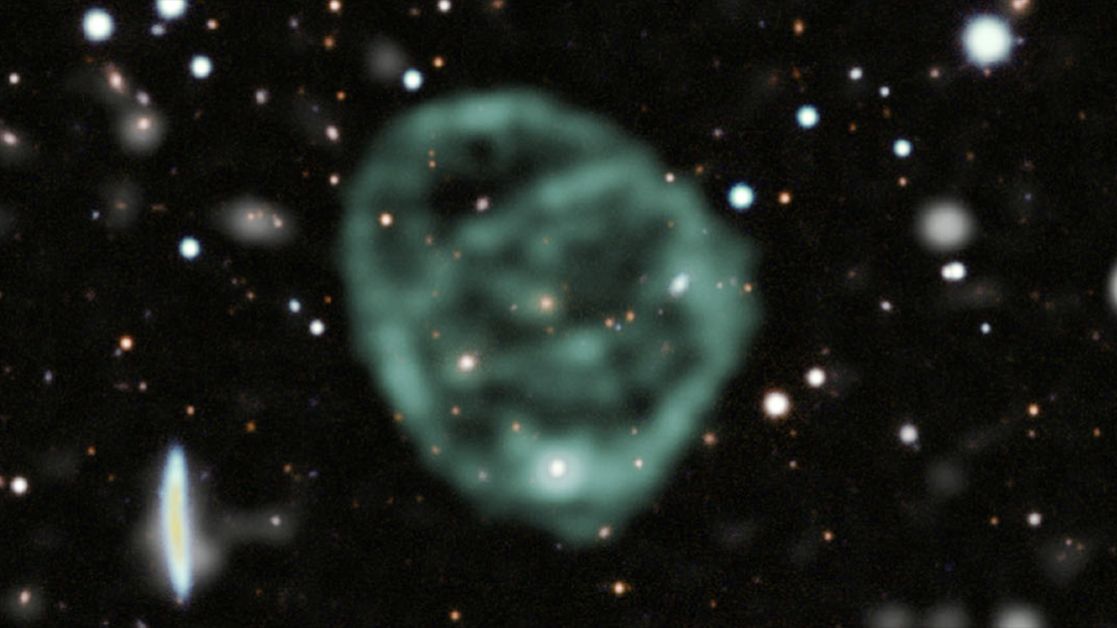
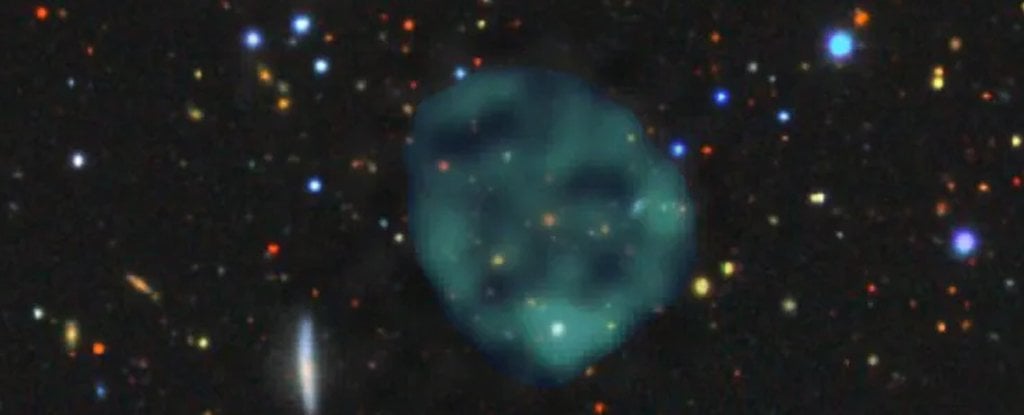
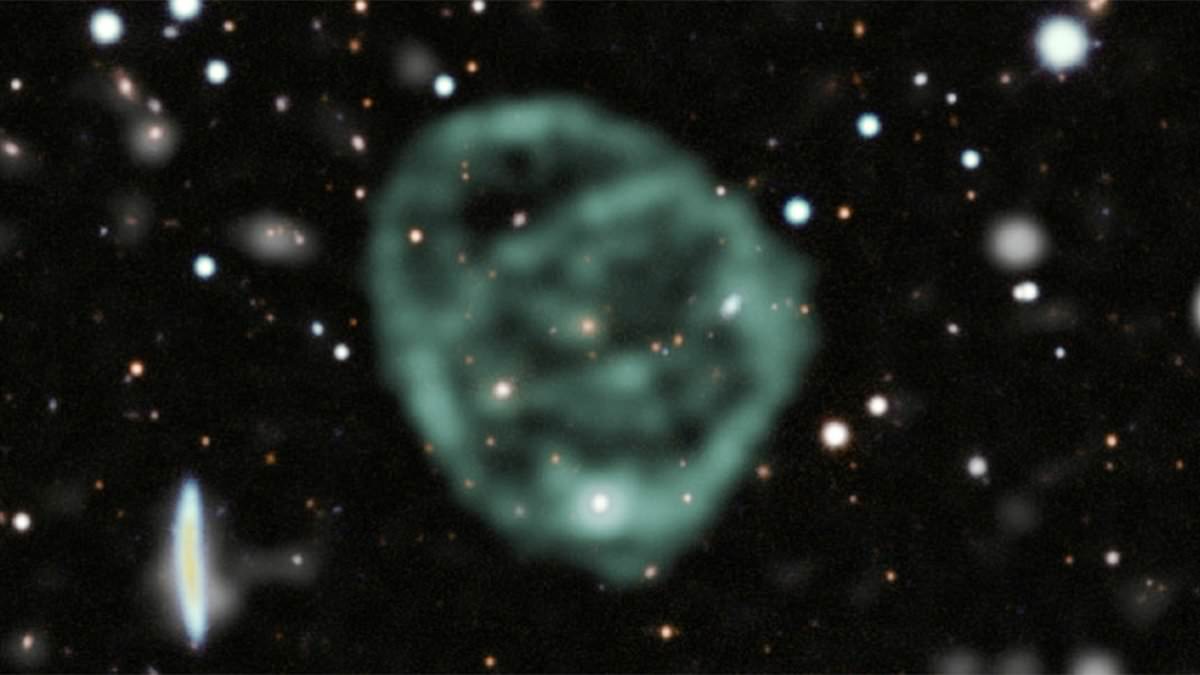
Astronomers have discovered the most powerful and distant 'odd radio circle' (ORC), featuring a rare twin-ring structure, which may be linked to superwinds from host galaxies, providing new insights into galaxy and black hole evolution.
Astronomers have unraveled the mystery behind the rare radio wave circles (ORCs) discovered in 2019, attributing them to outflowing galactic winds from starburst galaxies, shedding light on galactic evolution and phenomena. These enormous circles, reaching hundreds of thousands of light years across, are believed to be formed by the intense burst of star formation in starburst galaxies, leading to ultra-fast outflowing winds that create the observed radio rings. The findings provide new insights into the nature of these peculiar astronomical phenomena and their role in understanding galactic evolution.
Scientists may have solved the mystery of cosmic ORCs, vast odd radio circles that can encompass entire galaxies, by pointing to powerful winds erupting from bursts of exploding stars as the cause. These winds, driven by simultaneous supernova explosions in starburst galaxies, create shockwaves that generate the ORCs, which can spread out for hundreds of thousands of light-years. This discovery could provide insights into galactic evolution and the prevalence of extreme outflowing galactic winds.
Astronomers have finally found a possible explanation for the mysterious odd radio circles (ORCs) in deep space, which were discovered in 2019. These ghostly circles are believed to be shockwaves created by powerful galactic winds emanating from starburst galaxies, where intense star formation occurs due to galactic mergers. Computer simulations suggest that these galactic outflows, driven by high rates of supernova explosions, could produce the observed ORCs. This discovery raises questions about the duration and prevalence of ORCs and their relationship to starbursting galaxies, offering potential insights into the evolution of the Universe.
Astronomers at the University of California San Diego have discovered that odd radio circles (ORCs) in space are formed by outflowing winds from explosive events like supernovae, creating massive radio wave circles more than 50,000 times the diameter of the Milky Way. Using the ASKAP telescope, they observed that these ORCs are created by intense bursts of star formation and outflowing galactic winds, shedding light on the evolution of galaxies and the life cycle of these winds.