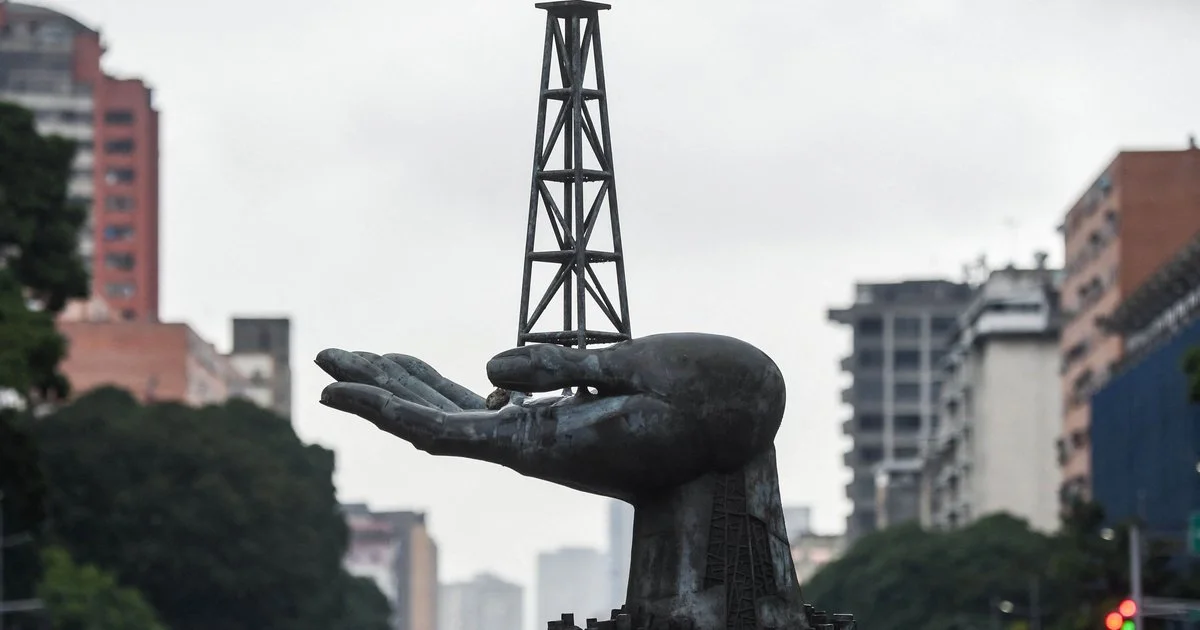
Increasing Venezuela’s oil output will require years and billions of dollars, with geopolitical factors like OPEC decisions, Russia's war in Ukraine, and global demand influencing the timeline and feasibility of boosting production.
OPEC+ members decided to keep oil output steady amid geopolitical tensions and a significant drop in oil prices, prioritizing market stability over increasing supply despite internal and external crises affecting member countries.
OPEC+ has agreed to keep oil output quotas steady for 2026 and introduced a new mechanism to evaluate members' maximum production capacity, amid ongoing geopolitical and market considerations.
U.S. stock futures are rising as Wall Street aims to extend its winning streak in November, supported by positive earnings and a pause in OPEC+ oil output hikes, with markets also reacting to Federal Reserve rate cuts and ongoing economic concerns.
OPEC+ has decided to pause oil output increases in the first quarter of 2026 and only slightly raise December output, amid fears of a supply glut and challenges from Western sanctions on Russia, with the group aiming to protect prices and manage market stability.
Despite falling oil prices, Exxon and Chevron are increasing their oil production, indicating a strategic move to maintain market presence and profitability in a challenging economic environment.
Opec+ has agreed to increase oil production, with Saudi Arabia focusing on boosting revenue, signaling a strategic shift in their oil policy to balance market stability and financial goals.
OPEC+ is expected to agree on a further increase in oil output starting in October, raising production by approximately 130,000 to 140,000 barrels per day, as part of unwinding previous production cuts amid weakening global demand and stable oil prices near $66 a barrel.
OPEC+ is expected to increase oil production in October, but likely by less than recent months due to slowing global demand and existing production constraints, with the group planning to unwind some of its previous output cuts gradually.
OPEC+ is considering further increasing oil output for August, potentially exceeding the 411,000 barrels per day hikes made in previous months, as the group aims to expand market share amid rising supplies from other producers like the US. The decision will be made at a meeting on Saturday involving key members such as Saudi Arabia, Russia, and the UAE.
Oil prices slightly declined ahead of the OPEC+ meeting, where an expected increase in output by eight countries could boost global reserves, amid geopolitical tensions and US-Iran nuclear talks. Investors are cautious, balancing supply concerns with demand forecasts and geopolitical uncertainties.
Saudi Arabia increased oil production ahead of Israel's attack on Iran, possibly influenced by US pressure, to manage market share and geopolitical risks, while also considering its own strategic interests and previous experiences with price fluctuations.
Saudi Arabia and Russia reached a compromise to increase oil production by 411,000 barrels per day from July, amid tensions over the pace of hikes, with Saudi Arabia pushing for faster increases and Russia advocating for a pause due to demand concerns. The decision is part of unwinding voluntary cuts to support the market, with ongoing tensions reflecting broader geopolitical and economic considerations.
Opec+ has announced a third consecutive increase in oil output for July, signaling a rapid unwinding of previous production cuts to boost supply and test oil prices amid economic uncertainties and internal disagreements among member countries.