Tag

Non Proliferation

All articles tagged with #non proliferation

international-relations2 years ago

Russia's Withdrawal from Nuclear Test Ban Treaty Sparks Concern and Criticism

Russia has signed a law revoking its ratification of the Comprehensive Nuclear-Test-Ban Treaty (CTBT), a global treaty banning nuclear testing. While the United States signed the treaty in 1996, it has never been ratified. Russia's move, although mostly symbolic, adds to the recent sense of menace fostered by President Putin and other hard-line Kremlin officials. The New START treaty is now the only significant nuclear weapons pact between Russia and the United States that remains in place. The CTBT aimed to ban all nuclear tests, but its effectiveness has been limited due to key countries, including the United States, not ratifying it.

international-affairs2 years ago

Global Medical Journals Unite to Demand Immediate Nuclear Disarmament

Over 100 medical journals worldwide have issued a joint call for urgent action to eliminate nuclear weapons, warning that the threat of a nuclear catastrophe is "great and growing". The call comes amidst Russia's veiled warnings of using nuclear weapons in Ukraine, North Korean missile tests, and slow progress towards non-proliferation. The editorial, co-authored by the editors of 11 leading medical journals, highlights the major danger to public health posed by nuclear weapons and urges nuclear-armed states to eliminate their arsenals. The editorial warns that even a "limited" nuclear war could result in the deaths of millions and global climate disruption leading to a nuclear famine. The medical journals' joint call emphasizes the extreme urgency of the current nuclear crisis.

politics2 years ago

Ukraine's Nuclear Disarmament: A Historic Milestone.

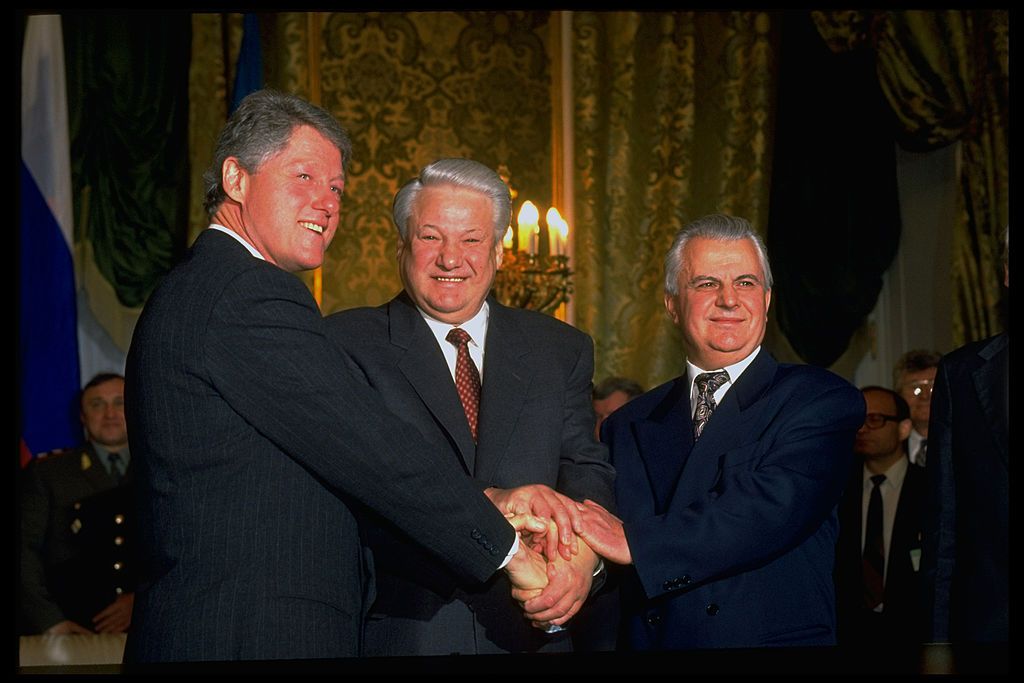
Ukraine gave up its nuclear weapons in the 1990s in exchange for financial assistance, legitimacy as a new state, fear of retaliation from Russia, technical problems with managing and controlling the nuclear weapons on its territory, and security assurances. The Budapest Memorandum committed the U.S., U.K., and Russia to “refrain from the threat or use of force against the territorial integrity or political independence of Ukraine.” However, since Russia invaded Ukraine in 2014, many have questioned if Ukraine made a mistake in giving up its nuclear weapons and if the West was wrong to demand that Ukraine do so.

international-relations2 years ago

"Ukraine Abandons Nuclear Weapons"

Ukraine gave up its nuclear weapons in the 1990s in exchange for financial assistance, legitimacy as a new state, fear of retaliation from Russia, technical problems with managing and controlling the nuclear weapons on its territory, and security assurances. The Budapest Memorandum committed the U.S., U.K., and Russia to “refrain from the threat or use of force against the territorial integrity or political independence of Ukraine.” However, Russia's invasion of Ukraine in 2014 has led some to question the value of the memorandum and whether Ukraine made a mistake in giving up its nuclear weapons.

international-relations2 years ago

G7 Leaders Advocate for Nuclear Disarmament and Global Stability

The G7 leaders met in Hiroshima and reaffirmed their commitment to achieving a world without nuclear weapons with undiminished security for all. They called on Russia to recommit to the principles of the Joint Statement of the Leaders of the Five Nuclear-Weapon States and urged China to engage in meaningful dialogue on transparency regarding their nuclear arsenals. The G7 also called for the immediate commencement of long overdue negotiations of a treaty banning the production of fissile material for use in nuclear weapons or other nuclear explosive devices. They reiterated their unwavering commitment to the goal of North Korea’s complete, verifiable, and irreversible abandonment of its nuclear weapons and existing nuclear programs.

politics2 years ago

AUKUS Submarine Deal Sparks Controversy and Threats.

Former Australian Prime Minister Paul Keating criticized Australia's plan to buy nuclear-powered submarines from the US, calling it "the worst deal in all history." Keating argued that the submarines wouldn't serve a useful military purpose and that Australia could defend itself against China's military buildup with planes and missiles. China has complained that the sub deal threatens global accords against nuclear non-proliferation. The head of the international nuclear watchdog organization, Rafael Grossi, rejected China's accusation and said his agency would hold the AUKUS allies and any other nation that attempts a similar nuclear transfer to tough and lasting standards of design, monitoring, inspection, and transparency to try to make sure nuclear non-proliferation accords were being observed.