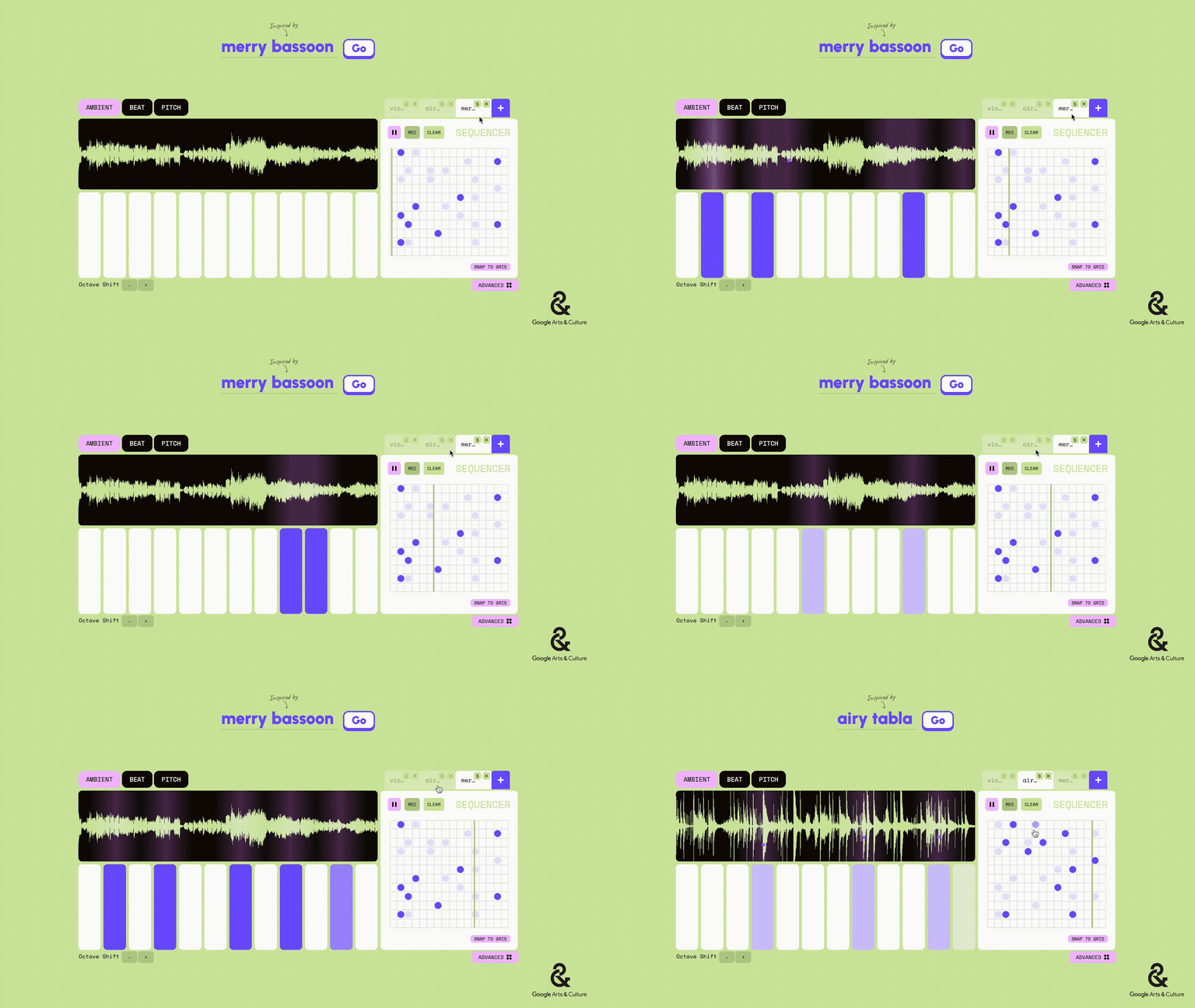
Google's Instrument Playground is an AI-powered experiment that allows users to describe an instrument and start playing with its sound using a virtual keyboard, powered by Google's MusicLM. The tool, created by Google's Artist in residence, Simon Doury, can emulate hundreds of instruments and allows users to mix and manipulate different instruments to create AI-generated music. While it's a fun sandbox for playing with AI, it also holds potential for new forms of music production and creativity, although there are concerns about data provenance and the impact on the value of music.
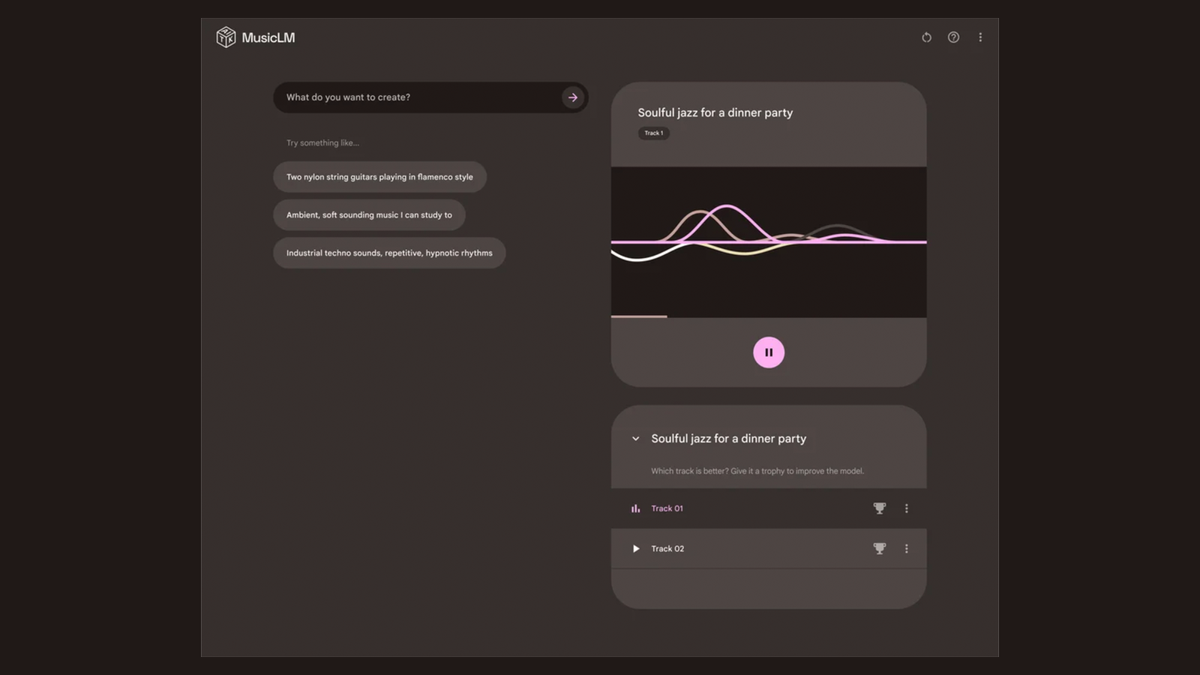
Google has released MusicLM, an experimental AI tool that can turn text descriptions into music. Users can type in a prompt like "soulful jazz for a dinner party" or "create an industrial techno sound that is hypnotic" and have the tool create several versions of the song. Google has been working with musicians and hosting workshops to "see how [the] technology can empower the creative process." The version of MusicLM in AI Test Kitchen won't generate music with specific artists or vocals.
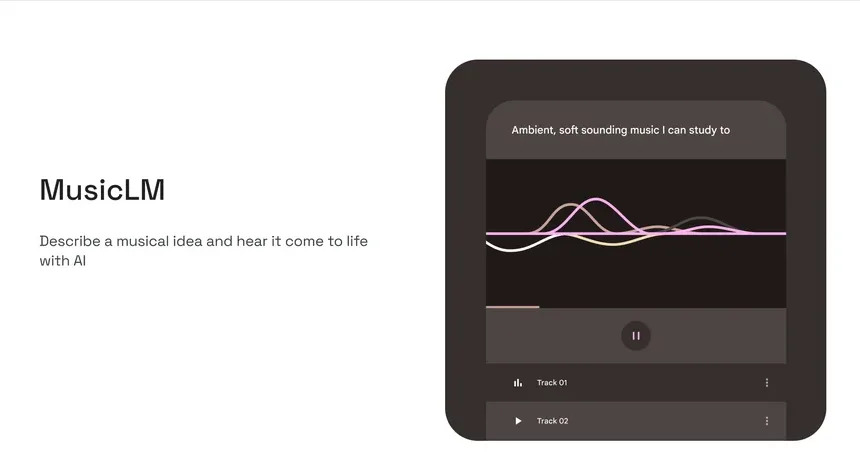
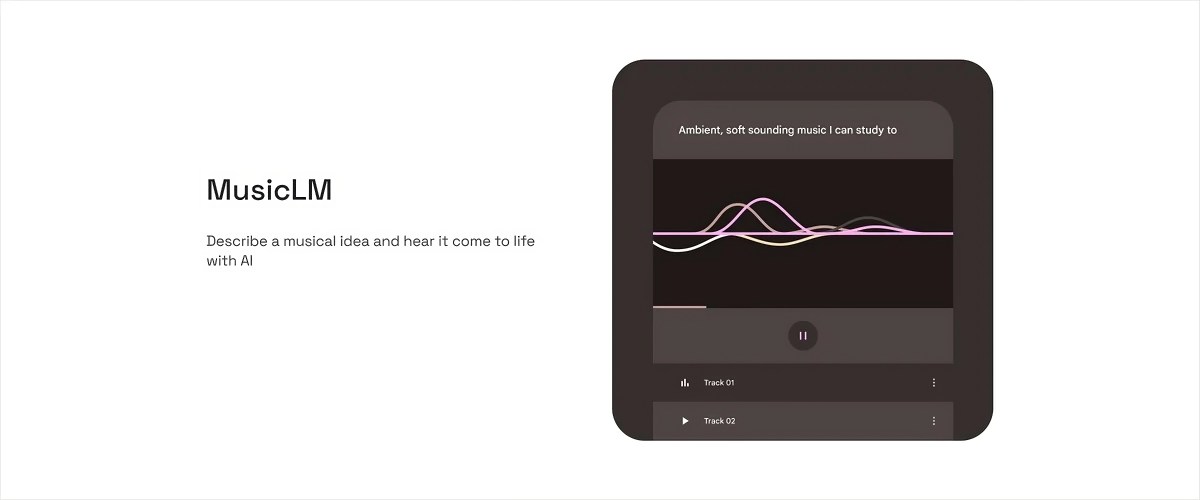
Google has updated its AI Test Kitchen app with a new "MusicLM" demo that allows users to describe any musical ideas and hear it come to life with AI-generated music. Users can specify instruments, vibe, mood, or emotion they want to convey. The MusicLM generator takes a few seconds to generate and provides two options for users to choose from. The update is available on Android and iOS.
Google has released MusicLM, an AI-powered music creation tool that generates new music in a range of styles based on a text description. MusicLM was trained on hundreds of thousands of hours of audio and is available in preview via Google’s AI Test Kitchen app. However, the system's songs sound passable at best and at worst like a four-year-old let loose on a DAW. MusicLM's usefulness is limited due to artificial limitations on the prompting side, and it won't generate music featuring artists or vocals.
Google's experimental AI tool, MusicLM, which generates high-fidelity music from text prompts, is now available for public use. The tool was trained on five million audio clips and can create two versions of a requested song for users to vote on. However, Google has highlighted the risks associated with generative AI in music, including cultural appropriation and copyright infringement. The release of MusicLM comes amid rising concerns around the use of generative AI in music and the potential for streaming fraud.
Google has opened up its text-to-music AI sound generator, MusicLM, to the public through its AI Test Kitchen. The AI can generate sounds, musical ideas, and entire tracks on demand, while responding to a variety of detailed stipulations. MusicLM can understand prompts relating to genre, mood, and type of instrument, and it can even imitate melodies recorded by the user. The AI generates two clips of audio in response to any given prompt, and the user is invited to select which of these they prefer in order to help train the AI.
Google is opening up access to its text-to-music AI, MusicLM, which generates music based on prompts such as mood, genre, and instruments. The public version doesn't allow users to generate music with specific artists or vocals to avoid copyright issues. Users can try prompts and select their favorite track to help improve the model. Google had previously held back access due to ethical concerns related to copyrighted material.
Google has released MusicLM, an experimental AI tool that can turn text descriptions into music. Users can specify instruments and the "vibe, mood, or emotion" they're aiming for, as they refine their MusicLM-generated creations. However, the tool poses ethical challenges, including a tendency to incorporate copyrighted material from training data into the generated songs. Several lawsuits making their way through the courts will likely have a bearing on music-generating AI, including one pertaining to the rights of artists whose work is used to train AI systems without their knowledge or consent.
Google has updated its AI Test Kitchen app with a new "MusicLM" demo that allows users to describe any musical ideas and hear it come to life with AI. Users can specify instruments, vibe, mood, or emotion they're aiming for. The MusicLM generator casts the process of conditional music generation as a hierarchical sequence-to-sequence modeling task and generates music at 24 kHz that remains consistent over several minutes. The update is live on Android, and the AI Test Kitchen also gets a more text-heavy icon to replace the previous oven motif.