Tag

Metal Rich

All articles tagged with #metal rich

space-exploration2 years ago

"NASA's Psyche Mission: Exploring a Metal-Rich Asteroid"

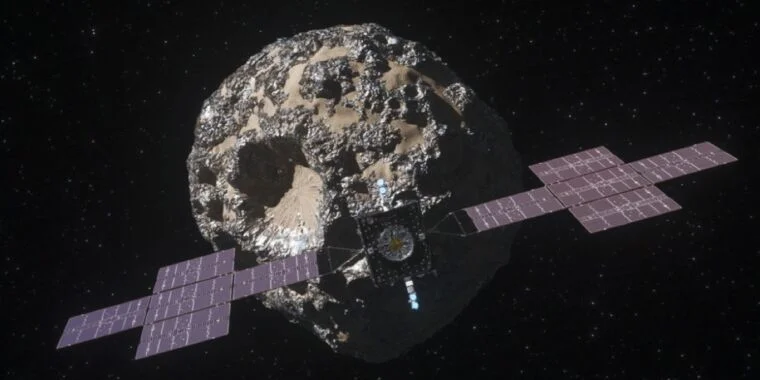
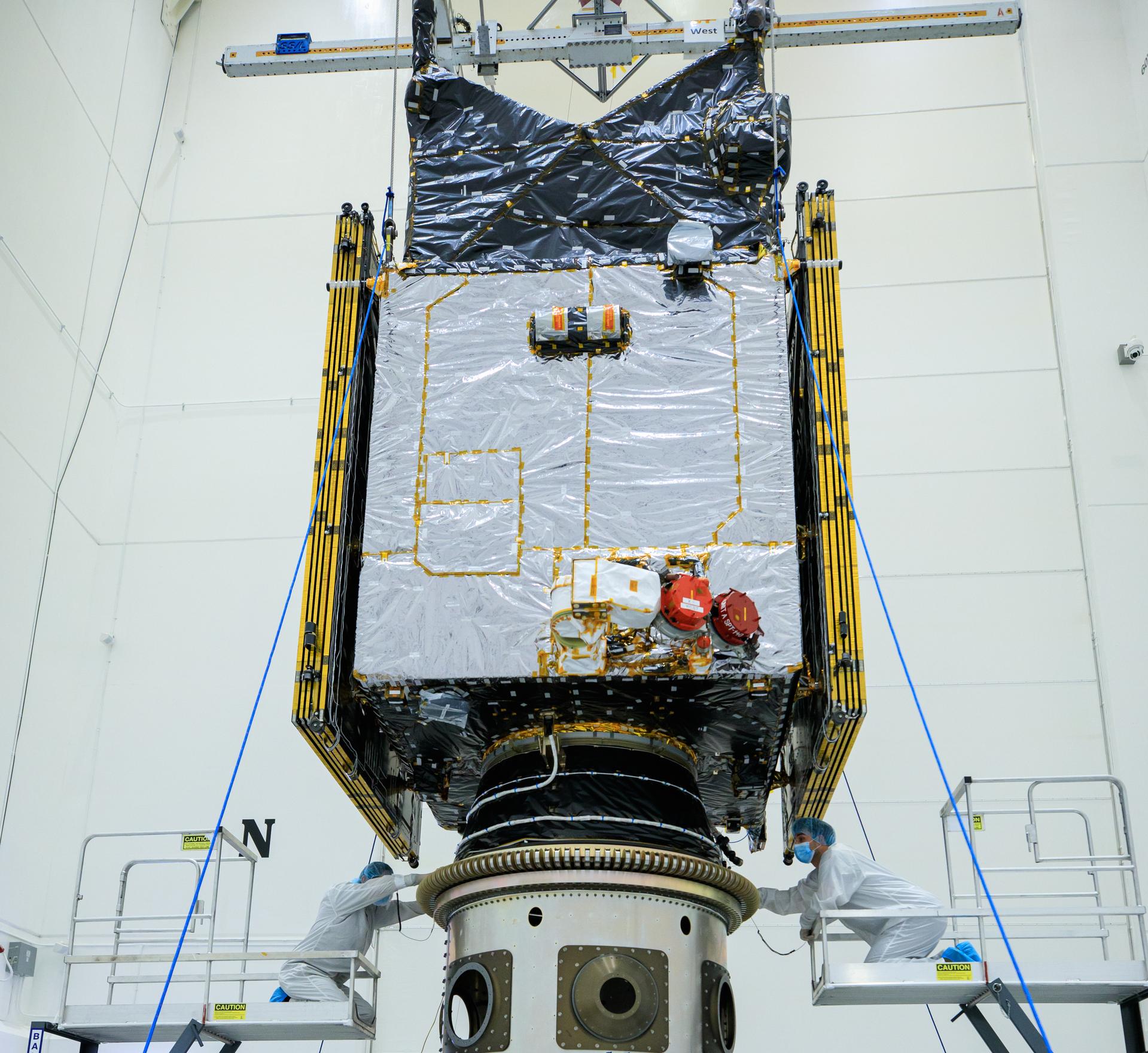
NASA's Psyche mission, set to launch on Thursday, will embark on a 2.2 billion mile journey to explore a rare, metal-rich asteroid in the main asteroid belt. The spacecraft will ride on board a SpaceX Falcon Heavy rocket and will be equipped with instruments to map the asteroid and gather data about its size and shape. Scientists believe the asteroid, named Psyche, could be the stripped down core of a shattered planetesimal, providing insights into the formation of planets. The mission was delayed by one week due to an issue with the spacecraft's thrusters, but now has daily launch opportunities until October 25.
NASA's Psyche Mission: Exploring a Metal-Rich Asteroid in Space

NASA is preparing to launch its first mission to a metal-rich asteroid, aiming to study the composition and origins of these celestial bodies. The mission, called Psyche, is set to launch in August 2022 and will reach the asteroid of the same name in 2026. Scientists hope that studying Psyche, which is believed to be the exposed core of a protoplanet, will provide valuable insights into the early formation of planets and the Earth's own core.

space2 years ago

"NASA's Psyche Spacecraft Launches Towards Mysterious Metal World"

NASA will provide coverage of the upcoming launch of its Psyche mission to a metal-rich asteroid, scheduled for October 12. The spacecraft will study the asteroid named Psyche, which is located between Mars and Jupiter, to gain insights into the formation of rocky planets. This will be the first mission to an asteroid with significant amounts of metal. The launch will be broadcasted live on various platforms, including NASA TV, YouTube, Facebook, Twitch, and the NASA app. The mission will also include a technology demonstration to test the use of lasers for high-bandwidth optical communications.

space2 years ago

"NASA's Mission to Valuable Metal-Rich Asteroid Approaches Launch Date"

NASA is preparing to launch a spacecraft to the metal-rich asteroid Psyche, believed to be worth around $10 quintillion. While the mission aims to study how planets form, the asteroid's potential value has garnered attention. The spacecraft is set to launch on October 5th, with final mechanical preparations underway, including attaching solar panels and loading propellant. The team is conducting training activities and eagerly anticipating the launch.

space2 years ago

NASA's Ambitious and Costly Mission to Mine a Quadrillion-Dollar Asteroid

NASA's mission to the metal-rich asteroid Psyche, which could be worth $10,000 quadrillion, is set to launch between October 5 and 25 from the Kennedy Space Center in Florida. The spacecraft is expected to reach the asteroid in August 2029 and orbit it for 26 months. Scientists hope studying Psyche up close could offer new insight into the interior of our own planet and the history of the solar system.

space2 years ago

Metal asteroid mission back on menu for space exploration.

NASA's Psyche spacecraft, which will explore a metal-rich asteroid of the same name, is back on track for an October 2023 launch after a one-year delay due to management and staffing issues at NASA's Jet Propulsion Laboratory. The mission aims to gain insights into planetary formation, understand the interior of terrestrial planets like Earth, and examine a world that is made largely of metal. The mission is also of interest to the nascent asteroid mining community, which seeks to learn about the potential value harbored by these relatively rare, metallic asteroids.

astronomy2 years ago

JWST reveals metal-rich atmosphere on GJ 1214b.

Scientists have used the James Webb Space Telescope (JWST) to study the atmosphere of exoplanet GJ 1214b and found it to be reflective and metal-rich. The planet, which is about 40 light-years away from Earth, is a "super-Earth" with a radius about 2.7 times that of Earth. The findings suggest that GJ 1214b's atmosphere is unlike any other known exoplanet and could provide insights into the formation and evolution of planets.