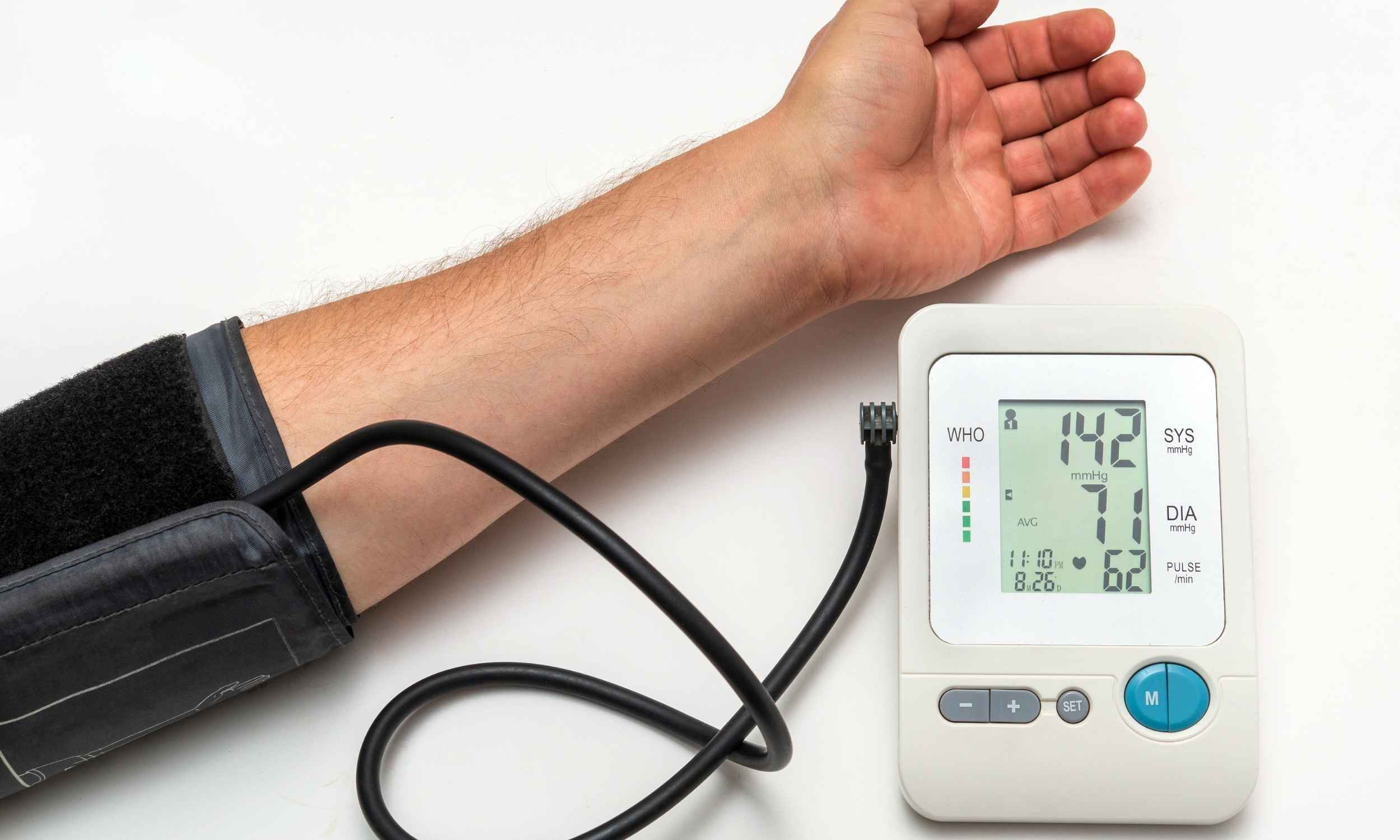
A Johns Hopkins study shows that arm positioning during blood pressure measurement significantly affects readings, with unsupported or dangling arms leading to higher and potentially misleading results, which can impact diagnosis and treatment of hypertension.
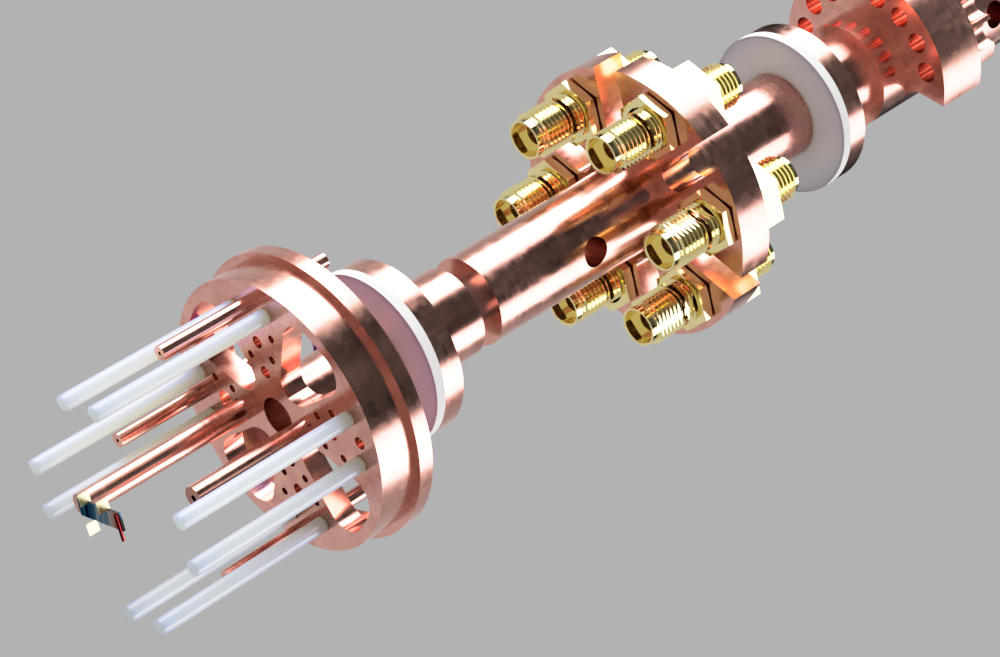
Researchers at HZB have developed an innovative technique to precisely measure minuscule temperature variations in the thermal Hall effect, overcoming previous limitations caused by thermal noise. This advancement sheds light on the behavior of coherent multi-particle states in quantum materials and their interactions with lattice vibrations. The team's novel sample rod and measurement method have significantly reduced interference signals and noise, allowing for high-resolution and reproducible measurements. The next step involves using this technique to investigate the topological properties of lattice vibrations in quantum materials.
Researchers at the Max Planck Institute for the Science of Light have developed a new method to measure negative pressure using liquid-filled optical fibers and sound waves. By encapsulating nanoliters of liquid in a closed optical fiber, the scientists were able to explore the unique thermodynamic states of the liquid. The combination of optical and acoustic waves allowed for precise pressure measurements and spatially resolved imaging inside the fiber. This new measurement technique provides insights into thermodynamic dependencies and opens up possibilities for monitoring chemical reactions in toxic liquids and investigating hard-to-access areas of thermodynamics.
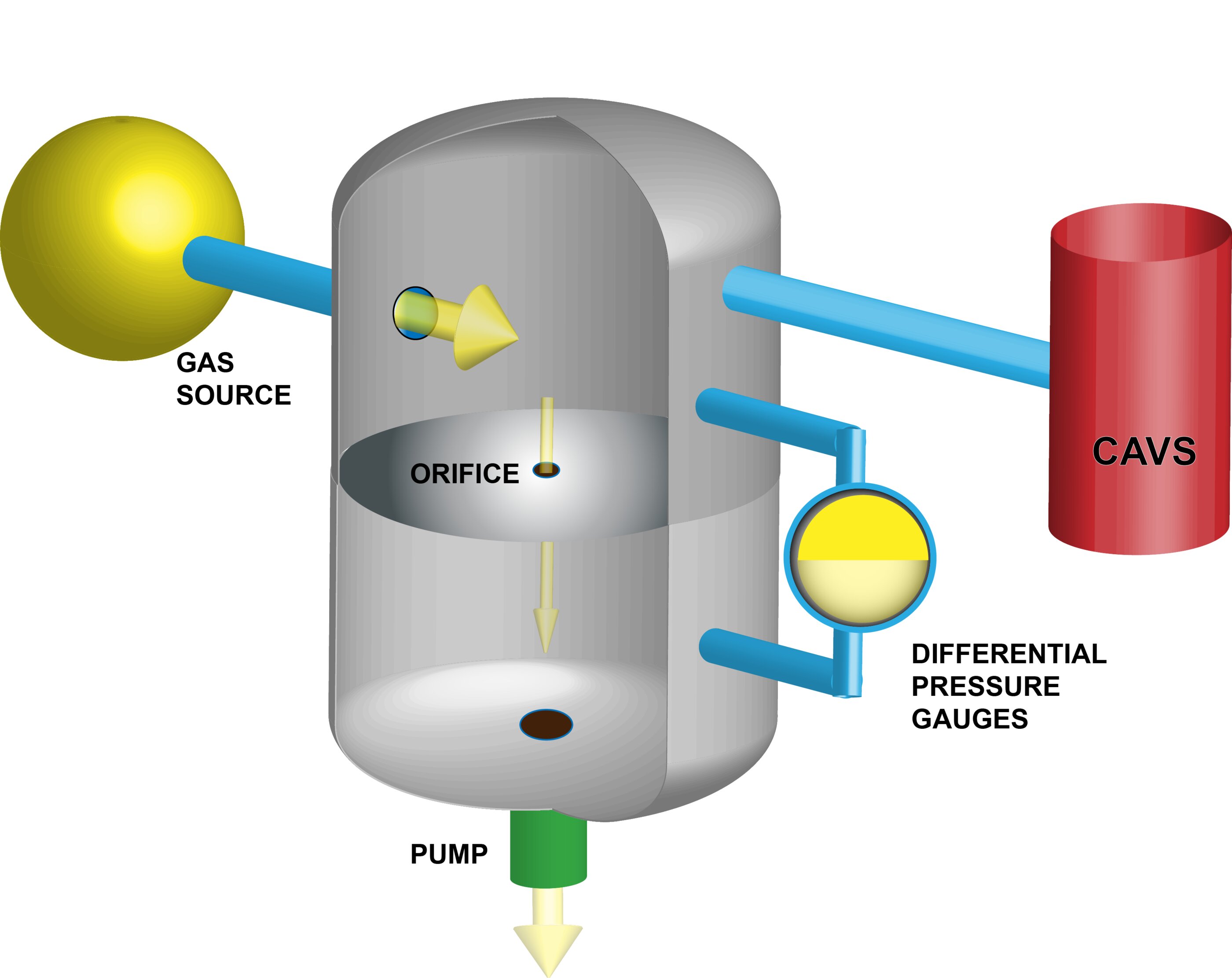
Scientists at the National Institute of Standards and Technology (NIST) have developed a new technique called CAVS (cold atom vacuum standard) for measuring extremely low gas pressures. The CAVS method has been validated as a "primary standard," meaning it can make accurate measurements without needing to be calibrated to reference pressure readings. The technique uses a cold gas of lithium or rubidium atoms trapped in a magnetic field, and the intensity of light emitted by the atoms serves as a measure of pressure. CAVS can measure vacuum pressures as low as a trillionth of the Earth's atmospheric pressure and has applications in semiconductor manufacturing, quantum computers, gravitational wave detectors, and particle accelerators.
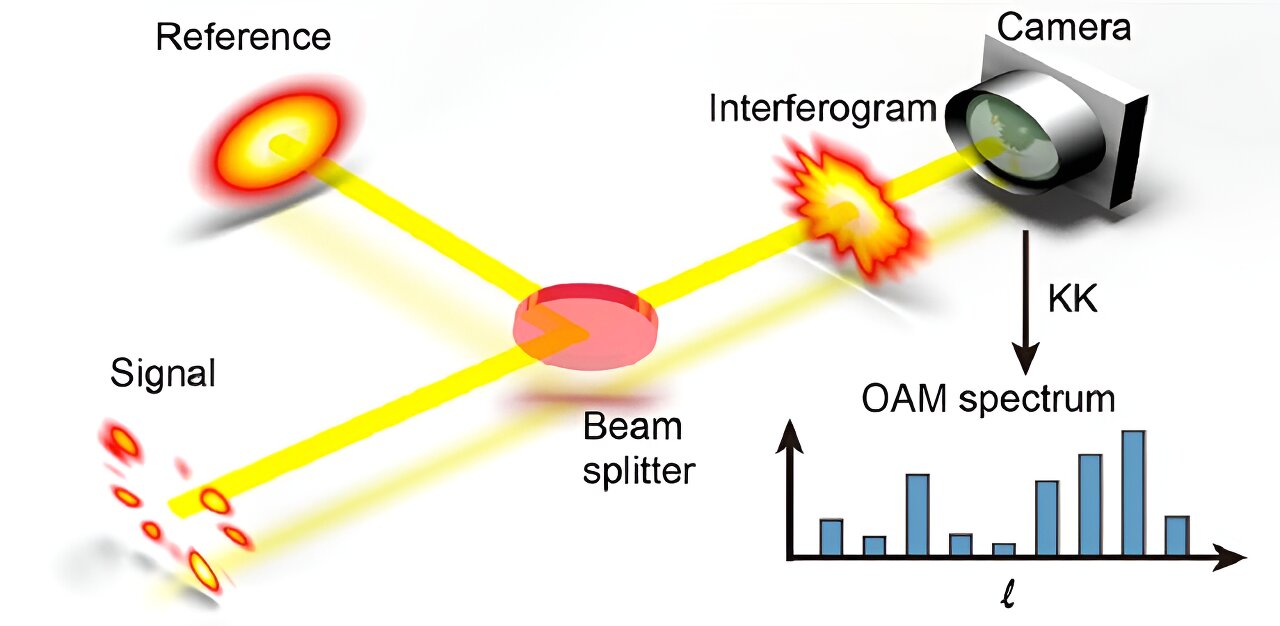
Researchers have developed a new measurement technique using on-axis Kramers-Kronig interferometry to retrieve the spectrum of orbital angular momentum (OAM) in structured light waves. By applying the Kramers-Kronig relation, they were able to untangle the complex helical light pattern from intensity-only measurements, enabling single-shot retrieval in interferometry. This breakthrough has the potential to revolutionize technologies that rely on structured light, such as communication, imaging, and quantum information processing. The technique is simpler, faster, and more cost-effective than conventional methods, providing a powerful means to measure and understand OAM in structured light fields.