A new study in Nature Ecology and Evolution challenges the long-held assumption that brain and body mass in animals follow a simple power law relationship. Instead, researchers found a log-curvilinear relationship, best described by a second-order polynomial equation. This model better fits the data and explains variations across species, offering new insights into cerebral evolution and the rate at which different animals develop larger brains.

Researchers have developed a method for state estimation that can handle model-structure uncertainty, allowing for the estimation of unknown governing equations. By simultaneously learning the motion model and state estimate using a set of symbolic differential equations, this approach enables state estimation in situations with substantial modeling errors or completely unknown dynamics. The method utilizes a reparametrization trick for Markov Gaussian processes and outperforms standard state-estimation techniques in the presence of modeling errors. It also allows for the discovery of missing terms in the governing equations using indirect observations.
A collaborative study involving over 5,000 participants during the 2022 mpox outbreak reveals how sexual behavior changes with age. The study challenges assumptions used in mathematical models of sexually transmitted infections, showing that gay and bisexual men over 70 continue to have multiple partners, while heterosexual women's activity tends to decrease after age 50. Partner concurrency, or having more than one recent sex partner, was uncommon in the general population but frequent among social media samples. The study emphasizes the nuanced impact of age and sexuality on sexual activity, providing valuable insights for tailoring safe sex messages to different demographics.
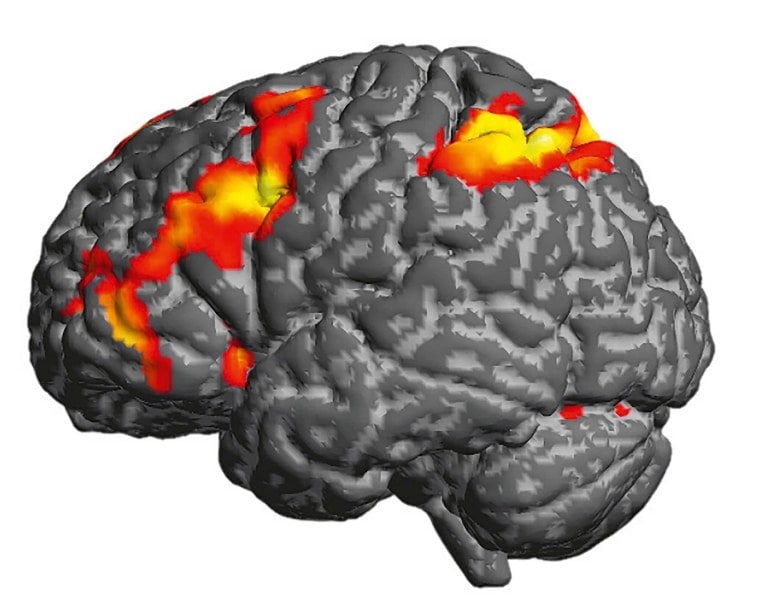
Researchers at ETH Zurich are using mathematical models to study how the brain predicts information and learns. They discovered signals for accuracy are found in the anterior insula and anxiety affects activity levels in this brain region. The ultimate goal is to apply these models to specific clinical problems and use them to predict individual outcomes for mental health disorders.