Tag

Massive Star

All articles tagged with #massive star

astronomy1 year ago

"Capturing the Birth of a Massive Star: Hubble's Stunning Images"

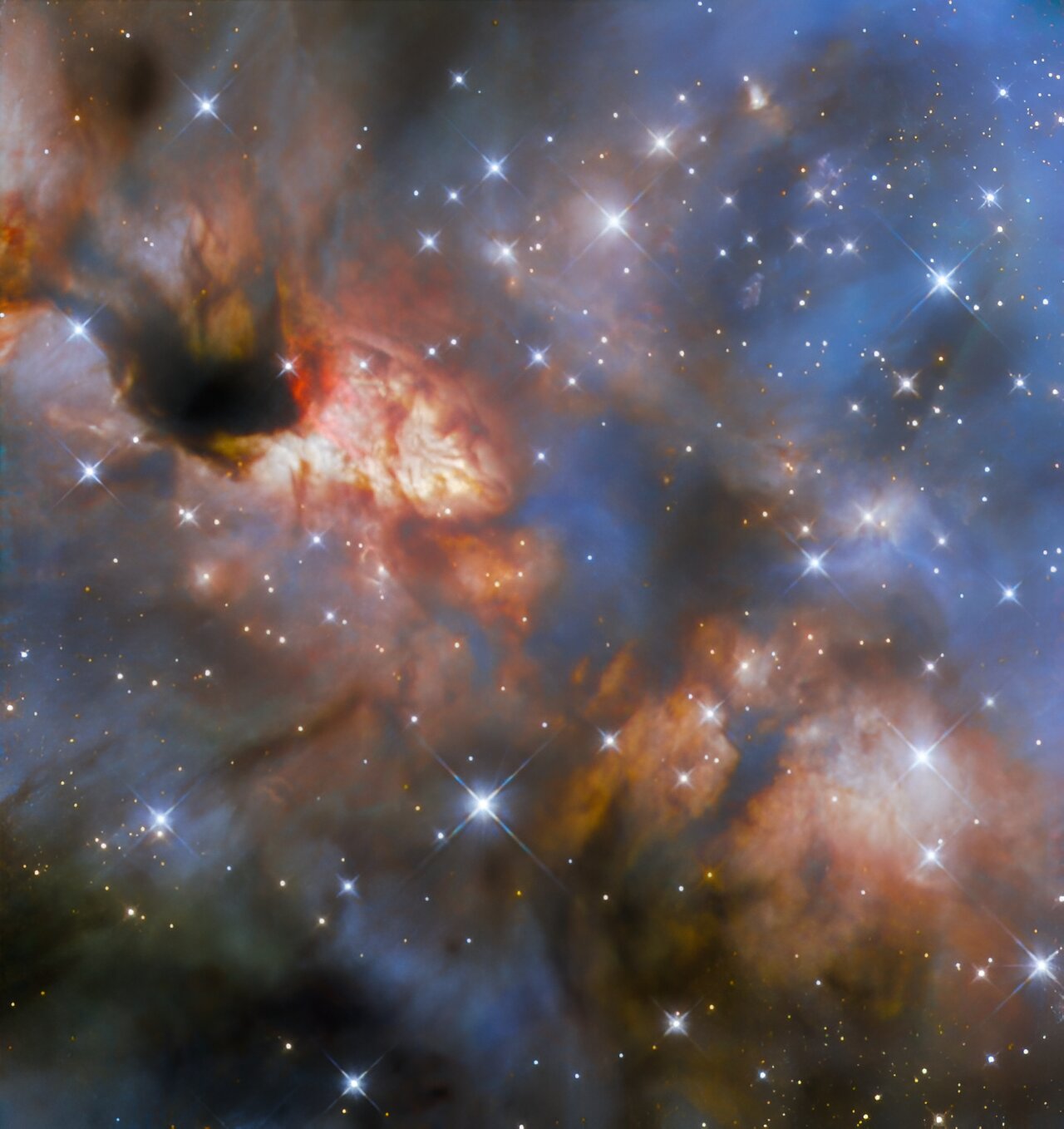
The NASA/ESA Hubble Space Telescope captured a vibrant image of the star-forming region IRAS 16562-3959, located about 5,900 light-years away in the constellation Scorpius. The image, taken with Hubble's Wide Field Camera 3, reveals a massive star in the process of formation, surrounded by shadowy clouds of light-obscuring dust. The detailed multi-wavelength image provides valuable insights into the composition, temperature, and density of the region, contributing to a better understanding of how the most massive stars in our galaxy form.

astronomy2 years ago

"Fading from View: Examining the Eruption of a Colossal Milky Way Star"

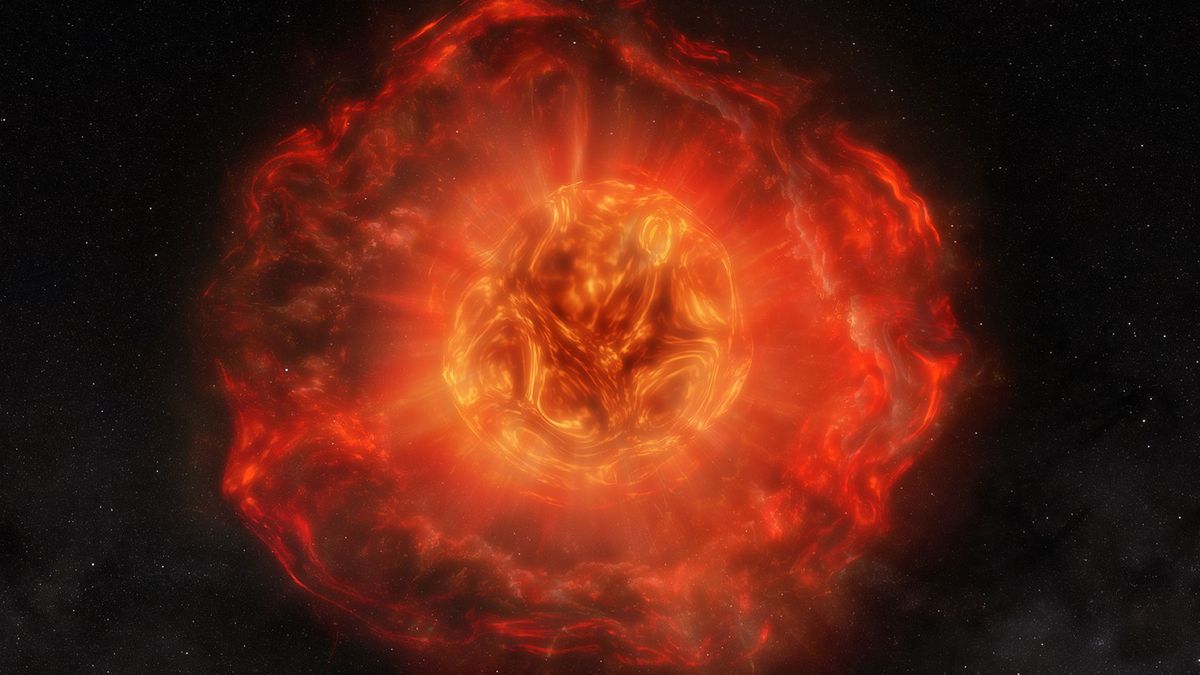
Astronomers from Georgia State University's CHARA Array have captured close-up images of the massive star RW Cephei, which recently experienced a dramatic fading event, providing new insights into its behavior. The star, located approximately 16,000 light years from Earth, is a cool hypergiant and had faded to about one-third of its normal brightness, prompting scientists to investigate the cause. Observations and intelligent algorithms revealed that a grand eruption launched a gas cloud from the star, blocking a large fraction of its light from view. The findings were presented at the American Astronomical Society meeting and published in The Astronomical Journal, shedding light on the troubled surroundings of RW Cephei.

astronomy2 years ago

JWST's Potential Answers to the Mysterious Disappearance of a Massive Star

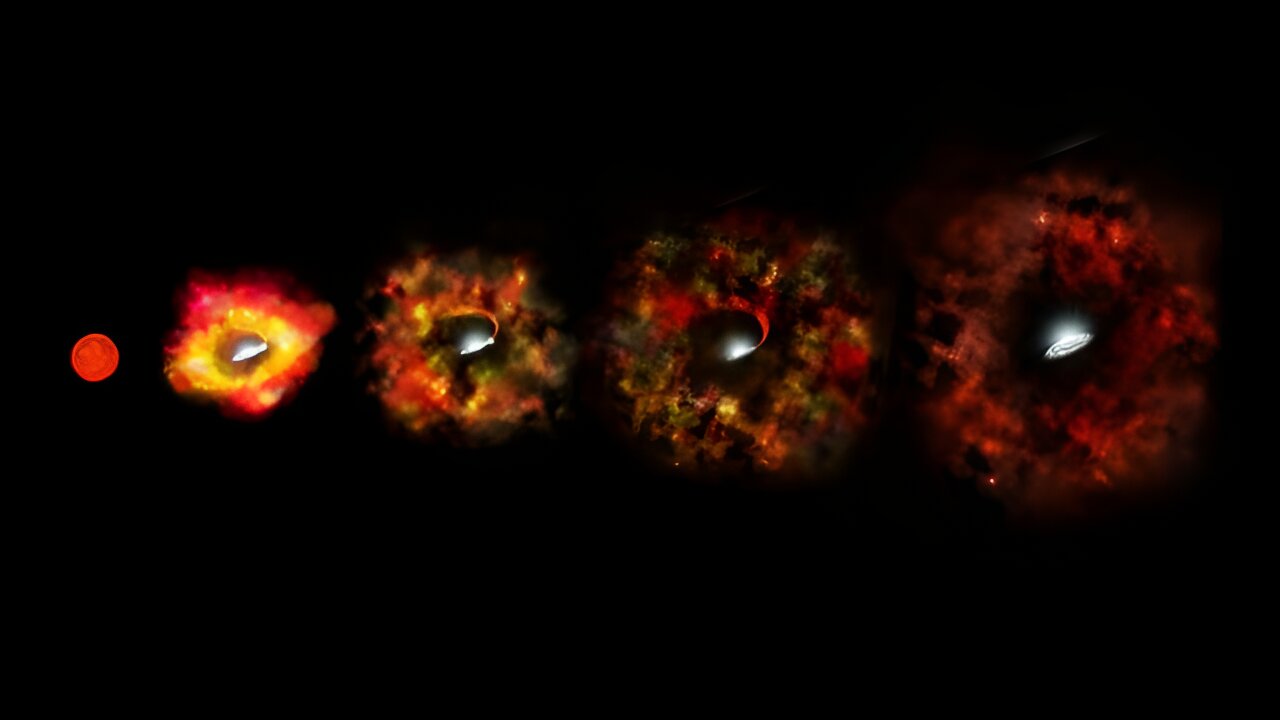
Astronomers have observed a massive star, N6946-BH1, that disappeared in 2009 and is now considered a failed supernova. Using data from the James Webb Space Telescope (JWST), they have discovered a bright infrared source that could be a remnant dust shell or material infalling into a black hole. Surprisingly, they found three sources instead of one, suggesting a stellar merger rather than a failed supernova. This challenges our understanding of supernovae and stellar mass black holes, and further observations will help distinguish between stellar mergers and true failed supernovae.

science-and-astronomy2 years ago

"Hidden Supernova: Massive Weight Loss of Doomed Star Delayed Flash for Days"

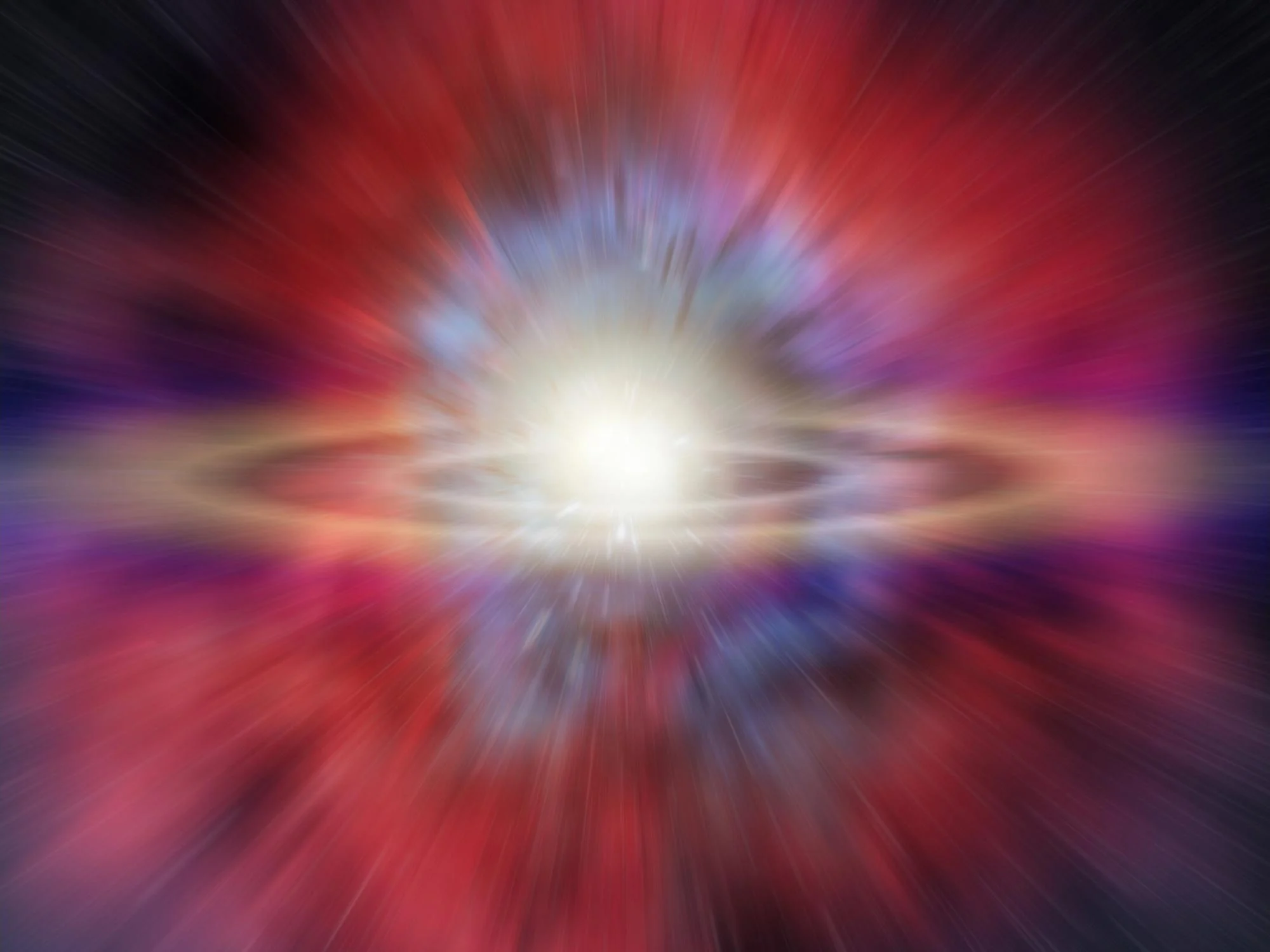
A massive star that exploded in the Pinwheel Galaxy appears to have lost approximately one sun's worth of ejected mass during the final years of its life before going supernova. Amateur astronomer Kōichi Itagaki discovered the star, known as SN 2023ixf, and observations revealed a significant and unexpected amount of mass loss in the year prior to the explosion. The shape of the light curve indicated a delayed shock breakout, providing evidence for the presence of dense material from recent mass loss. This discovery sheds light on the behavior of massive stars in their final years before exploding.

astronomy2 years ago

"Enormous Plasma Waves Emanate from Massive Star, Potentially Causing Gigantic Tidal Phenomena"

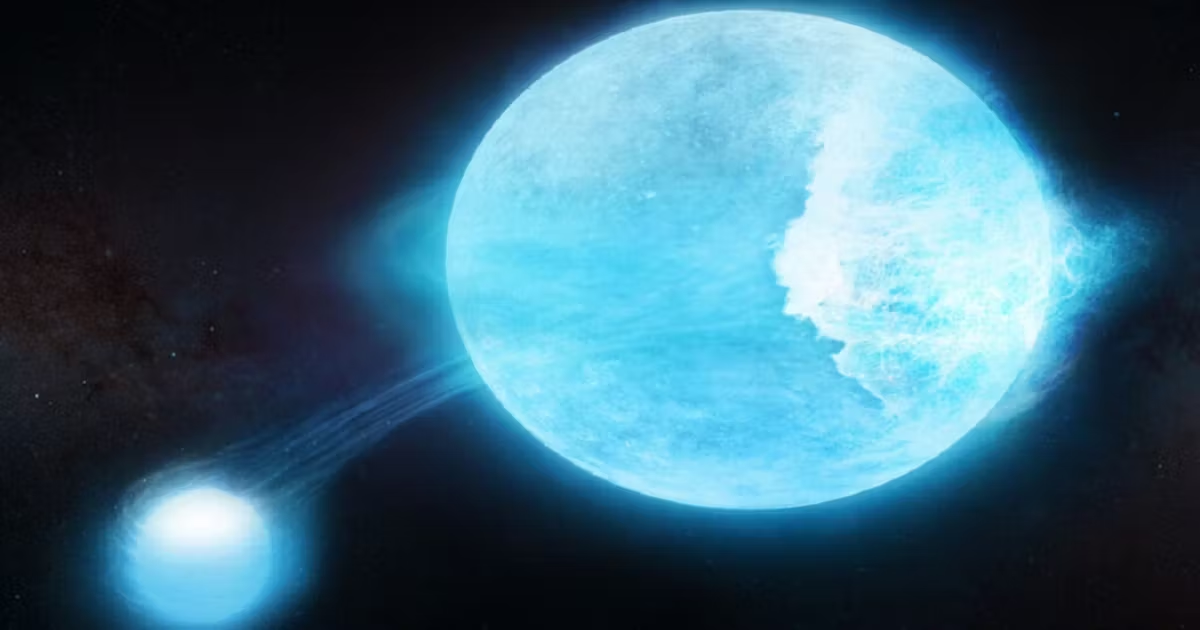
Astronomers have used computer simulations to study the massive tides on the star MACHO 80.7443.1718, which create plasma waves 2 million miles high, three times larger than the Sun. These waves are caused by the gravitational forces between the star and its smaller companion, resulting in extreme tides that rise and fall in a regular rhythm. The breaking of these plasma waves affects the star's rotation and orbit, with each wave releasing a significant amount of energy. This discovery suggests that MACHO 80.7443.1718 is just the first of a new class of objects with extreme plasma tidal waves.

astronomy2 years ago

Hubble Captures Stunning Supernova Aftermath.

The Hubble Space Telescope captured an image of the aftermath of a Type II supernova explosion in the spiral galaxy UGC 2890, which is located 30 million light-years away in the Camelopardalis constellation. Hubble's investigation of Type II supernovae helps to reveal insights into the types of stars that create these explosions and any survivors of these catastrophic events. This observation is one of many Hubble investigations of Type II supernovae, revealing any stellar survivors of colossal supernova explosions.