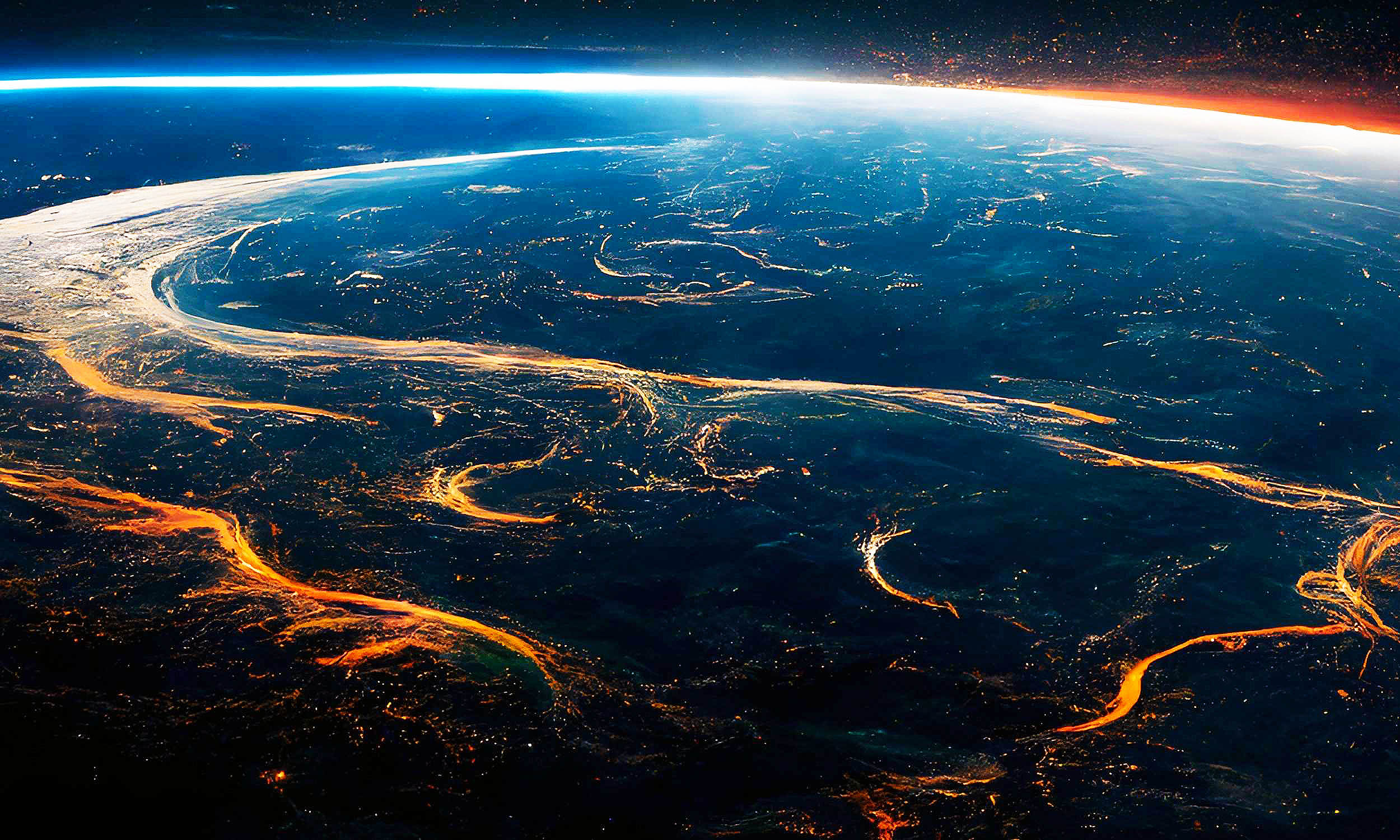
Scientists have used advanced computer modeling to simulate Earth's first days, revealing that the planet's mantle retained a molten, magma ocean for hundreds of millions of years, leaving chemical and seismic signatures that inform our understanding of Earth's formation and evolution, and providing insights applicable to other rocky planets.
Scientists have discovered the cause of a massive 'gravity hole' in the Indian Ocean, which is an area with low gravitational pull causing the seafloor to sink. Researchers from the Indian Institute of Science have found that the hole was formed by plumes of hot, low-density magma rising up beneath the oceanic low. These plumes, along with a distinctive mantle structure, created the geoid low. However, further research is needed to fully understand the phenomenon.
Scientists have discovered the cause of a massive 'gravity hole' in the Indian Ocean, which is an area with low gravitational pull causing the seafloor to sink. Researchers from the Indian Institute of Science have found that the hole was formed by plumes of hot, low-density magma rising up beneath the oceanic low. These plumes, along with a distinctive mantle structure, created the geoid low. However, further research is needed to fully understand the phenomenon.