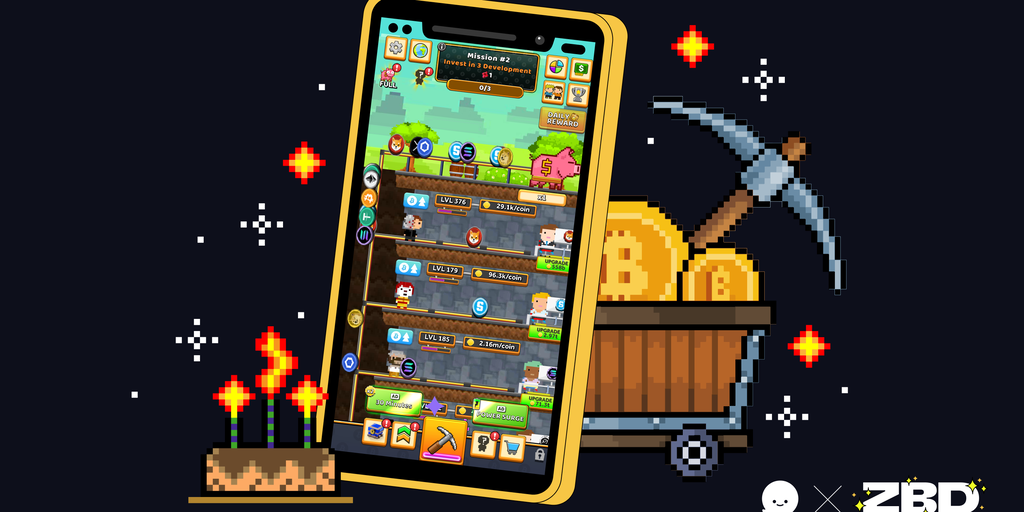
The idle tapping game Bitcoin Miner initially struggled to gain traction, but saw a dramatic turnaround after integrating real Bitcoin earnings through the Lightning Network. The game's downloads surged after enabling BTC payments, with significant day-one retention and overall success. While the Bitcoin payouts are modest, they have significantly boosted player engagement and retention. The integration of real BTC earnings has transformed the game's appeal and player retention, demonstrating the potential of crypto rewards in mobile gaming.
The upcoming Bitcoin halving will reduce the block reward for miners, leading to an increase in transaction fees and highlighting the limited supply of Bitcoin. This may drive consumer adoption of second-layer networks like the Lightning Network, which offer faster and cheaper transactions. As Bitcoin becomes more widely adopted, network fees are likely to steadily increase, making it more comparable to traditional currencies and potentially providing a solution for financially disenfranchised individuals without bank accounts.
The recent surge in popularity of BRC-20 tokens, which are fungible tokens created using the non-fungible Ordinals protocol, has led to soaring costs for users on the Bitcoin network. Fees to send coins are skyrocketing, transactions are taking longer, and some users and exchanges are considering alternatives like the Lightning Network. The surge in fees has caused frustration and distress in certain parts of Africa and Latin America where some residents rely on bitcoin for everyday payments. The ability to mint enormous token supplies out of thin air is what's behind the hysteria and angst, with some suggesting without evidence that the BRC-20 phenomenon is actually a coordinated attack on the world's dominant blockchain.
Binance, the world's largest cryptocurrency exchange, has resumed Bitcoin withdrawals after a temporary pause due to a "congestion issue." The exchange has adjusted its miner fees and is exploring the use of Bitcoin's Lightning Network to speed up withdrawal times. Binance has referred to DefiLlama's data "for accurate information" regarding its wallet movements. The price of Bitcoin dropped to a week low of $27,790 on Monday morning, but has since recovered slightly.
Binance has resumed bitcoin withdrawals after a second pause due to unprecedented congestion on the Bitcoin network. The exchange has adjusted its fees and is integrating Lightning Network withdrawals to prevent similar occurrences in the future. The number of unconfirmed transactions has decreased from a high of 500,000 to just over 430,000 over a 12-hour period. The price of bitcoin continues to decline and is currently at $28,240. Binance has significantly slid in its position for bitcoin trading volume and is no longer in the top 10 exchanges for bitcoin trading pairs.
German investment bank Berenberg predicts that Bitcoin may regain the attention it lost during the crypto winter and become a sensible alternative among crypto tokens and within a global financial context. As US regulators crack down on the industry, almost every token appears at risk of being branded a security and becoming subject to an enforcement action, except Bitcoin, which is characterized as a commodity rather than a security. The recent banking crisis in the US and concerns over the Federal Reserve's interest-rate policies have led some countries to reduce their exposure to the US dollar, which could help to highlight Bitcoin's value proposition.
Coinbase CEO, Brian Armstrong, has stated that the Lightning Network, a layer 2 scaling solution for Bitcoin, is "something we'll integrate" into the cryptocurrency exchange. Armstrong did not provide further details on what the integration would involve or when it could be expected. Coinbase has been criticized in the past for not integrating the Lightning Network, which enables faster and cheaper BTC transactions than the Bitcoin base network. If Armstrong stays true to his word, Coinbase would join Bitfinex, Kraken, and OKX as the largest trading platforms to have integrated Lightning.
Bitcoin is gaining popularity in Africa as a potential solution to the continent's broken financial system. With limited access to traditional banking options, rampant hyperinflation, and capital controls, moving money in Africa is an expensive and complicated process. Bitcoin offers a way to send digital payments directly to one another, without relying on credit and without incurring multiple settlement fees along the way. The Lightning Network, a layer two technology built on top of bitcoin's main chain, is helping to alleviate transaction costs and enable nearly instantaneous cash payments around the planet.