Industry experts are debating whether the traditional four-year Bitcoin cycle is over, with some arguing that macroeconomic factors and institutional demand are now more influential than the halving events that historically drove market peaks, while others believe the cycle remains intact due to its mathematical and traditional foundations.
Bitcoin has surged 129% year-to-date in 2024, driven by the April halving and macroeconomic factors, nearing the $100,000 mark. Analysts are optimistic about further gains, though challenges like altcoin dominance and potential market corrections persist. The halving reduced miner rewards, historically leading to price increases, and Bitcoin's appeal as "digital gold" amid inflation and geopolitical instability has attracted institutional investors. While Bitcoin's dominance has slightly decreased, indicating a shift towards altcoins, its future trajectory depends on breaking the $100K psychological barrier and maintaining market dominance.
As November 28, 2024, approaches, speculation mounts on whether Bitcoin will replicate its past performance and reach a new all-time high (ATH) beyond $100,000. Historically, Bitcoin has surged on this date in 2013 and 2017, coinciding with its four-year halving cycle, which reduces the rate of new Bitcoin entering circulation and often triggers bullish trends. Factors such as post-halving momentum, increased institutional adoption, geopolitical and economic conditions, and corporate treasury adoption contribute to optimism. However, challenges like macroeconomic uncertainties, regulatory scrutiny, and market volatility could impact Bitcoin's trajectory.
The article discusses the cyclical nature of Bitcoin's market, suggesting that its price could surpass $100,000 due to historical patterns of recovery and growth following each halving event. The author highlights Google Trends as a key indicator of market strength, noting increased search interest as a sign of new buyers entering the market. The piece also speculates on potential regulatory easing under a future Trump administration, which could further boost Bitcoin's value.
Bitcoin's recent price surge is attributed more to a post-halving supply shock than to Donald Trump's election victory, according to Onramp Bitcoin co-founder Jesse Myers. The April halving reduced block rewards, creating a supply-demand imbalance that drives prices higher. This pattern has historically led to predictable bubbles post-halving, as seen in previous cycles. Analysts suggest Bitcoin's scarcity and market dynamics will continue to push its value upward, with only 1.2 million BTC left to be mined.
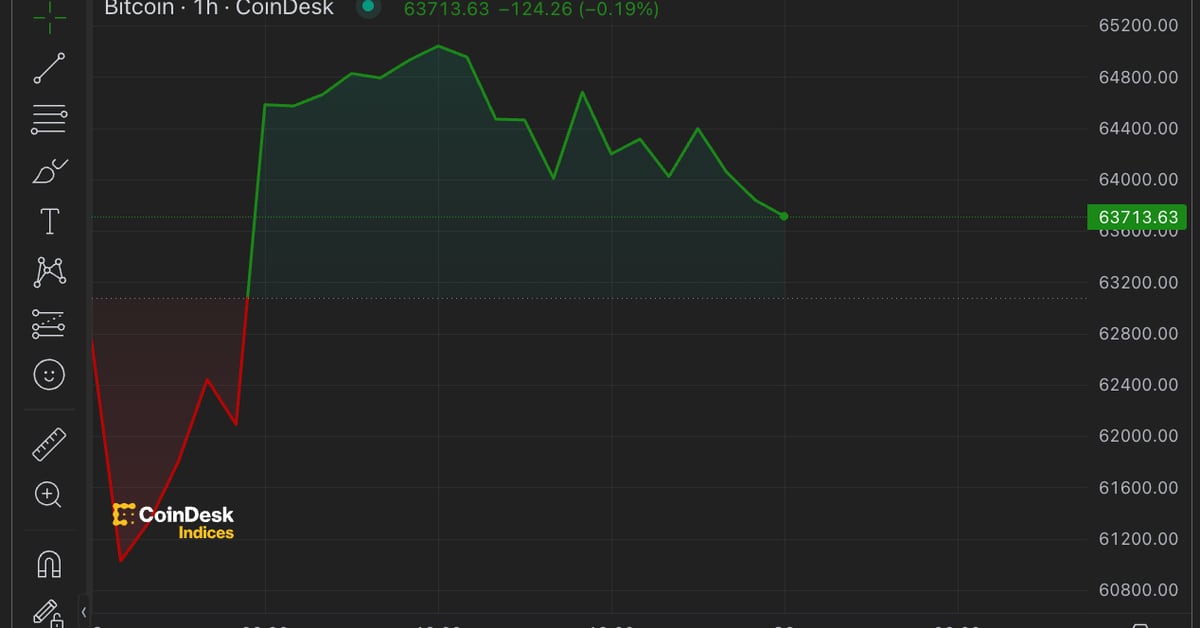
Bitcoin held steady around $63,700 following its fourth block reward halving, with the event historically preceding a rally in the cryptocurrency's price. Despite predictions of a drop from financial institutions like JPMorgan and Goldman Sachs, Bitcoin has already experienced a significant rally to record highs, reaching $73,680. The cryptocurrency has traded between $59,600 and $73,860 since late February, with recent market volatility attributed to rising conflict in Israel and a sell-off that wiped out $4 billion in open interest from the bitcoin market.
Bitcoin completed its fourth halving, reducing the block rewards for miners and potentially impacting the cryptocurrency's price and miners' economics. While some expect downside in bitcoin post-halving, others believe the impact may be magnified by the emergence of spot bitcoin ETFs. The reduction in block rewards aims to maintain scarcity and control the cryptocurrency's inflation rate, while the hash rate, which has historically fallen after a halving, is expected to recover in the medium term. The immediate impact will be felt by miners, with those with access to inexpensive, reliable power sources being well positioned to navigate the post-halving market dynamics.
The Bitcoin halving, which occurs every four years, led to a surge in transaction fees as a new Bitcoin-based system called Runes launched. The halving reduced the amount miners get rewarded for creating new bitcoin, and fees soared as speculators rushed to mint digital tokens. The event, venerated in the blockchain community, saw a record-high 37.6 BTC fee attached to the halving block, and fees remained far higher than normal in the aftermath. The launch of the Runes protocol for fungible tokens also contributed to the spike in fees, reflecting intense competition by users. The halving is seen as a momentous occasion in the crypto community, symbolizing Bitcoin's original concept as an autonomous, decentralized financial network with a non-inflationary monetary policy set by code.
Bitcoin has completed its fourth halving, reducing miners' block subsidy reward from 6.25 BTC to 3.125 BTC. This event marks a new epoch for the network, with hopes of landing on the memeable date of 4/20 failing to materialize for the U.S. market. The reduction in subsidy rewards could see some miners exiting the market, potentially impacting the network's processing abilities. Transaction fees will become increasingly important for miners as the primary revenue stream, and the industry anticipates a shift in mining power and increased innovation and efficiency improvements within the sector.
CNBC Crypto World reports on Bitcoin's rise to $64,000 in the final hours before the halving, exploring the impact of the event on the cryptocurrency's price and discussing why some believe this halving will be different from previous ones.
JPMorgan predicts that Bitcoin's long-awaited halving event could lead to a price decline due to overbought market conditions, subdued venture capital funding, and potential challenges for mining companies post-halving, with some likely to relocate to more energy-efficient regions or consolidate with larger miners.
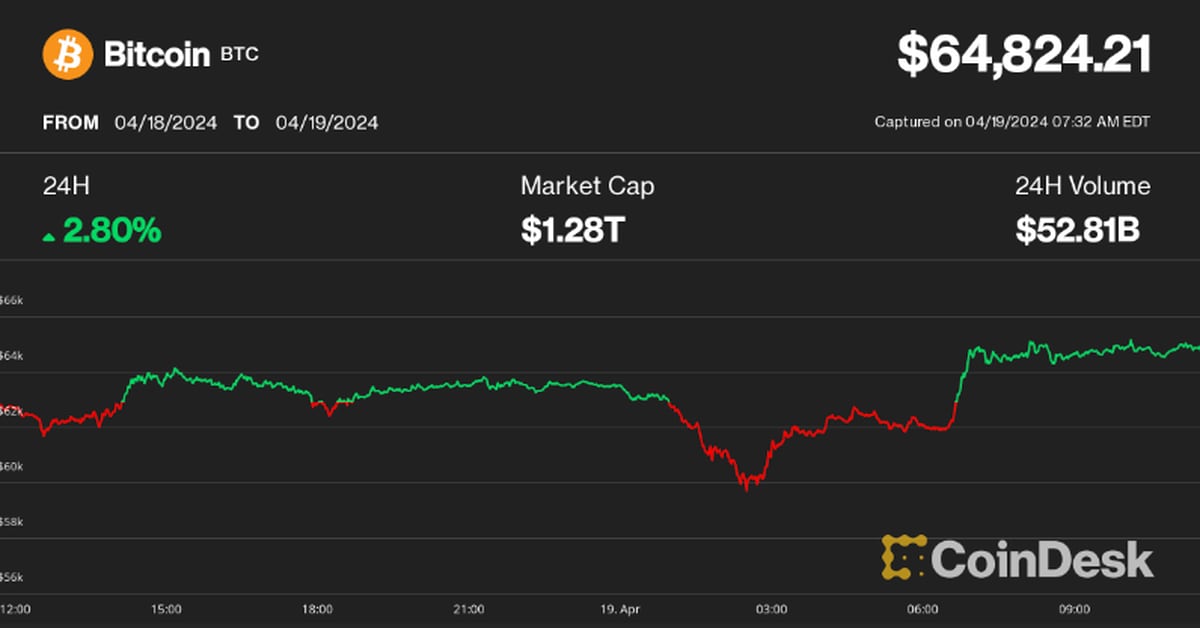
Bitcoin surged above $65,000 on its "halving" day, cutting miner rewards in half, while Ether crossed $3,000 and Solana saw a 7% increase. The global crypto market cap rose to $2.35 trillion, with top memecoins like Dogecoin and Shiba Inu also rising. The positive sentiment was fueled by the halving event and SEC approval of spot Bitcoin ETFs, marking a departure from previous halving events as Bitcoin's price peaked a month before.
Coinbase predicts that macroeconomic factors will drive the direction of digital asset markets following the bitcoin halving, citing increased geopolitical tensions, higher interest rates, and rising national debts as key influences. The report notes that previous halvings have historically kickstarted bull markets, but this cycle, the growth of investors using bitcoin as a macro hedge has reduced volatility. The correlation of altcoins to bitcoin underscores BTC's anchor role in the space, while the approval of spot exchange-traded funds has created a bifurcated pool of investors, with some viewing bitcoin as a speculative asset and others as a hedge against geopolitical risk.
Bitcoin price bounces as halving nears, with a 5% increase over 24 hours, reaching a weekly low of $58,800 and approaching the $65,000 mark. U.S.-based spot bitcoin exchange-traded funds (ETFs) registered outflows totaling $4.3 million on Thursday, extending a four-day run of withdrawals ahead of the halving. Cryptocurrency exchange Kraken is acquiring TradeStation Crypto to expand its regulatory licensing in the U.S.
The Bitcoin halving, set to occur around April 20, is expected to reduce the supply of new coins, potentially leading to a price rally in the long term. However, market professionals caution that immediate price reactions may not occur, with significant growth anticipated six to 18 months after the halving. Despite expectations of a sell-off in the short term, the event coincides with increased institutional engagement and geopolitical tensions, shaping the trajectory of the cryptocurrency market.