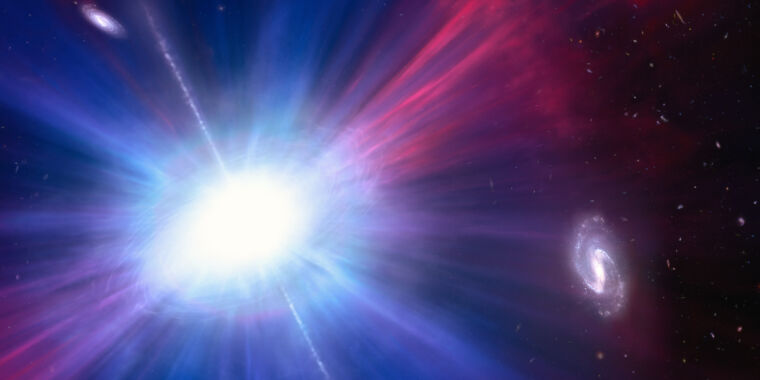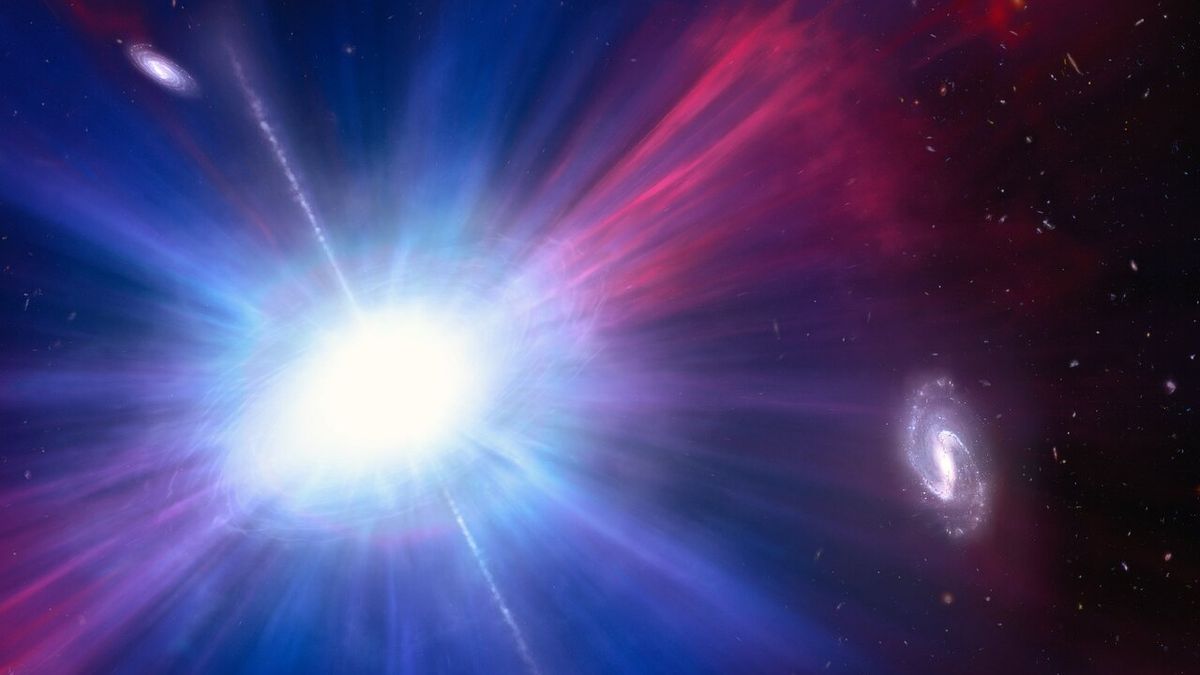
Scientists have identified that the brightest blue cosmic explosions, known as LFBOTs, are caused by black holes shredding stars in extreme Tidal Disruption Events, with the recent discovery of AT 2024wpp providing strong evidence that these events are far more energetic than typical supernovae and involve black holes feeding on companion stars, resulting in powerful high-energy emissions.
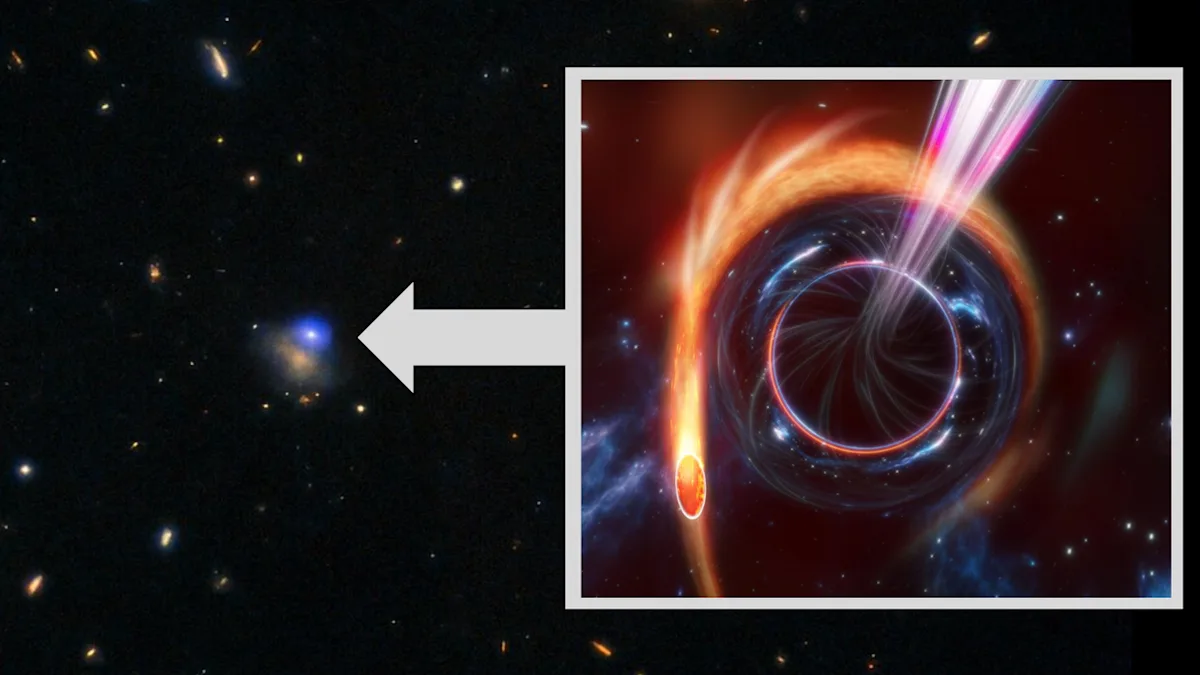
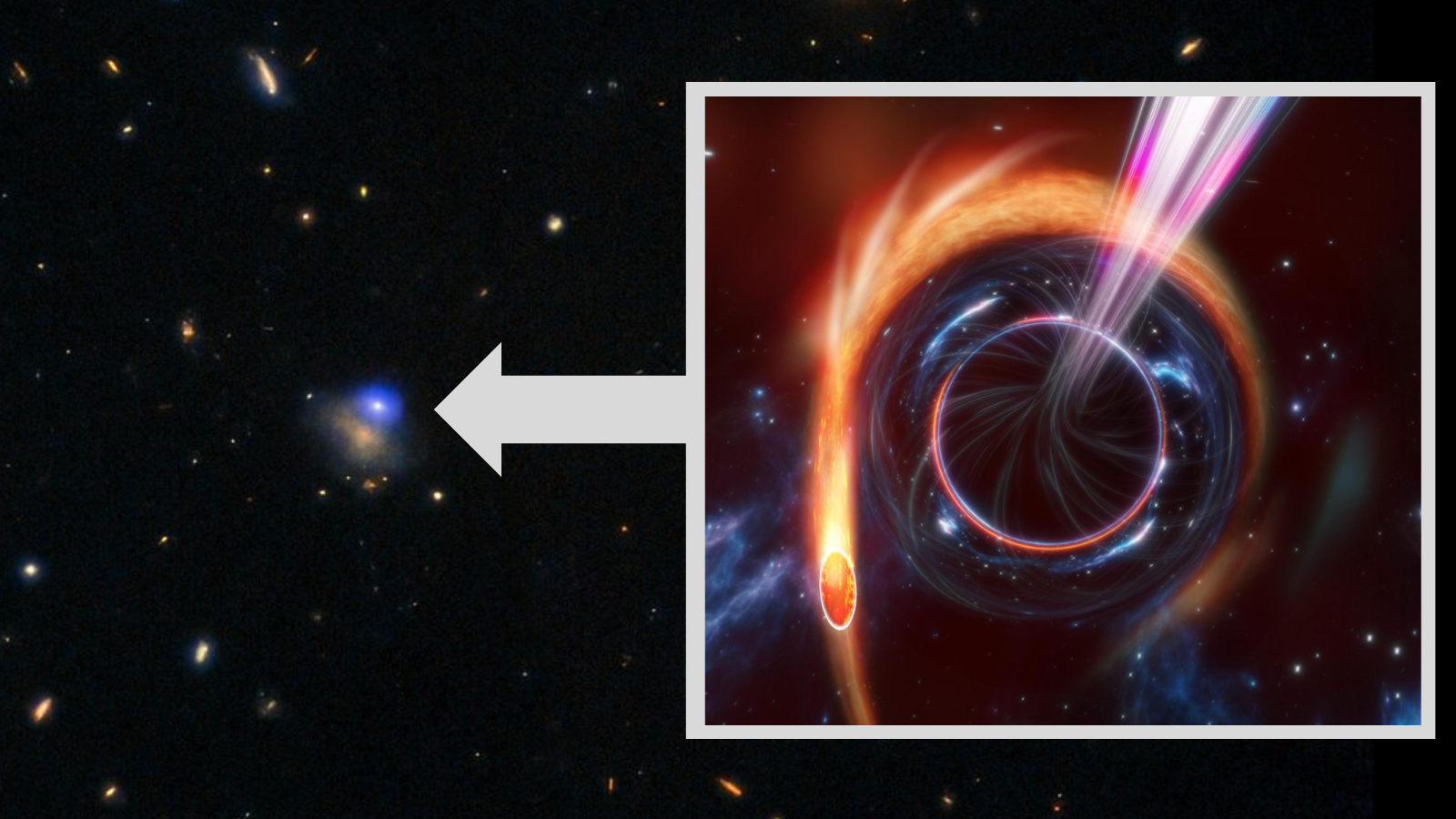
Scientists have identified that the brightest blue cosmic explosions, called LFBOTs, are caused by black holes shredding stars in extreme Tidal Disruption Events, with the recent discovery of AT 2024wpp providing key evidence that these events produce energy far exceeding that of typical supernovae.
An LFBOT (Luminous Fast Blue Optical Transient) named AT2022tsd, also known as the "Tasmanian Devil," has been observed emitting intense bursts of light and energy, surpassing the power of hundreds of billions of stars like our Sun. Unlike other LFBOTs, AT2022tsd displayed a unique behavior by flaring repeatedly over several months. Scientists are still uncertain about the exact source of these outbursts, but possibilities include a stellar-mass black hole, intermediate-mass black hole, or neutron star involved in tidal disruption events. The extreme energy output and prolonged bursts challenge our understanding of physics and the nature of these phenomena.
The Hubble Telescope has observed a luminous fast blue optical transient (LFBOT), a rare and mysterious cosmic explosion, in intergalactic space between two galaxies over 3 billion light-years away. This burst of blue light, known as "the Finch," is unlike any previously observed LFBOTs, as it is not located in a galaxy. Astronomers are considering two possible explanations: a star being ripped apart by an intermediate-mass black hole or a kilonova resulting from the collision of two neutron stars. Further research is needed to determine the true nature of this astronomical phenomenon.