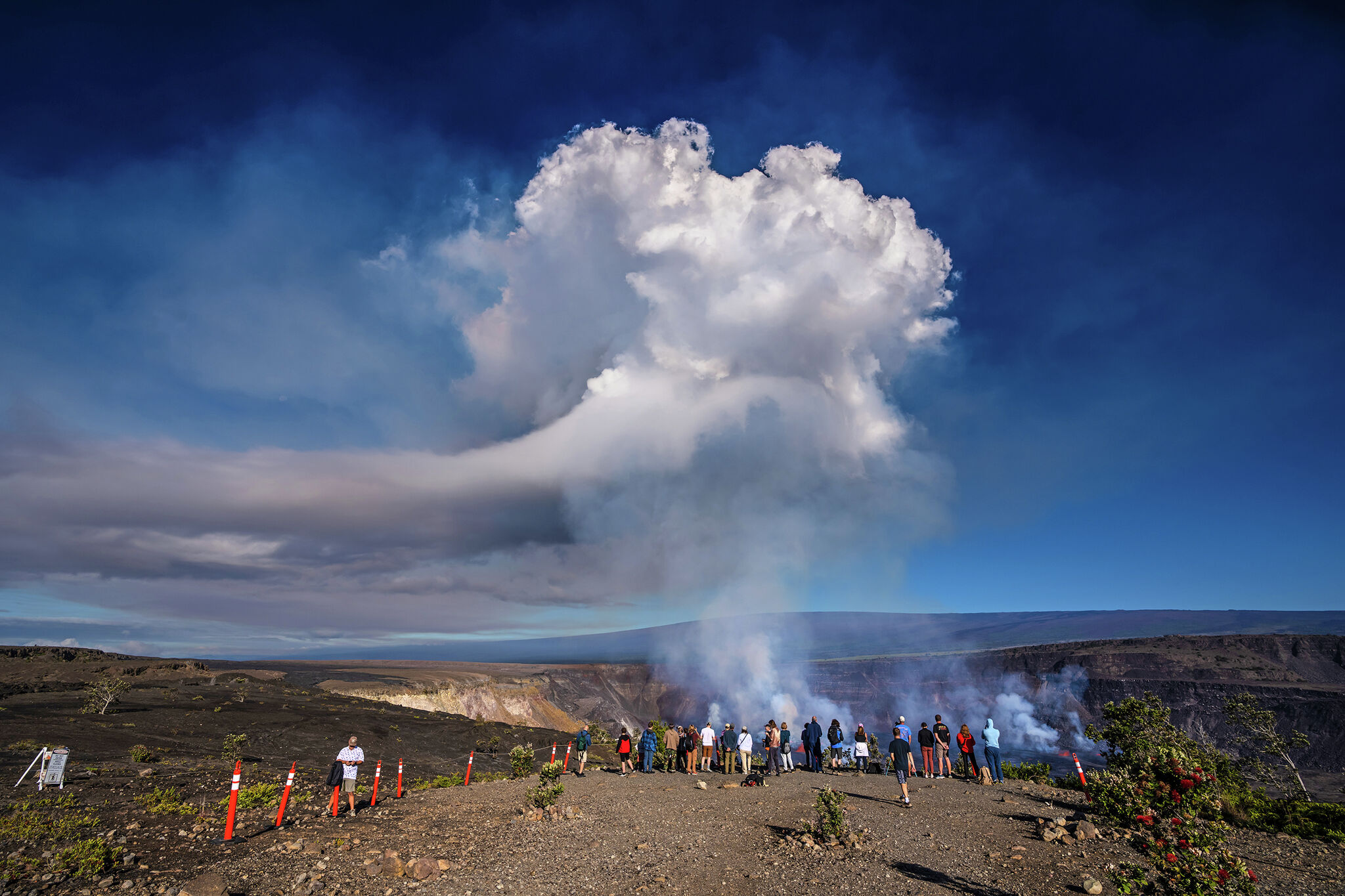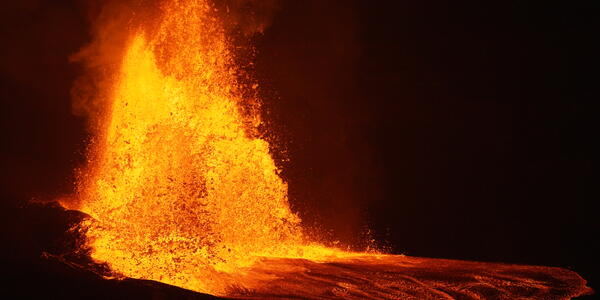
A year after a rare episodic lava fountaining eruption began at Kīlauea's summit on December 23, 2024, the volcano has hosted 38 eruptive episodes, significantly reshaping the landscape with spectacular lava fountains and new geological features, while remaining monitored and visible from various vantage points.
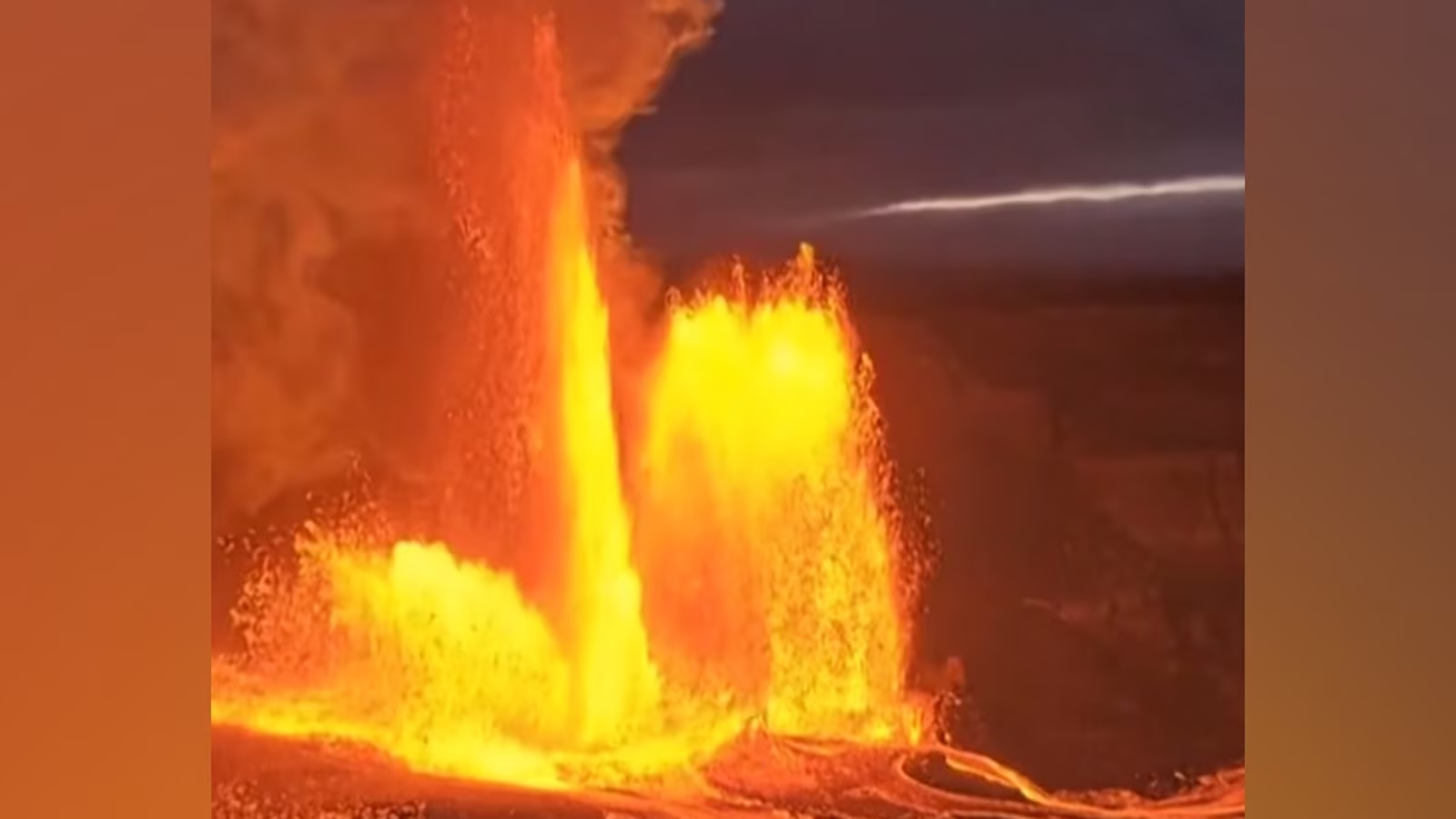
Hawaii's Kilauea volcano erupted with spectacular lava fountains over 1,000 feet high, marking its 23rd eruption since December 2024. The event produced large lava flows and a volcanic plume reaching over 14,000 feet, but poses no immediate danger to nearby communities. However, hazards like volcanic smog and glass strands remain, and scientists anticipate another eruption soon.
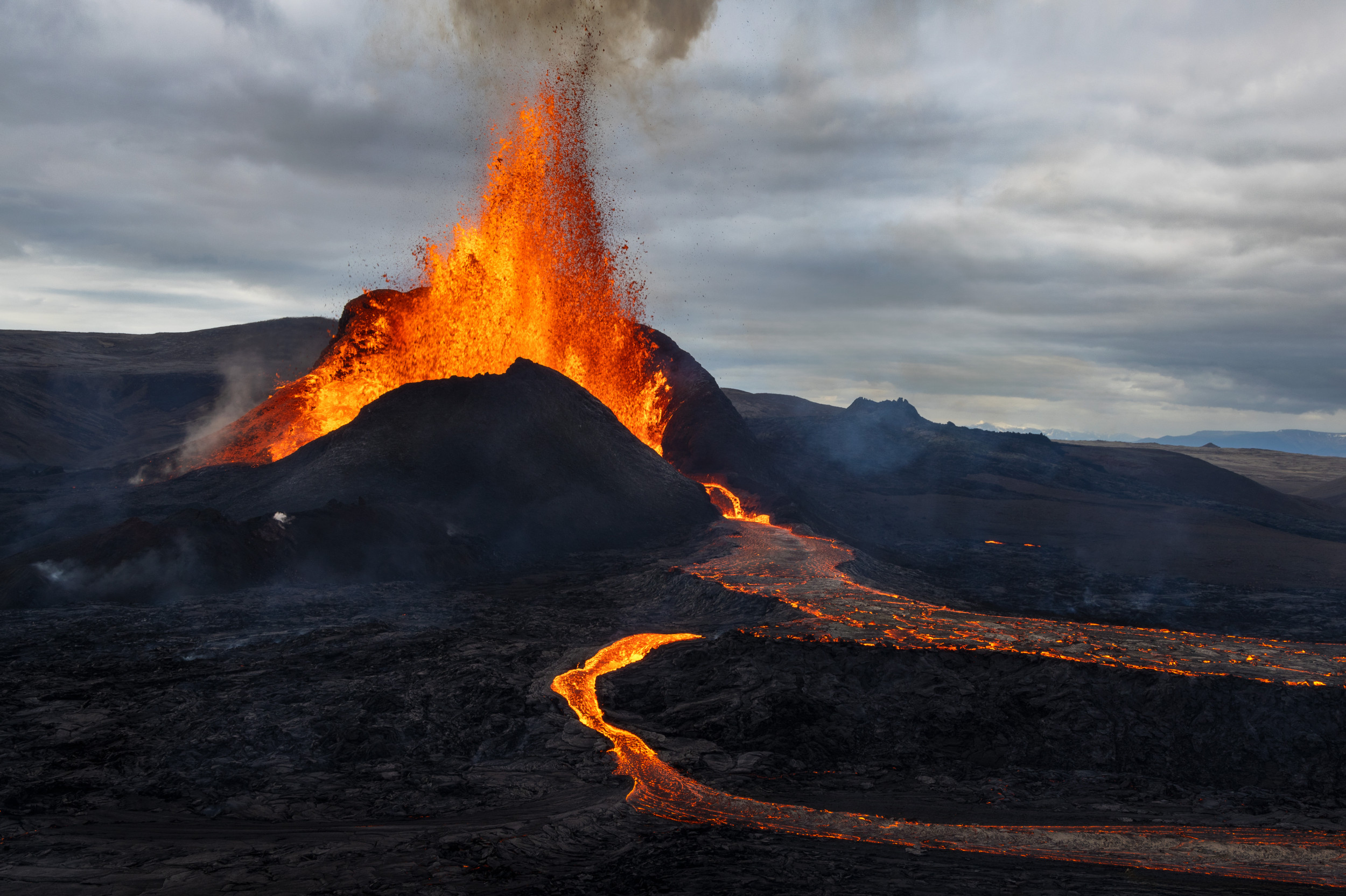
Scientists studying the 2021 eruption of Iceland's Fagradalsfjall volcano have proposed a new theory on how volcanic fountains form. They believe that low-lying volcanoes like Fagradalsfjall have a shallow magma-filled cavity beneath the caldera. As the magma rises, a layer of gas-induced foam forms, and when this layer collapses, it creates pressure that propels the magma into the air, resulting in lava fountains. This study brings scientists closer to understanding the formation of these captivating phenomena, which differ from fountaining events at other well-known volcanoes. Fagradalsfjall volcano has recently shown increased activity, prompting evacuations due to the potential threat of eruption.
Hawaii's Kilauea volcano erupted after a three-month pause, with lava fountains shooting up 200 feet from the Halemaumau crater. The eruption is contained to the summit, and there is no threat to surrounding communities. The Hawaiian Volcano Observatory raised the volcano alert level to "warning" but has since lowered it to "watch." Hawaii Volcanoes National Park is open 24 hours a day, and visitors can view the spectacle from marked trails.