Scientists have used tailored laser pulses and SwissFEL X-ray techniques to create long-lived quantum states in a copper oxide material, extending their duration by about a thousand times, which could lead to advances in quantum data storage and optoelectronic devices.
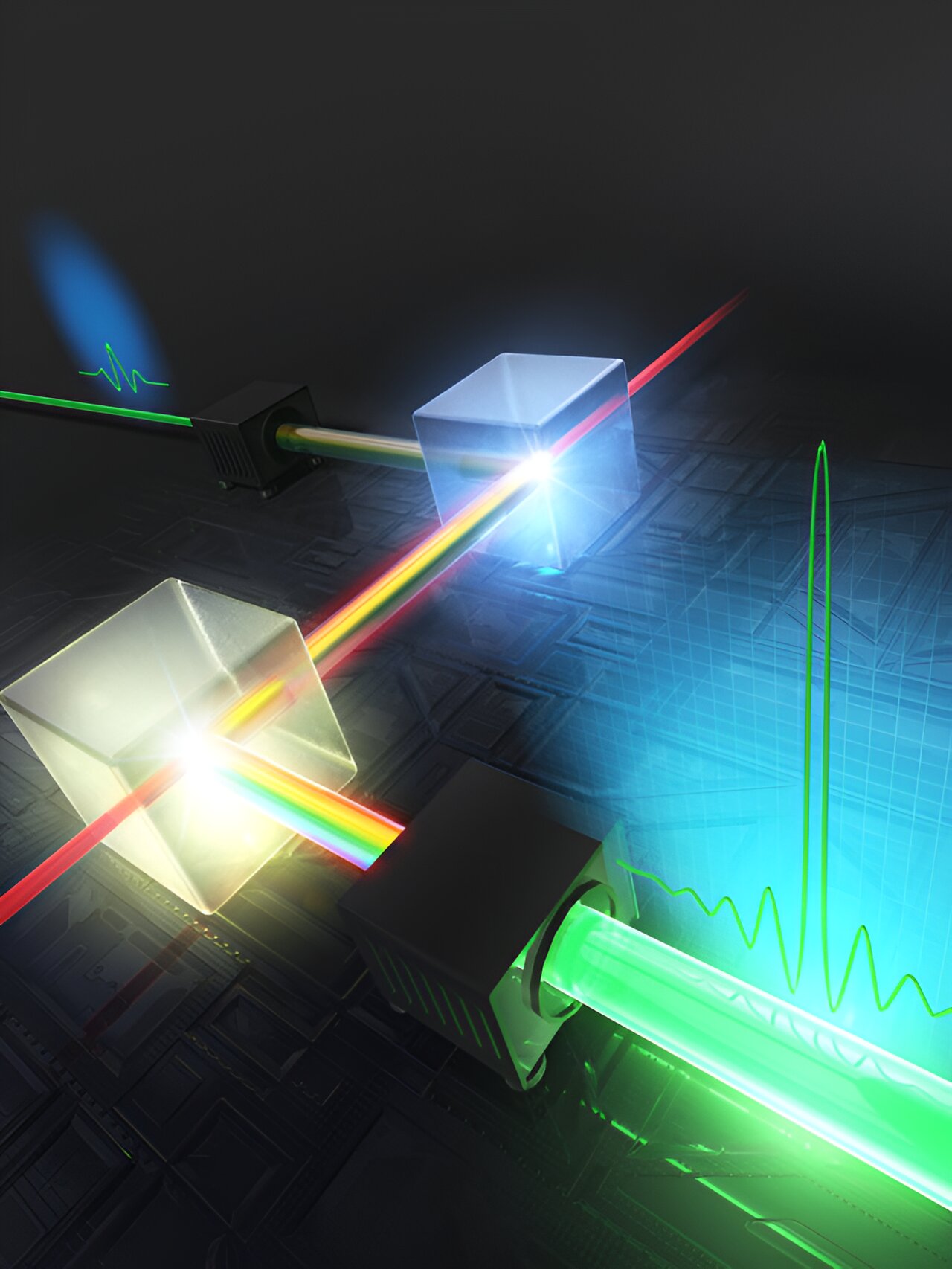
Physicists at RIKEN have developed a new technique, advanced dual-chirped optical parametric amplification, that has increased the energy of single-cycle laser pulses by a factor of 50, reaching peak powers of 6 terawatts. This breakthrough will advance the development of attosecond lasers, enabling the imaging and probing of ultrafast processes, such as the motion of electrons in atoms and molecules, with potential applications in various fields including biology, materials science, and medical diagnostics. The new method, involving just two crystals, amplifies complementary regions of the spectrum and has the potential to pave the way for even shorter pulses in the future.
Researchers have developed a new photonic approach to quantum computing that operates at room temperature and uses laser pulses to create inherently error-correcting logical qubits, simplifying quantum computing. This method, demonstrated by a team of researchers, shows promise in addressing the challenges of insufficient qubits and susceptibility to external influences, but further improvements in error tolerance are needed.
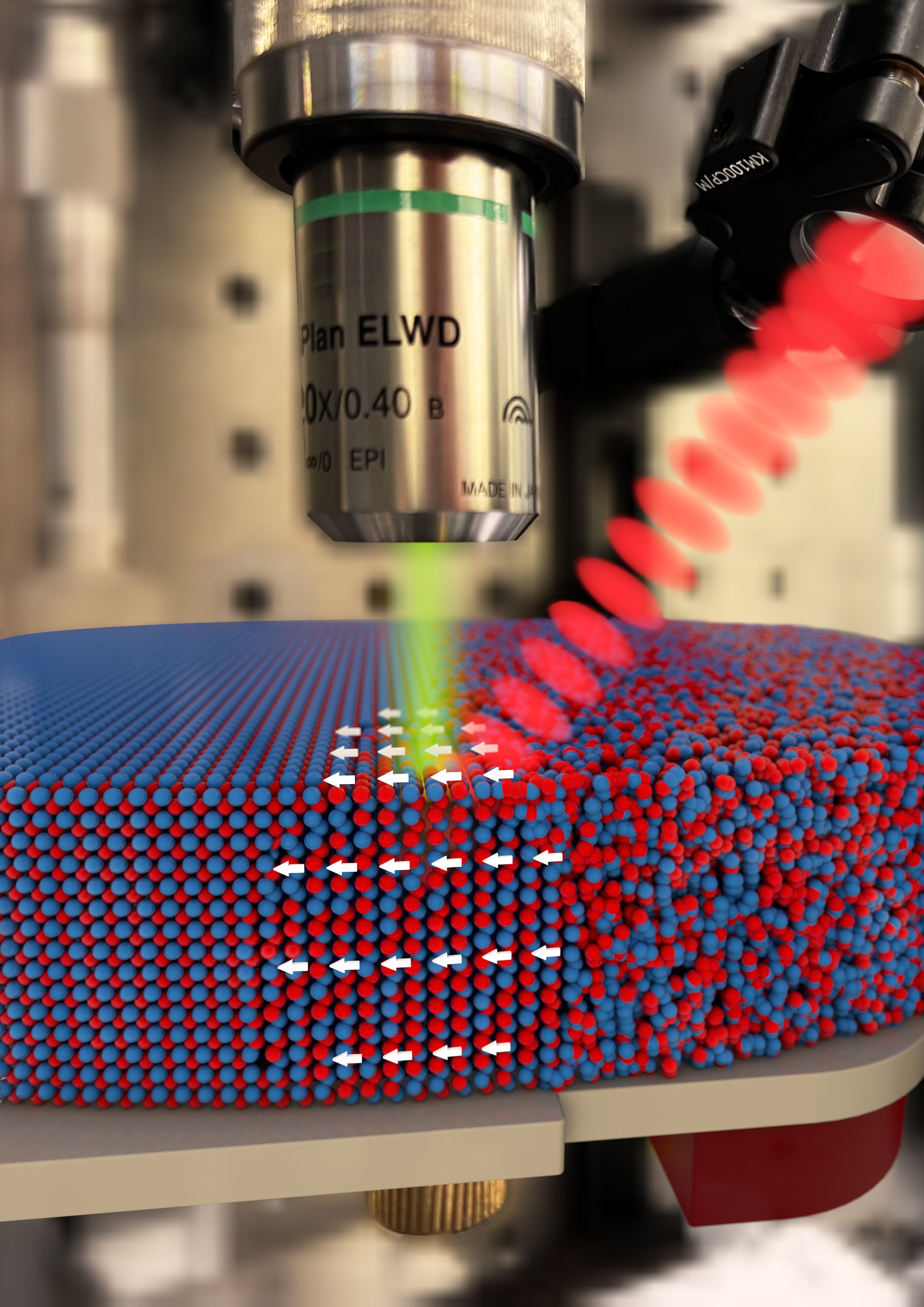
Researchers have discovered that an iron-vanadium alloy can be magnetized using ultrashort laser pulses, similar to a previously studied iron-aluminum alloy. The laser pulses rearrange the atoms in the crystal, causing the iron atoms to move closer together and form a magnet. The phenomenon is not limited to specific material structures and can be observed in diverse atomic arrangements. This research opens up potential applications in magnetic sensors, data storage, and spintronics, offering a new approach to future computer technology.
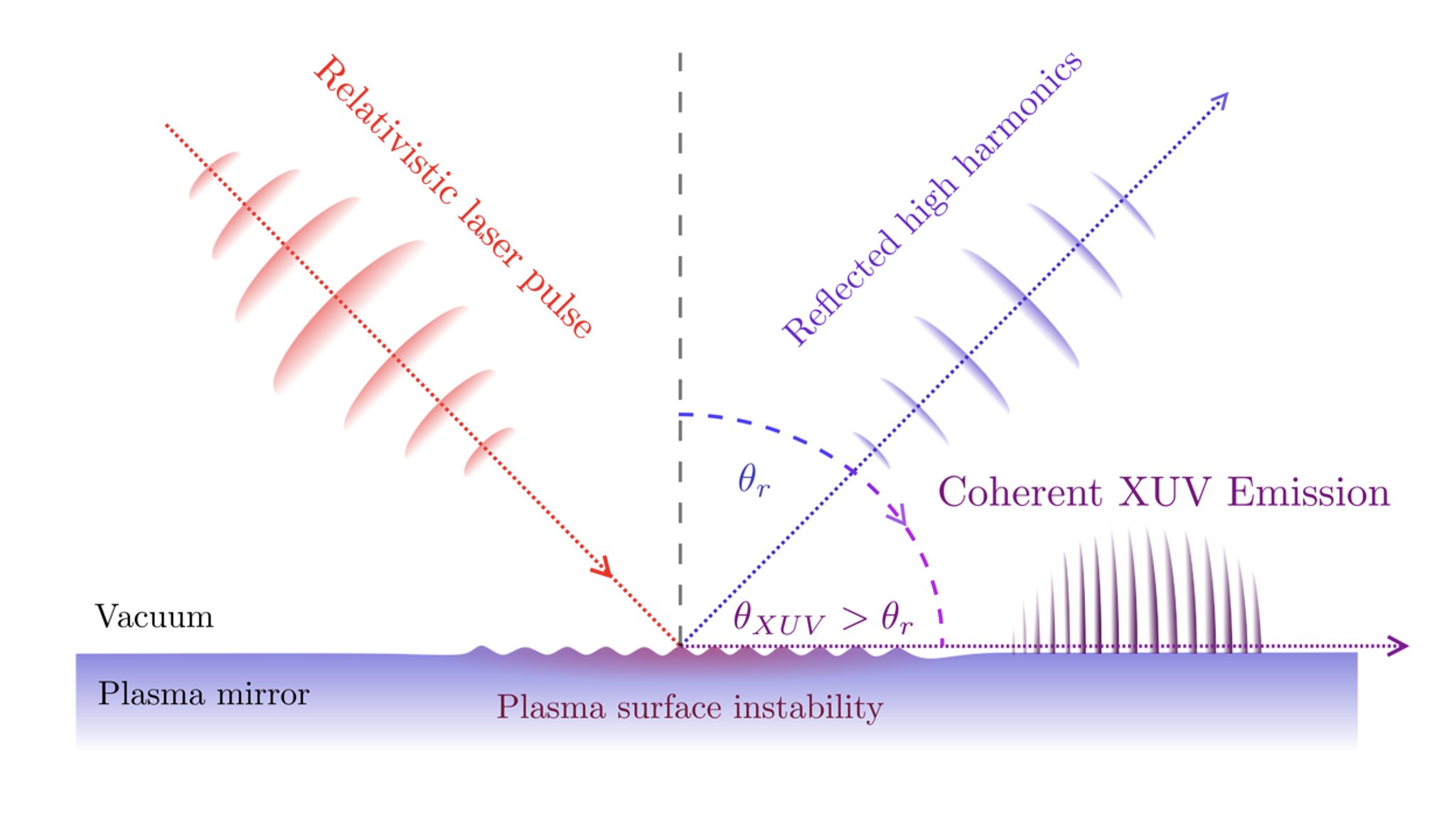
Researchers have discovered a surprising transition during interactions between intense laser pulses and plasma mirrors, resulting in an anomalous emission of coherent extreme ultraviolet (XUV) radiation. This emission propagates parallel to the surface of the plasma mirror and is linked to laser-driven oscillations of relativistic electron nanobunches. The findings could lead to more studies exploring this anomalous emission and its potential for narrow-band coherent XUV generation.
Physicists Anne L’Huillier, Pierre Agostini, and Ferenc Krausz have been awarded the 2023 Nobel Prize in Physics for their groundbreaking work in developing attosecond laser pulses, which allow for the observation of ultrafast electron motion. By producing flashes of light lasting mere attoseconds, billions of billions of times briefer than a second, researchers can directly detect the movement of electrons as they navigate atoms. This new method has opened doors to studying electrons and has potential applications in fields such as attochemistry and early cancer detection.
A German-Chinese research team has achieved a significant breakthrough in quantum computing by creating a quantum superposition state within a semiconductor nanostructure. Using two carefully calibrated optical laser pulses, the team generated a quantum bit, or qubit, in a quantum dot within the nanostructure. This achievement overcomes previous limitations of using large-scale free-electron lasers and opens up new possibilities for quantum computing advancements.