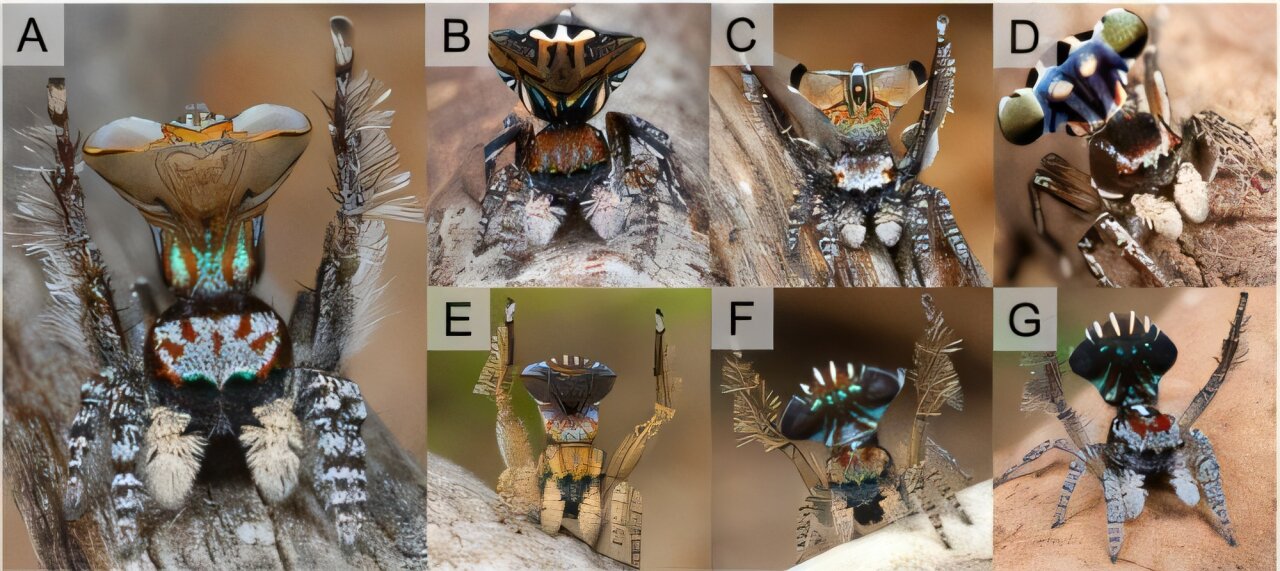
Jumping spiders mimic predatory insects like wasps to deceive predators and potential mates, a strategy that can even fool AI image recognition systems, highlighting complex evolutionary adaptations in animal behavior.
Scientists in New Zealand have discovered 12 new jumping spider species and a new genus called Ourea in the alpine regions of the South Island, highlighting the rich and previously underexplored biodiversity of these endemic spiders, which are known for their jumping and ballooning abilities.
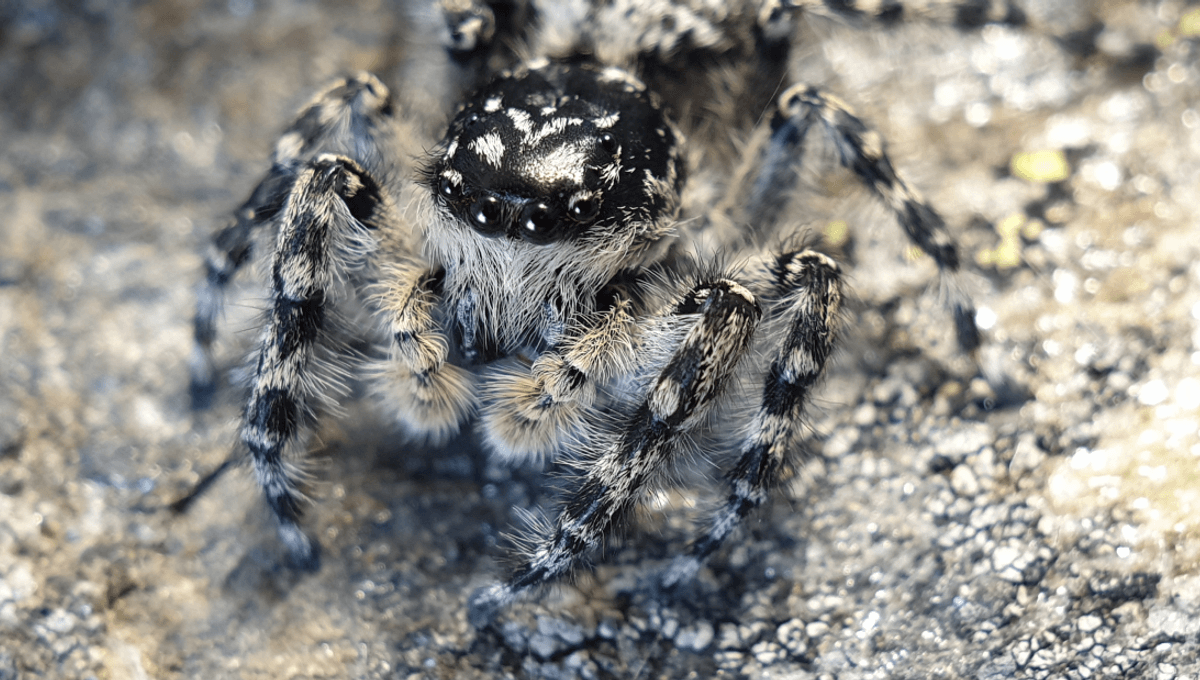
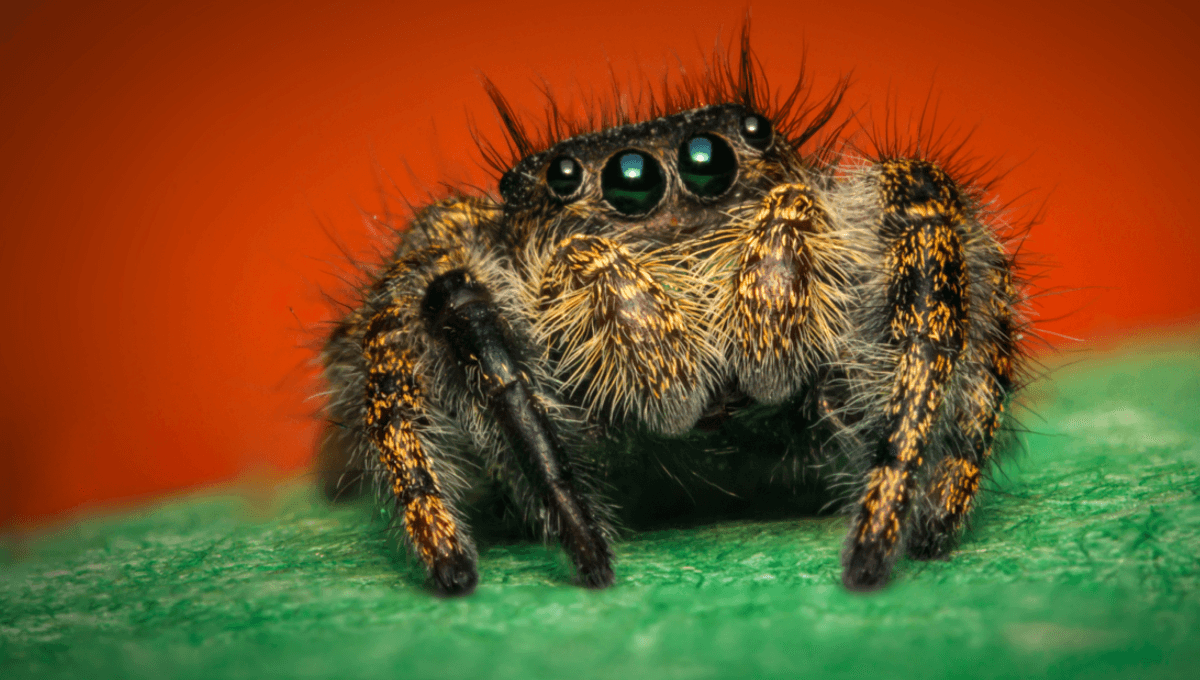
Adorable jumping spiders, typically considered asocial, have been found to recognize and remember each other. In a study on Phidippus regius, researchers observed that the spiders behaved differently towards spiders they had previously encountered compared to strangers. This individual recognition is typically associated with social animals, but the jumping spiders exhibited long-term social memory, suggesting they are capable of individual recognition. This finding adds to the growing list of surprising traits exhibited by jumping spiders, including biological motion perception and REM-like sleep behavior.
Scientists conducted an experiment to understand how jumping spiders perceive their prey's color patterns. They attached capes to termites in different colors and presented them to the spiders. The findings revealed that while the spiders quickly spotted termites in striped capes, they rarely attacked them, providing an explanation for why many species use striking stripes to scare off predators. The research suggests that jumping spiders have an inherent ability to pinpoint striped patterns, making stripes an effective strategy to grab a predator's attention and reduce attacks.
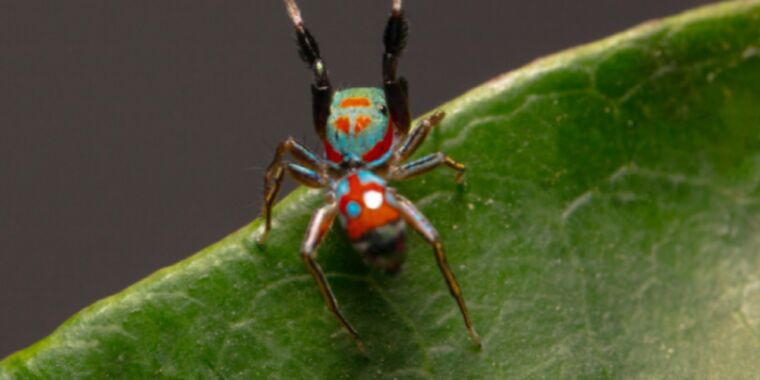
Researchers have discovered that the colorful jumping spider Siler collingwoodi mimics the walk of ants to evade predators. The spider's "stop-and-go" walking pattern is similar to that of ants, which involves extending its first pair of legs up and forward, essentially mimicking an ant's antenna. The spider also bobbed its abdomen, which is similar to the smaller ant species that were roughly the same size as the spider. The spider relies on a combination of imperfect ant mimicry and coloration camouflage to ward off predators.