
"Unlocking the Power of Internal Clocks: A Solution for Jet Lag and Aging"
Originally Published 2 years ago — by Phys.org
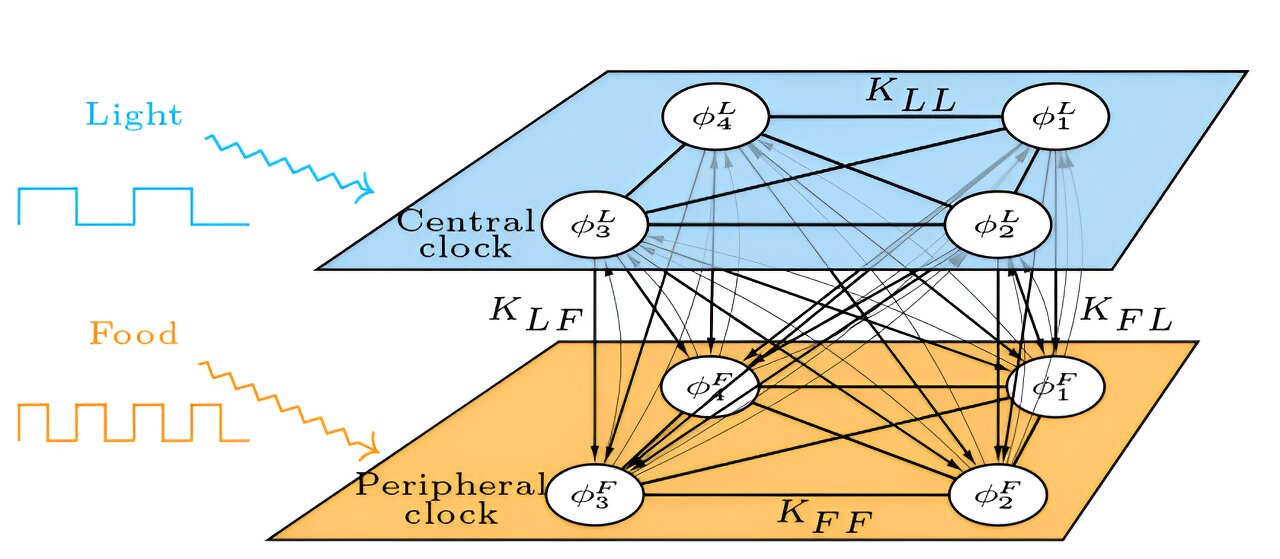
A team of scientists has developed a mathematical model to study the interactions between multiple internal clocks in the body, focusing on the effects of aging and disruptions like jet lag. The model revealed that desynchronization of internal clocks can occur due to conflicting time cues, such as nighttime eating or warm weather during a short photoperiod. The researchers found that aging weakens the signals between circadian clocks and reduces sensitivity to light, making the system more vulnerable to disruptions and slower to recover. They also discovered that having a larger meal in the early morning of a new time zone can help overcome jet lag, while constantly shifting meal schedules or eating at night can lead to misalignment between internal clocks. Further research aims to identify factors that result in more resilient internal clocks, potentially leading to recommendations for preventing jet lag and maintaining a healthy circadian system in old age.