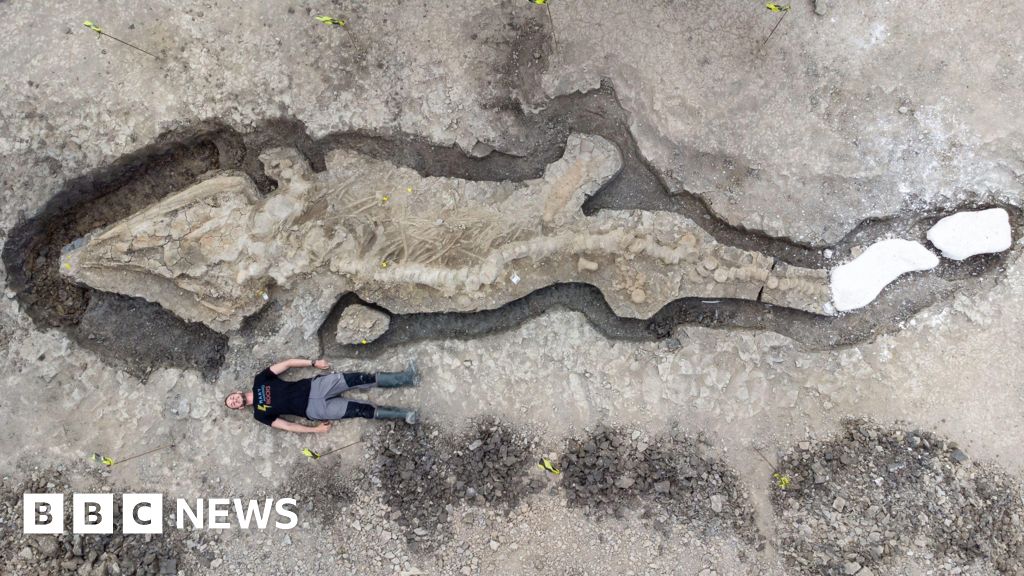
Leicestershire and Rutland have become unexpected hotspots for ichthyosaur discoveries, with recent finds suggesting the area was once a shallow sea during the Jurassic period. Inland discoveries, like the 10-meter-long ichthyosaur fossil found in 2021, are often more complete than coastal finds due to less erosion. This has led experts to reconsider the potential of inland areas for uncovering Jurassic marine reptiles and possibly dinosaurs, with many specimens likely still buried beneath the region.
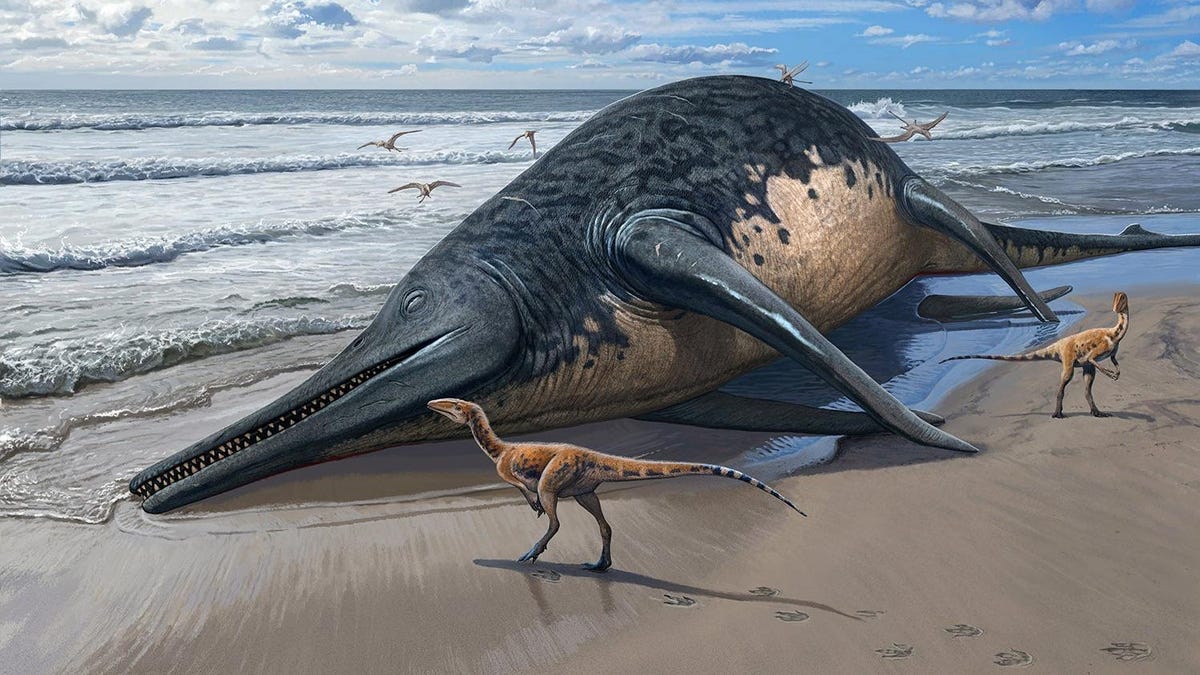
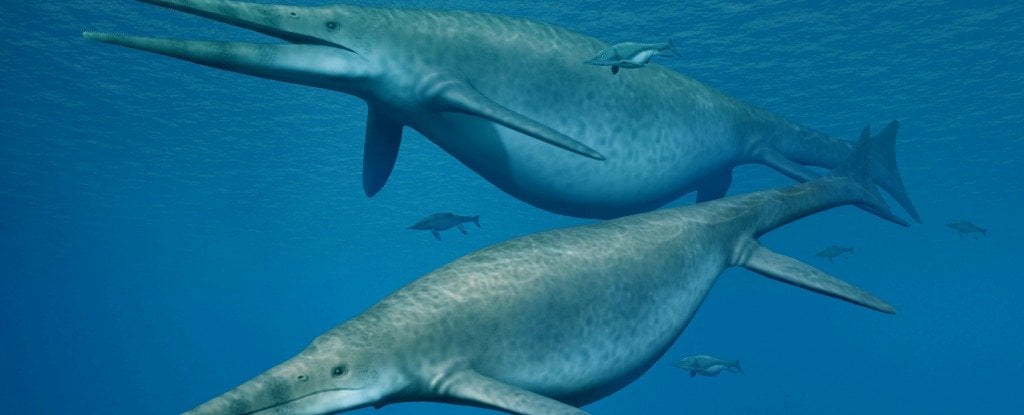
A jawbone found in Somerset, England, is believed to belong to the largest marine reptile ever known, a newly identified species called Ichthyotitan severnensis, estimated to have been over 80 feet long. This finding suggests that ichthyosaurs could have grown nearly as large as blue whales, challenging the long-held belief that blue whales were the largest animals known to science. Ichthyosaurs were ancient sea-dwelling reptiles that disappeared about 90 million years ago, and the discovery sheds light on the diversity of very large ichthyosaurs at the end of the Triassic period.
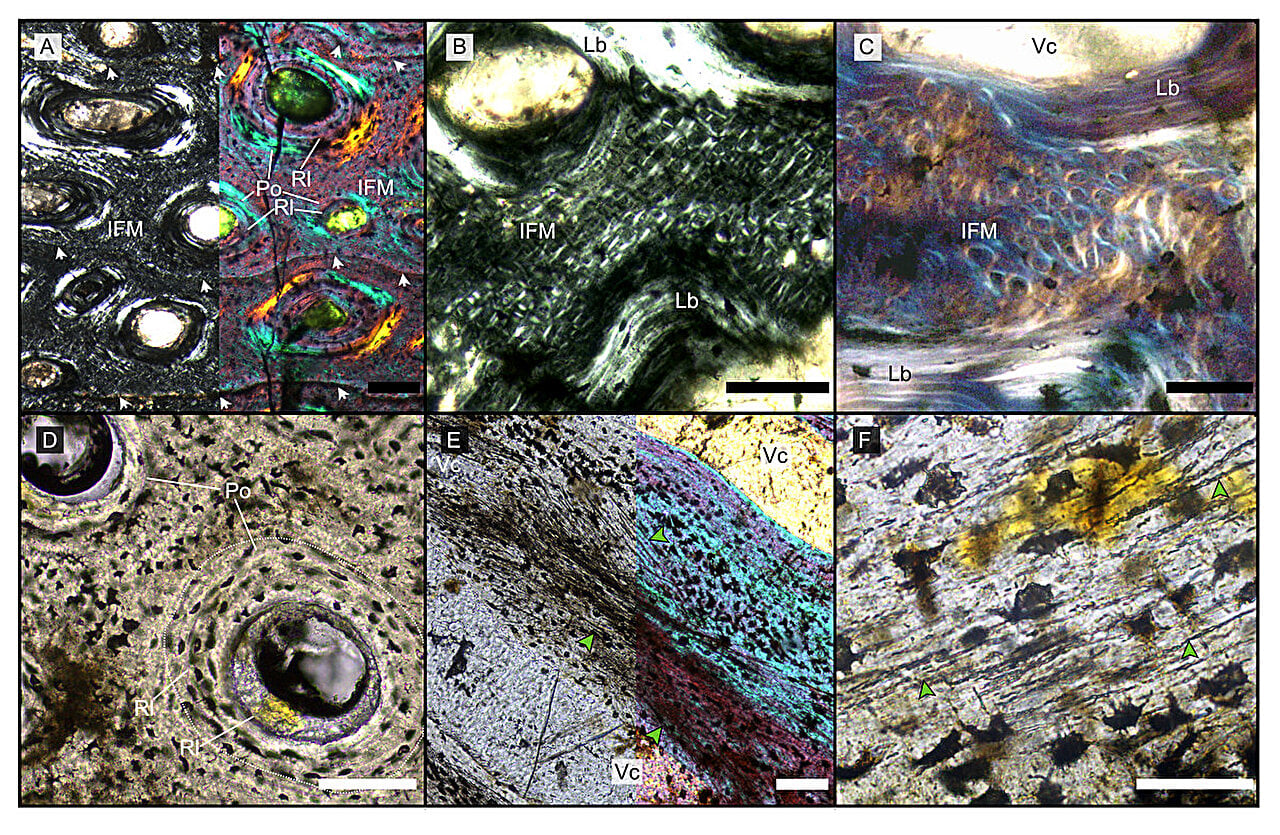
Mysterious fossilized bone fragments, initially thought to be from a creature the size of a blue whale, have been identified as belonging to ancient air-breathing marine reptiles known as ichthyosaurs, which thrived in the oceans over a hundred million years ago. Scientists at the University of Bonn in Germany used osteohistology to analyze the microstructure of the fossilized jawbones and found a unique, shared pattern of fibrous collagen, indicating they belong to the same animal group. This discovery refutes claims that the bones come from land-living dinosaurs and sheds light on the anatomy and potential hunting behavior of these ancient leviathans of the sea.
A study from the University of Bonn suggests that large, fossilized bone fragments found in Europe since the 19th century may have belonged to gigantic ichthyosaurs, marine creatures that could reach 25 to 30 meters in length. The microstructure of the fossils indicates that they come from the lower jaw of these ancient sea creatures, refuting previous claims that the bones belonged to land-living dinosaurs. The unusual structure of their bone walls, similar to carbon fiber-reinforced materials, likely allowed for fast growth and stability, and the findings have been published in the journal PeerJ.
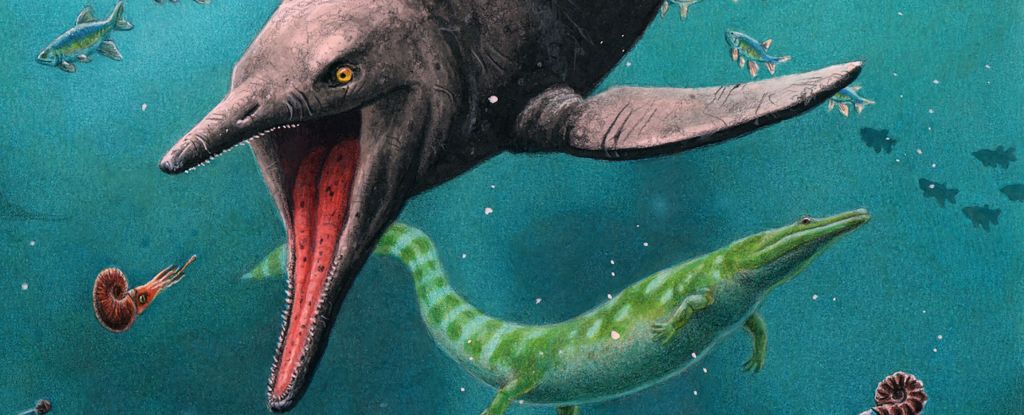
The discovery of 250 million-year-old bones on the remote Arctic island of Spitsbergen suggests that ichthyosaurs, ancient marine reptiles resembling modern dolphins, may have roamed Earth's oceans much earlier than previously thought. The fossils represent the oldest evidence of ichthyosaurs ever found and suggest that they may have appeared prior to the End-Permian Mass Extinction, rather than evolving as a result of the event. The discovery challenges the current timeline for ichthyosaurs and suggests that they were mass extinction survivors rather than ecological successors.
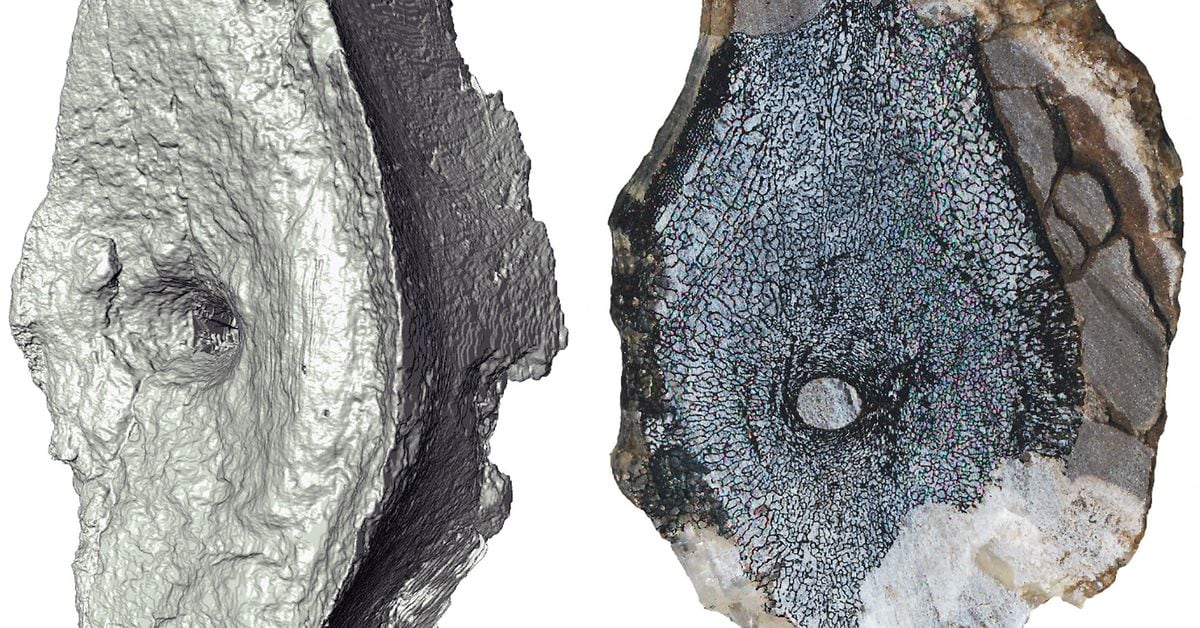
Fossils of the earliest-known ichthyosaur, a type of marine reptile that lived approximately 250 million years ago, have been discovered in Norway's Arctic island of Spitsbergen. The 11 tail vertebrae discovered indicate that the animal was about 10 feet long, making it a top predator. The fossils showed that this ichthyosaur was quite advanced anatomically, indicating that the long-anticipated transitional ichthyosaur ancestor must have appeared much earlier than previously suspected. The discovery may suggest that ichthyosaur origins predated the mass extinction event by up to perhaps 20 million years.