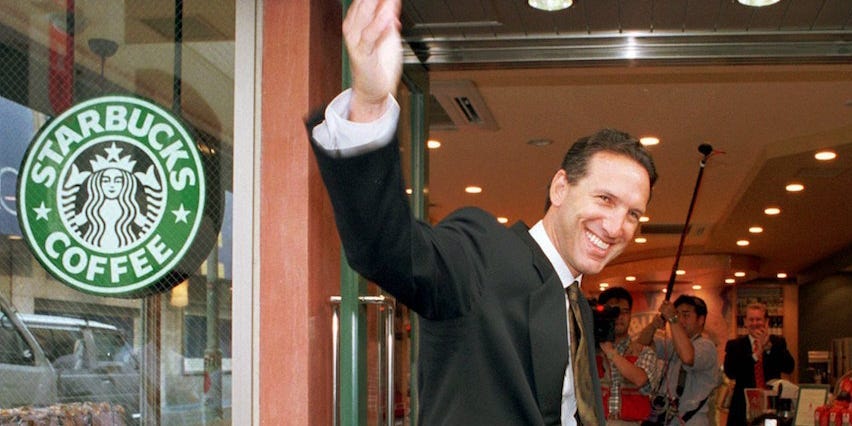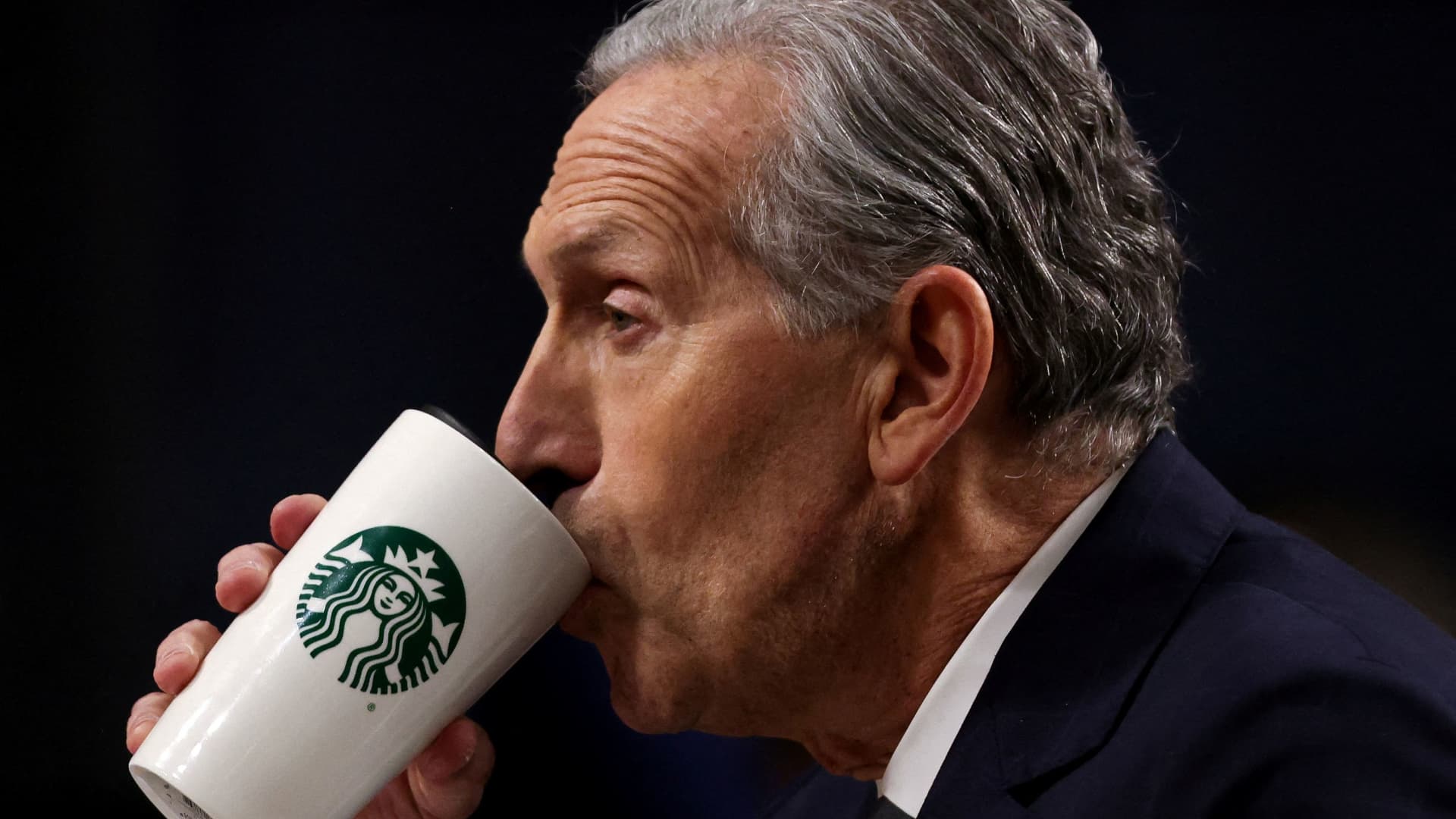
Howard Schultz expressed strong support for Starbucks CEO Brian Niccol's 'back to Starbucks' strategy, highlighting his enthusiasm for the company's efforts to revive its culture and sales, and publicly endorsing Niccol's leadership during a key company event.
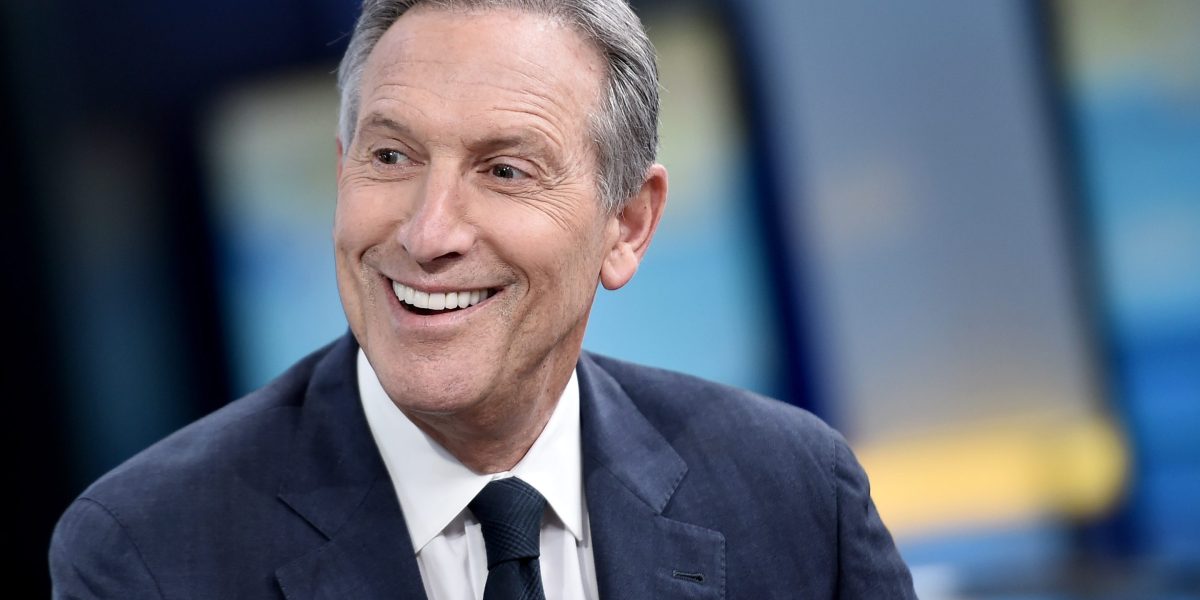
Howard Schultz, Starbucks' chairman emeritus, advises young entrepreneurs to gain experience by working for value-aligned companies before starting their own ventures. He emphasizes learning from organizational operations and surrounding oneself with skilled individuals. Schultz also highlights the importance of perseverance, sharing his own experiences of overcoming early rejections when building Starbucks. He encourages young leaders to ignore naysayers and maintain belief in their dreams, while also being realistic about their circumstances.
Former Starbucks CEO Howard Schultz is stepping down from the company's board as part of a planned transition. Schultz, who had previously served three stints as CEO, expressed his intention to support the next generation of leaders in his role as chairman emeritus. The change comes after Schultz's efforts to modernize Starbucks and improve relations with baristas, but also faced criticism for his aggressive approach against baristas unionizing. Wei Zhang, a former senior advisor to Alibaba, will take Schultz's seat on the board, potentially aiding Starbucks' Chinese business recovery.
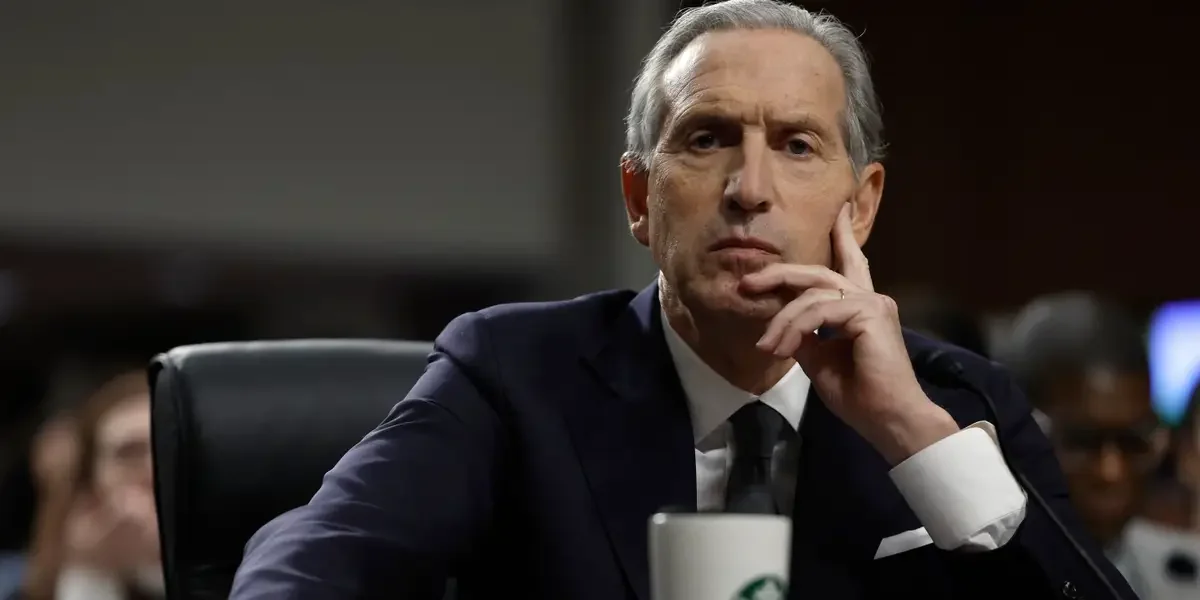
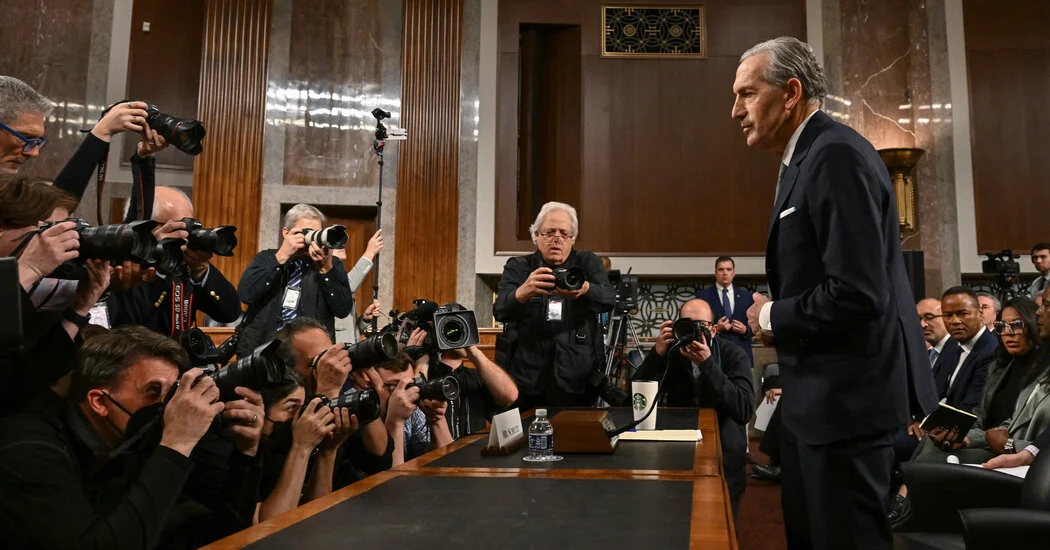
Former Starbucks CEO Howard Schultz is stepping down from the coffee chain's board as part of a planned transition. Schultz, who ended his third stint as CEO in March, did not provide a reason for his exit. Wei Zhang, a senior advisor to Alibaba and president of Alibaba Pictures Group, will take his seat on the board. Schultz's departure comes after he faced criticism for his aggressive approach against baristas unionizing and being grilled in front of a Senate committee over the company's alleged union busting.
Howard Schultz, the former CEO of Starbucks, faced accusations of union-busting from senators during a recent hearing. Schultz's image has shifted from a model of corporate responsibility to a union buster, and Americans' attitudes toward unions and large companies have evolved. Gen Z, the generation Schultz hopes to attract to work at his coffee shops, is the most supportive of unions. Public support for unions is at a historic high, with 71% of those surveyed approving of labor unions. Starbucks' critics have growing support, and mistrust for large corporations has also grown.
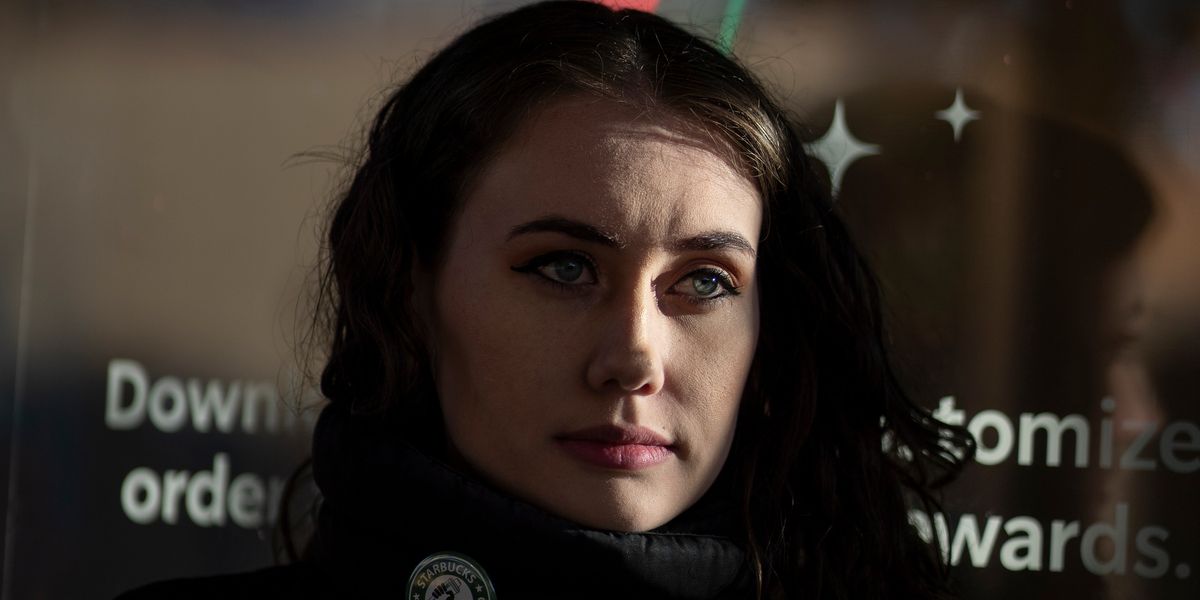
Starbucks fired union organizer Lexi Rizzo, who led a successful unionization vote at a Buffalo store, only two days after former CEO Howard Schultz denied the company was "union-busting" at a Senate committee hearing. Rizzo, who had worked for the company for seven years, was allegedly fired for repeatedly being late to work. The union, Starbucks Workers United, called the firing "retaliation at its worst." Schultz was confronted by Democratic Senators over 130 labor law violations committed by Starbucks since the union campaign began.
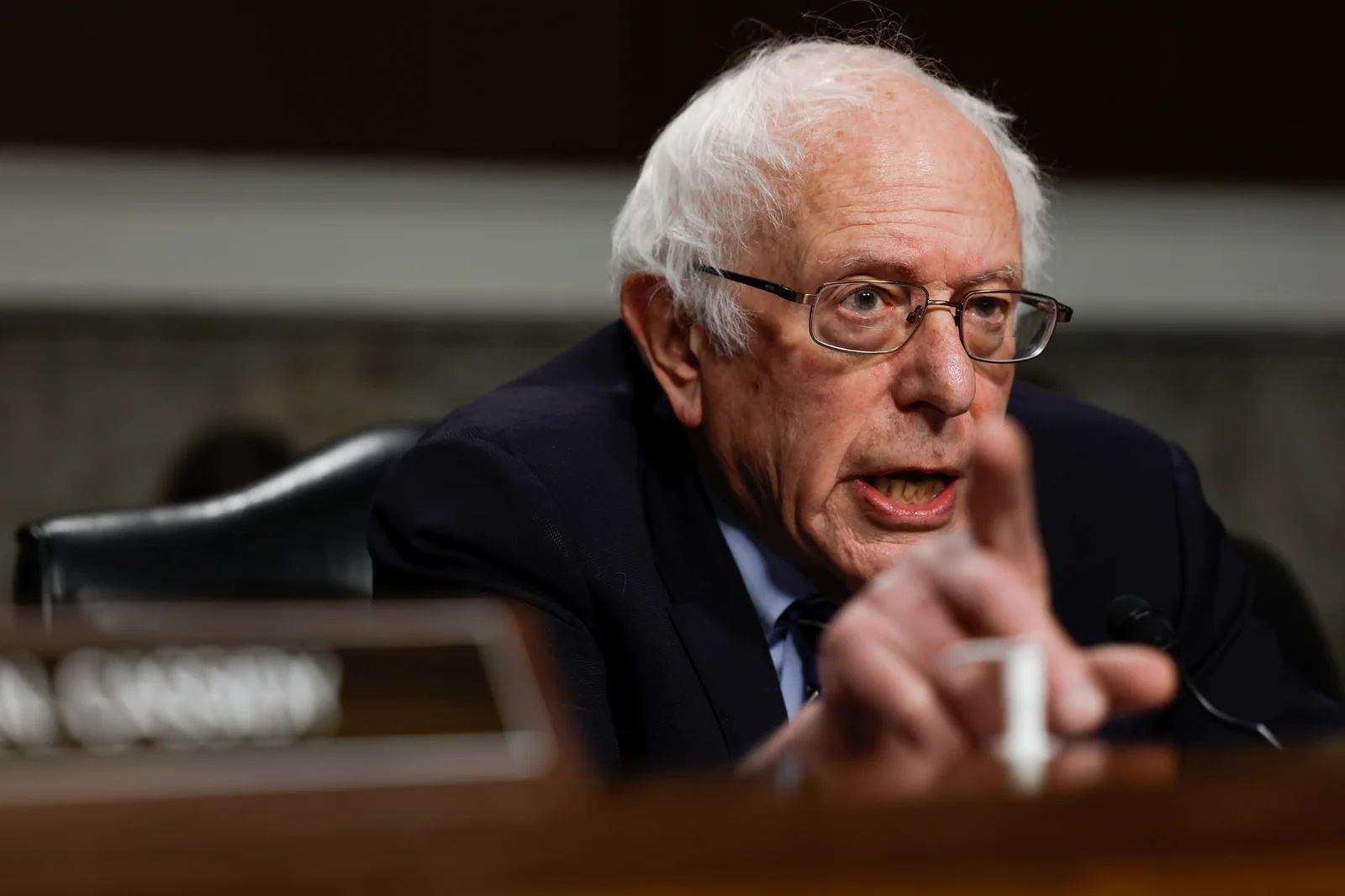
Starbucks has fired a shift supervisor who was instrumental in organizing one of the first stores in the coffee chain to unionize, according to Starbucks Workers United. The firing came the same week that former CEO Howard Schultz testified before Congress, where he was grilled by lawmakers for the company’s labor practices and alleged union-busting. Senator Bernie Sanders has placed pressure on Schultz’s alleged union-busting tactics, noting that Starbucks has waged the most aggressive and illegal union-busting campaign in the modern history of the US.
Starbucks has fired Alexis Rizzo, a shift supervisor at one of the first two US stores to win a union election, who is credited with sparking the organizing drive that has resulted in nearly 300 unionized shops across the United States. Rizzo is one of dozens of union organizers that Starbucks has fired since late 2021, according to the National Labor Relations Board (NLRB), which has accused the company of hundreds of labor law violations. The company has been accused of withholding raises and tips from union workers, unlawfully denying new benefits to organized shops, and illegally obstructing contract negotiations.
Starbucks fired Alexis Rizzo, a shift supervisor and union leader, who was responsible for igniting the Starbucks Workers United union campaign, just days after former CEO Howard Schultz testified on Capitol Hill about the coffee chain's alleged union-busting. Rizzo suspects she was let go as a result of Wednesday's Senate hearing. Nearly 300 Starbucks cafes have voted to unionize under Starbucks Workers United, and the union has made more than 500 complaints of unfair labor practices related to Starbucks with the federal labor board. Judges have found that the company has broken federal labor law 130 times.
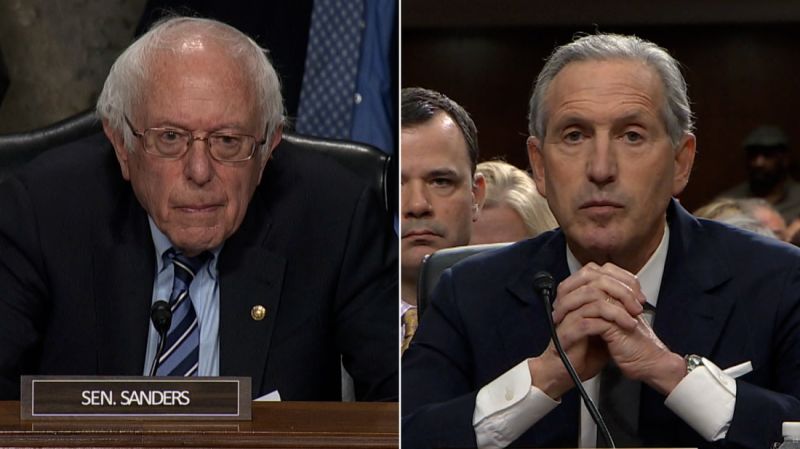
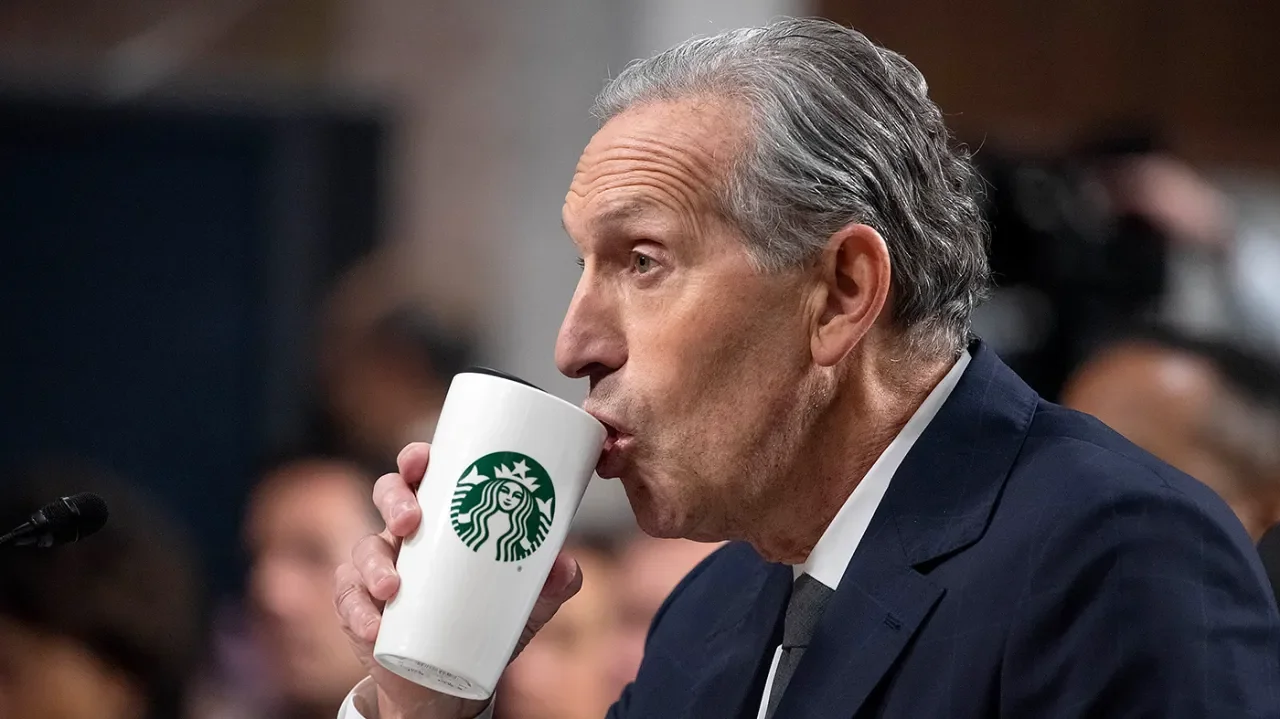
Former Starbucks CEO Howard Schultz defended his billionaire status at a Senate Labor Committee hearing, arguing in favor of the "American dream" given that he himself "came from nothing" and "earned it." Schultz also defended Starbucks' labor practices, stating that the company is committed to fulfilling its obligation as an employer under the National Labor Relations Act and is committed to good faith negotiations on first contracts for each unionized store. The hearing also saw heated exchanges between Schultz and Sen. Bernie Sanders, who accused Starbucks of waging the most aggressive and illegal union-busting campaign in the modern history of the US.
Former Starbucks CEO Howard Schultz, worth $3.7 billion, was offended when he was referred to as a billionaire during a Senate hearing on Wednesday. The Senate committee was investigating Starbucks' treatment of unionized employees. Schultz maintained that Starbucks has never broken labor laws and that working at the coffee chain is "the best first job in America." The hearing came after a court ruling in New York on March 1, which found that Starbucks had violated labor laws by illegally monitoring and firing workers in Buffalo and preventing them from unionizing.
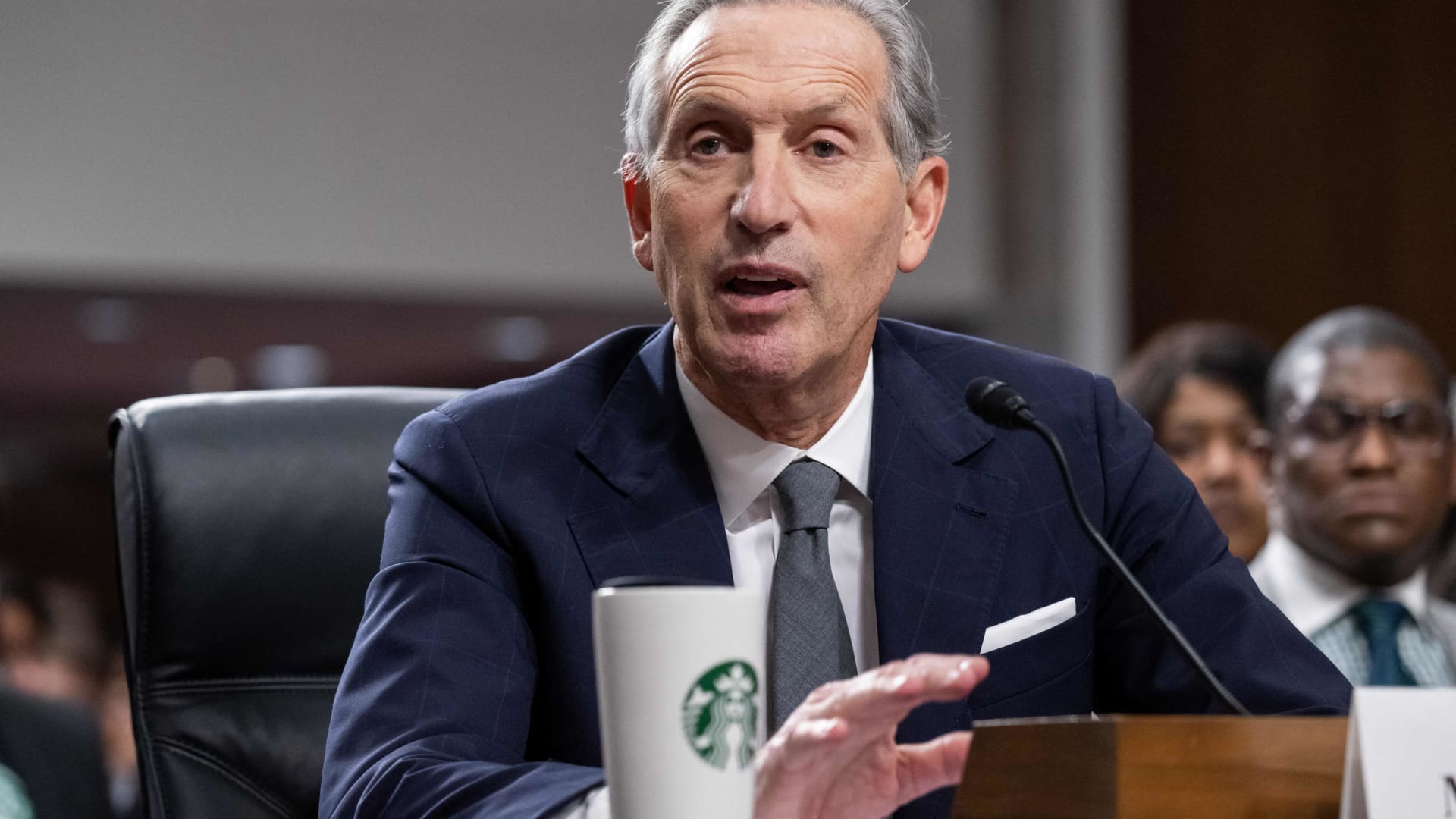
Former Starbucks CEO Howard Schultz faced criticism from Senate Democrats at a hearing on labor practices at Starbucks, with accusations of illegal union-busting and calculated efforts to stall contract talks. Schultz defended the company's labor practices and denied breaking the law, highlighting the company's benefits and average hourly wage of $17.50. Republicans on the committee praised Starbucks, while Democrats argued that unions acted as a corrective to a power imbalance between workers and management. The hearing coincided with a nonbinding shareholder vote in favor of an independent assessment of Starbucks' practices related to worker rights.
Howard Schultz, former CEO and current board member of Starbucks, faced tough questioning from Senate Democrats at a hearing on the company's labor practices. Democrats accused Starbucks of union-busting and stalling in contract talks, while Republicans praised the company's success and treatment of workers. The hearing also highlighted the changing politics of labor in Washington, with some Democrats arguing that unions are necessary to correct power imbalances between workers and management. Starbucks shareholders also voted in favor of an independent assessment of the company's practices related to worker rights.
Sen. Bernie Sanders grilled former Starbucks CEO Howard Schultz over the company's response to union organizing at its stores, accusing the coffee giant of "the most aggressive and illegal union-busting campaign in the modern history of our country." Schultz denied the allegations and said the company had not broken the law. Republicans on the Senate committee defended Starbucks, despite the company's progressive stances. The National Labor Relations Board is prosecuting more than 80 complaints against Starbucks, covering 278 unfair labor practice charges.
Former Starbucks CEO Howard Schultz faced questioning from Democrats on the Senate Health, Education, Labor and Pensions Committee over allegations of illegal union-busting tactics at the coffee chain. Schultz denied involvement in the decision to fire union organizers or close stores that voted to form a union. Workers at nearly 300 Starbucks stores have voted to form a union since December 2021. Starbucks drew more than 80 unfair labor practice charges from the National Labor Relations Board (NLRB) over the past 18 months, more than any other company.