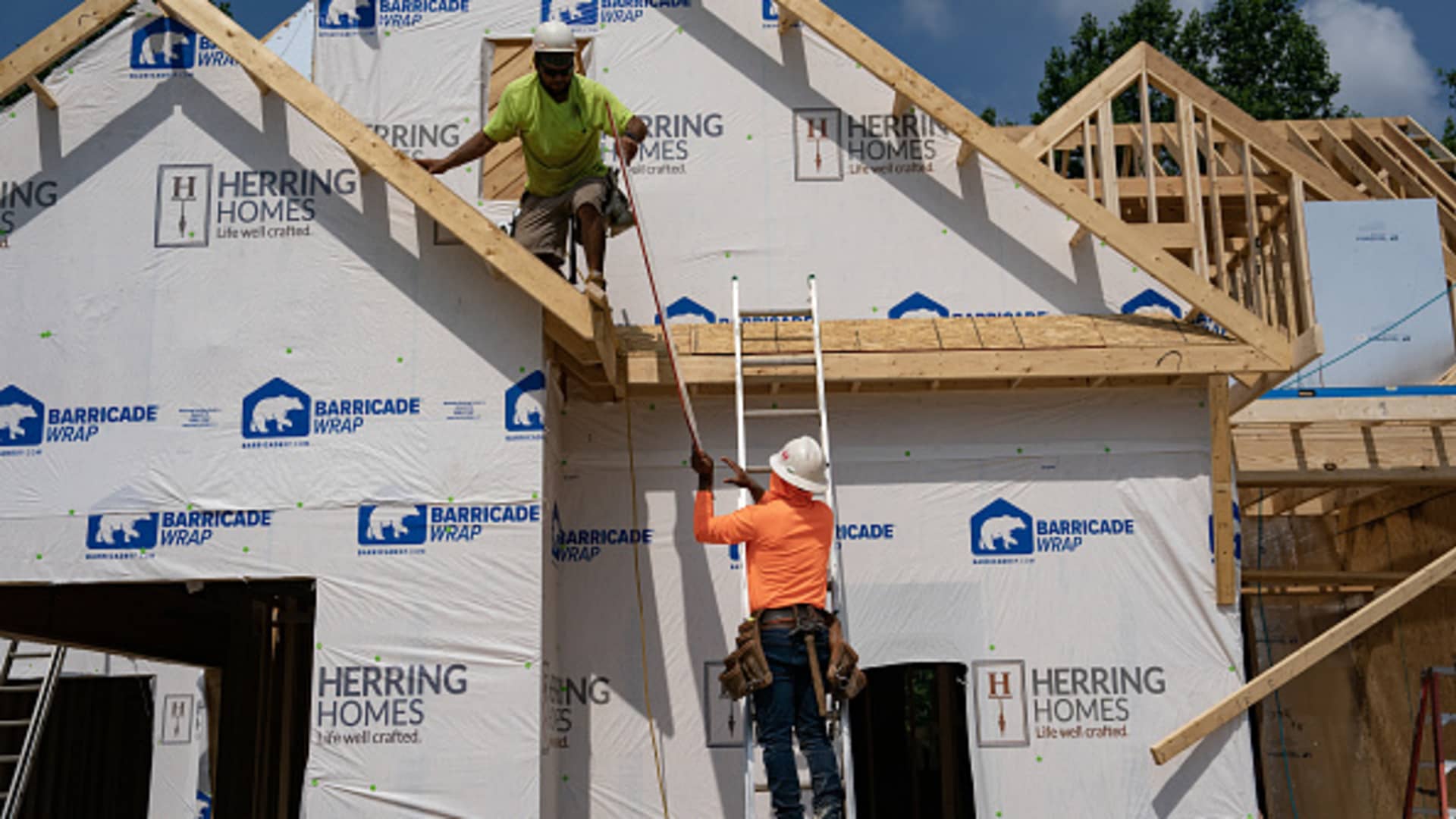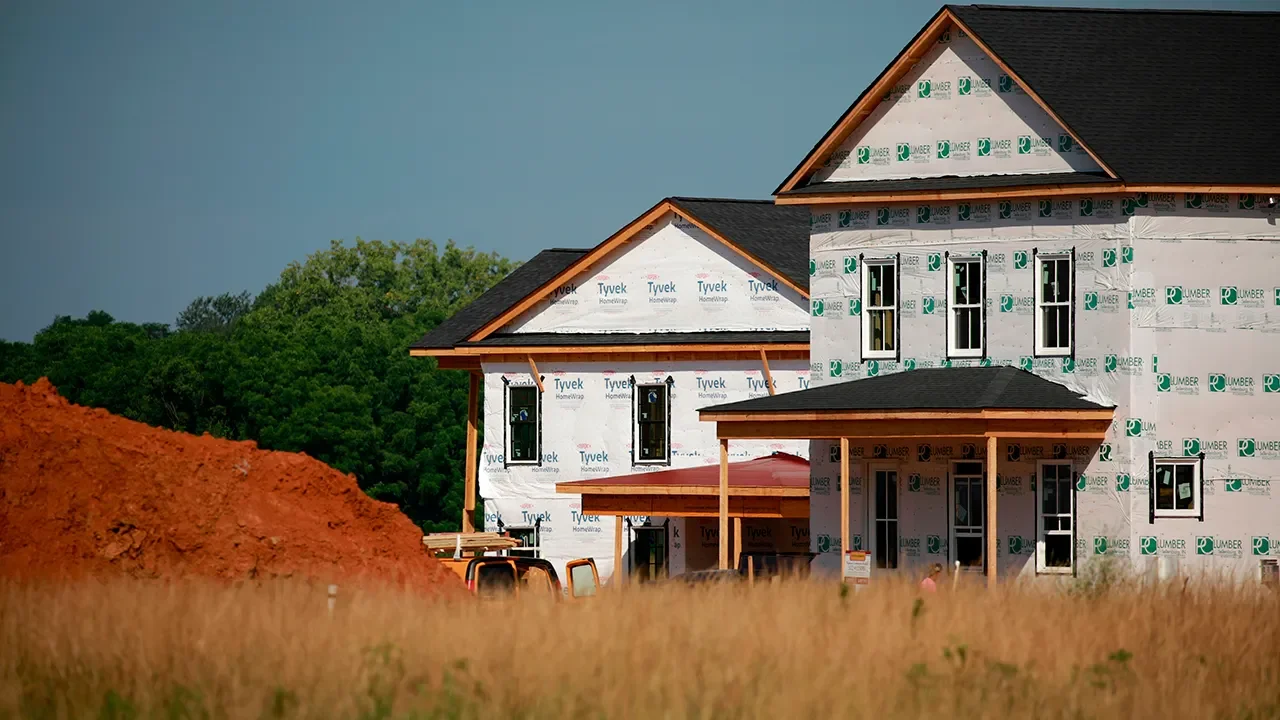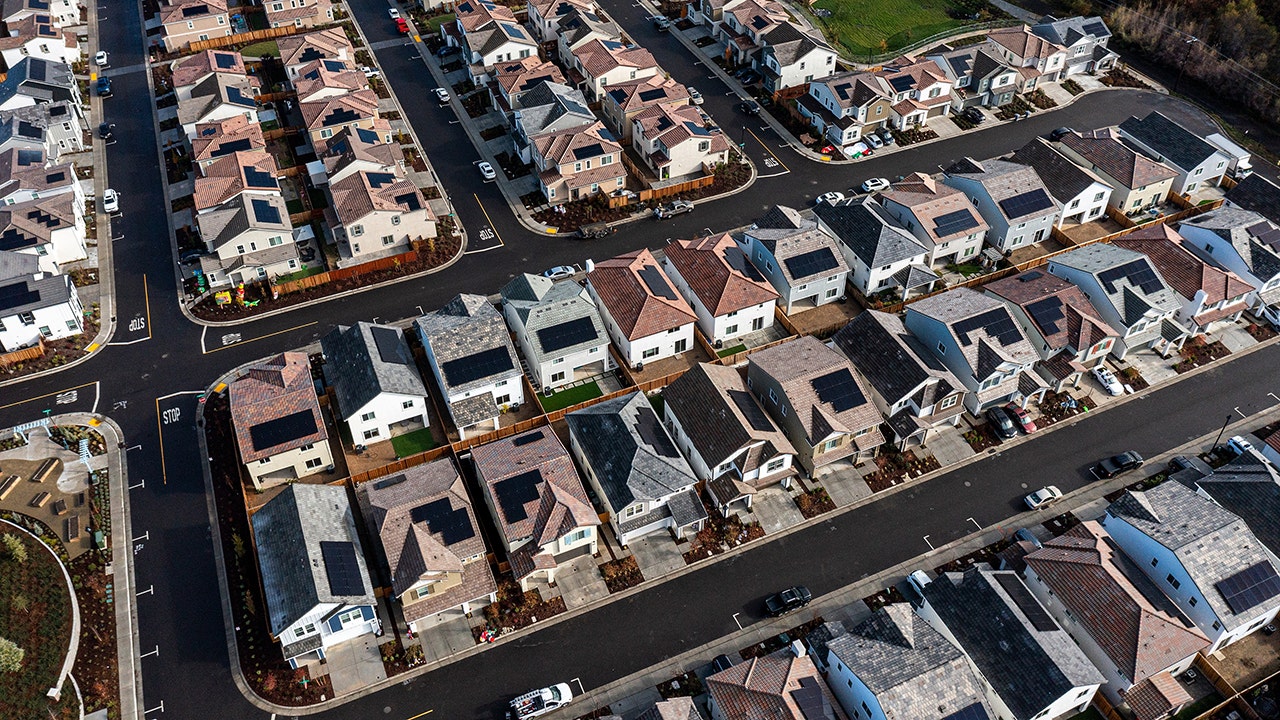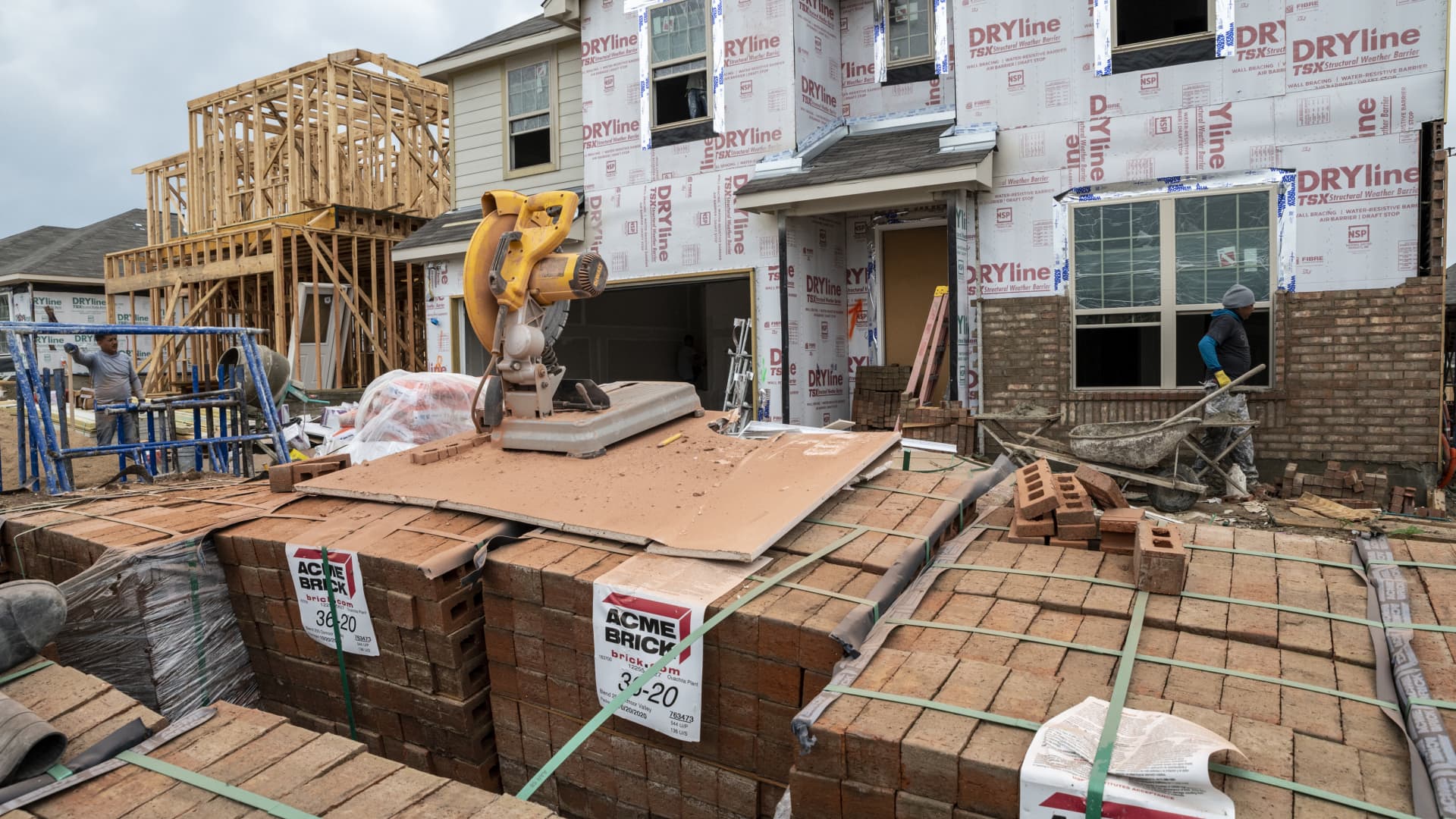
U.S. homebuilder sentiment rose to an eight-month high in December, reaching 39 on the NAHB/Wells Fargo index, but activity remains limited by rising construction costs due to tariffs and economic uncertainty, with builders offering incentives and price reductions amid a sluggish housing market.
U.S. homebuilder sentiment has unexpectedly declined to its lowest level since December 2022, influenced by high mortgage rates and economic uncertainty, leading builders to use price cuts and incentives to attract buyers. Despite some easing in mortgage rates, the housing market remains challenged, with low sales expectations and depressed construction activity.
The US housing market is experiencing a significant downturn, with construction starts and permits at five-year lows, declining builder sentiment, and increased costs due to tariffs and labor shortages, raising concerns about broader economic impacts.
Homebuilder sentiment in the U.S. housing market surged in January for the second consecutive month as mortgage rates dropped, with the National Association of Home Builders/Wells Fargo Housing Market Index rising five points to 44. The decline in mortgage rates has improved housing affordability and brought buyers back into the market. Despite the optimism, the housing market faces challenges such as higher prices and shortages of labor and lumber as home building is expected to expand in 2024.
Homebuilder sentiment in the U.S. housing market rebounded in December as mortgage rates fell, according to the National Association of Home Builders/Wells Fargo Housing Market Index. The index rose three points to 37, slightly exceeding expectations, following a six-point drop in November. The decline in mortgage rates has led to increased buyer interest, with builders reporting an uptick in traffic. The recent decline in rates has sparked optimism among homebuilders, who believe that the worst may be over for the housing market.
Sales of new U.S. single-family homes dropped 5.6% in October, more than expected, as higher mortgage rates deterred buyers despite builders cutting prices. However, the decline is likely temporary due to a persistent shortage of previously owned houses on the market. The supply of existing homes is nearly 50% below pre-pandemic levels, leading to increased demand for new construction. While the median house price plunged 17.6% from a year ago, economists caution against reading too much into this figure, as it does not account for changes in the mix of sales. With mortgage rates expected to fall again, a rebound in new home sales is anticipated.
Homebuilder sentiment in the market for single-family homes dropped to a 10-month low, with the National Association of Home Builders/Wells Fargo Housing Market Index falling four points to 40 in October. Builders attribute the decline to high mortgage rates, which have reached a 23-year high, making homes less affordable for buyers. As a result, buyer traffic has decreased, and builders are resorting to incentives such as buying down mortgage interest rates and cutting home prices to attract buyers. Boosting housing production is seen as a solution to the affordability crisis, but uncertainty regarding monetary policy is contributing to challenges in the market.
Homebuilder sentiment in the market for single-family homes rose one point in July to 56, marking the seventh consecutive month of gains and the highest level since June 2022. Builders attribute the increased demand to low supply in the resale market, but higher mortgage rates and supply-side challenges continue to impact the market. The rise in interest rates has strained affordability, leading to a drop in sales expectations for the next six months. Despite this, builders are using fewer incentives, and sales of newly built homes have seen a significant increase compared to last year.
Housing starts in the US unexpectedly increased by 2.2% in April to an annual rate of 1.4 million units, due to limited inventory and increased homebuyer demand. However, compared to the same period last year, housing starts are down by 22.3%. Applications to build also fell by 1.5% to an annualized rate of 1.42 million units. The National Association of Home Builders/Wells Fargo Housing Market Index rose five points to 50, indicating a positive sentiment in the single-family housing market. Despite the increase, the housing market remains in a slump due to the Federal Reserve's aggressive campaign to tighten policy and slow the economy.
Homebuilder sentiment in the US housing market rose to its highest level since July, as declining mortgage rates and limited inventory helped drive demand higher for new homes. The National Association of Home Builders/Wells Fargo Housing Market Index rose five points to 50, marking the first time in nearly a year that the index pulled out of negative territory. The interest rate-sensitive housing market has borne the brunt of the Federal Reserve's aggressive campaign to tighten policy and slow the economy. Limited inventory has also bolstered demand this month, and new construction will continue to be a significant part of prospective buyers’ search in the quarters ahead.
Homebuilder sentiment in the market for newly built homes rose in April for the fourth straight month, as the supply of existing homes for sale remains scarce. The National Association of Home Builders/Wells Fargo Housing Market Index climbed to 45 in April, a 1-point gain. Builders cited a lack of listings on the resale market, which gave them an unusually strong edge. Slightly lower mortgage rates are also helping demand. Meanwhile, sales expectations in the next six months increased 3 points to 50.
Homebuilder sentiment in the US housing market rose to 45 in April, the highest level since September, due to declining mortgage rates and low inventory. However, the index still points to a slump in the housing sector ahead of the pivotal spring-selling season. The interest rate-sensitive housing market has borne the brunt of the Federal Reserve's aggressive campaign to tighten policy and slow the economy. Despite this, demand has shown early signs of returning as mortgage rates fall from a record high of 7.08% in November, and limited inventory has also bolstered demand this month.