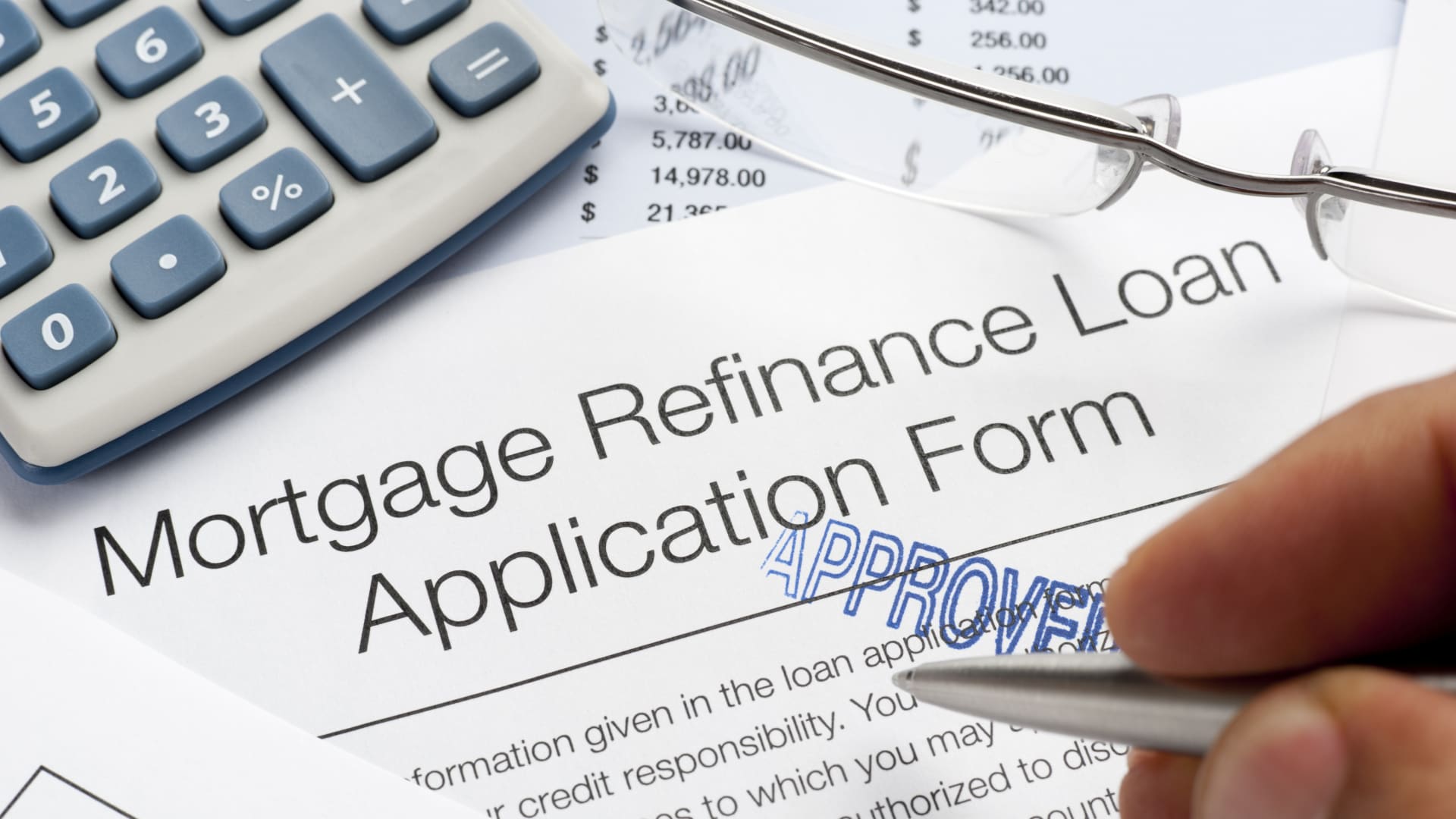
The average 30-year fixed mortgage refinance rate is 6.23%, with rates trending downward in late 2025 due to Federal Reserve rate cuts, making refinancing potentially beneficial if it offers at least a 1% lower rate than current rates. Various refinance options exist, including rate-and-term, cash-out, no-closing-cost, and streamline loans, each suited for different financial goals. Costs and eligibility criteria vary, and shopping around for the best deal is recommended.
Mortgage rates have slightly decreased this week, with Navy Federal Credit Union offering the lowest APR at 5.614%, leading a list of top lenders with sub-6% rates for 30-year fixed loans. Shopping around and comparing APRs, which include fees and points, is crucial for securing the best deal, especially as lenders offer discounts and promotions.
The average 30-year fixed mortgage refinance rate is 6.24%, with rates remaining high despite recent Fed rate cuts, making refinancing less attractive unless significant savings are possible. Homeowners should consider costs, potential savings, and loan types before refinancing, which can involve various fees and options like cash-out or no-closing-cost loans.
Mortgage refinance rates remain elevated but have shown some decline, with the average 30-year fixed-rate around X.XX% as of December 2025. Refinancing can be beneficial if it offers a rate at least 1% lower than your current rate, but it involves costs and considerations like loan type, term, and market conditions. Various refinance options are available, including rate-and-term, cash-out, no-closing-cost, and streamline loans, with potential savings and strategic benefits depending on individual circumstances.
The average 30-year fixed mortgage refinance rate is 6.04% as of December 24, 2025, with rates remaining high compared to pandemic lows, and homeowners are advised to consider refinancing if they can secure at least a 1% lower rate or need to tap home equity. Various refinancing options and costs are discussed, along with market trends influenced by Federal Reserve rate cuts.
Despite the Federal Reserve's rate cut, mortgage rates increased, leading to a 3.8% decline in total mortgage applications, with refinancing applications dropping 4% and purchase applications falling 3%. The rise in rates has impacted loan demand, although refinance activity remains high compared to last year, and mortgage rates have slightly decreased at the start of the week amid ongoing economic data releases.
Mortgage refinance demand surged nearly 60% last week due to falling interest rates, reaching the lowest levels since October of the previous year, driven by homeowners seeking savings amid economic uncertainty, with particular strength in adjustable-rate mortgages and a slight increase in home purchase applications.
Mortgage rates are at their lowest for 2025, with the 30-year rate at 6.35%, leading to increased home purchase applications. Rates are expected to stay stable or slightly decrease through 2026, influencing borrowing and refinancing decisions.
Mortgage rates in the U.S. have dropped to an average of 6.322% for a 30-year fixed loan as of September 2025, marking a significant decline from recent highs and the first time below 6.4% since October 2024. Despite the decrease, rates remain high compared to pandemic lows, influenced by economic factors such as inflation, government debt, and Federal Reserve policies. Homebuyers are advised to improve their credit scores, maintain low debt-to-income ratios, and shop around for the best rates to mitigate costs.
Mortgage rates dropped to their lowest since April, leading to a 7% weekly increase in refinance applications, which are 40% higher than last year, while home purchase applications remained largely unchanged due to ongoing market uncertainty.
Mortgage refinance demand surged to a two-year high as interest rates dropped to their lowest level since March, with applications rising 15% last week. However, home purchase applications fell 3%, as buyers anticipate further rate drops and face a tight, expensive market.
As of July 15, 2024, mortgage rates for 15- and 30-year fixed-rate loans remain steady at 5.875% and 6.625%, respectively. It's crucial to compare different lenders' rates, terms, and fees to secure the best deal. Factors influencing mortgage rates include credit score, loan type, and economic conditions.
Mortgage rates for 15- and 30-year fixed-rate terms have decreased slightly, with the 30-year rate now at 6.625% and the 15-year rate at 5.990%. It's important to compare different lenders' rates, terms, and fees to secure the best deal.
As of June 6, 2024, the interest rate for a 30-year fixed-rate mortgage has decreased to 6.625%, while the rate for a 15-year fixed-rate mortgage remains steady at 5.990%. Mortgage rates fluctuate daily based on economic conditions, so it's important to check current rates and compare offers from different lenders to secure the best deal.
As of June 4, 2024, the interest rate for a 30-year fixed-rate mortgage has decreased to 6.875%, while the rate for a 15-year fixed-rate mortgage remains steady at 6.125%. Mortgage rates fluctuate daily based on economic conditions, so it's important to compare different lenders' rates, terms, and fees to secure the best deal.