
Tag

High Energy Electrons

All articles tagged with #high energy electrons

Record-Breaking Cosmic Ray Electrons Detected Near Earth
science1 year ago

Record-Breaking Cosmic Ray Electrons Detected Near Earth

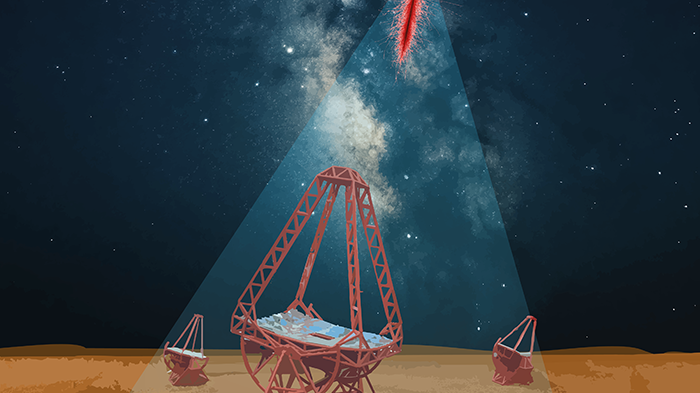
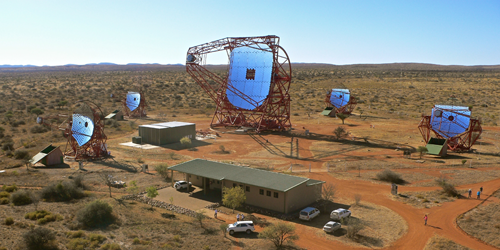
Scientists at the H.E.S.S. observatory in Namibia have detected the highest energy cosmic electrons ever observed, providing new insights into cosmic rays and extreme cosmic processes. These electrons, with energies up to 40 TeV, suggest nearby sources such as supernova remnants or pulsars. The discovery was made possible by the observatory's large telescopes and advanced algorithms, which differentiate these electrons from other cosmic rays. This finding enhances our understanding of cosmic accelerators and the universe's most violent phenomena.
Record-Breaking Cosmic Ray Electrons Detected Near Earth
physics1 year ago

Record-Breaking Cosmic Ray Electrons Detected Near Earth

The H.E.S.S. Collaboration has extended the measurement of cosmic-ray electron and positron spectra to 40 TeV, revealing a significant spectral break at 1 TeV. This breakthrough challenges existing models of cosmic-ray origins and propagation, suggesting that local sources like pulsars or supernova remnants may play a role. The findings also constrain the potential contribution of dark matter annihilation to the cosmic-ray flux, prompting a reevaluation of cosmic-ray acceleration models.

"Earth's Electrons: The Surprising Source of Lunar Water Formation"
space-science2 years ago

"Earth's Electrons: The Surprising Source of Lunar Water Formation"

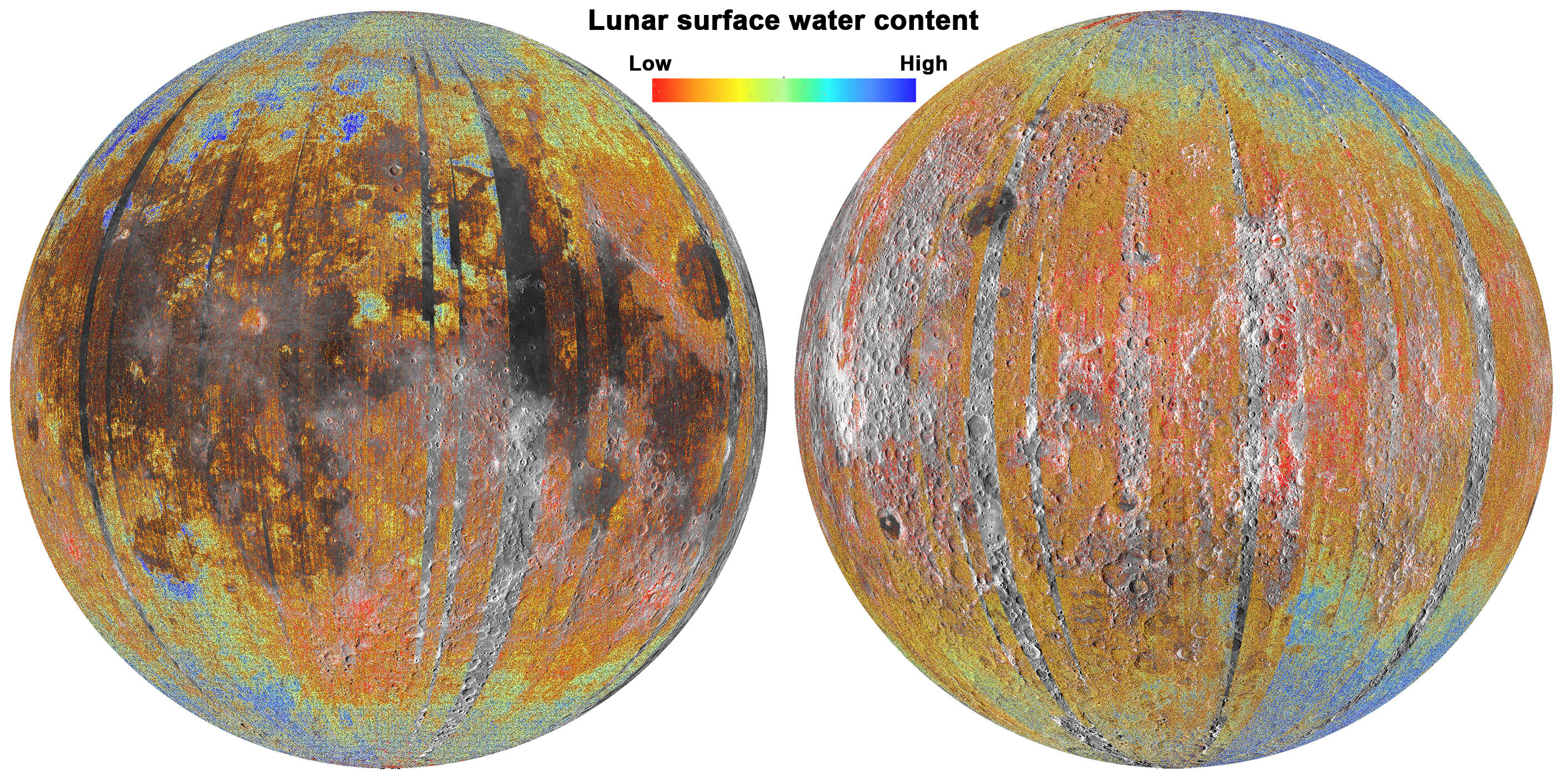
Researchers have discovered that high energy electrons from Earth's plasma sheet may be contributing to weathering processes on the moon's surface and aiding the formation of water. The study suggests that the magnetotail, a region consisting of high energy electrons and ions sourced from Earth and the solar wind, may play a role in the origin of water ice previously discovered in the lunar permanently shaded regions. This finding highlights the strong connection between Earth and the moon and could provide valuable insights for future lunar exploration and resource utilization.