Recent research suggests that while Greenland's ice melt is significant, it is unlikely to cause the collapse of the Atlantic Ocean circulation system in the coming decades. Historical evidence indicates that the current system's shutdown requires prolonged and massive iceberg release, which is not expected to occur soon. However, the Atlantic Meridional Overturning Circulation (AMOC) is projected to decline, and climate change mitigation remains crucial to prevent future risks.

Scientists from Oregon State University analyzed air bubbles in a 50,000-year-old Antarctic ice core, revealing that the current rate of CO2 increase, driven by human activity, is unprecedented and 10 times faster than the fastest natural CO2 rise observed in the past. This rapid increase, compared to historical natural events, highlights the severe impact of human emissions on climate change.
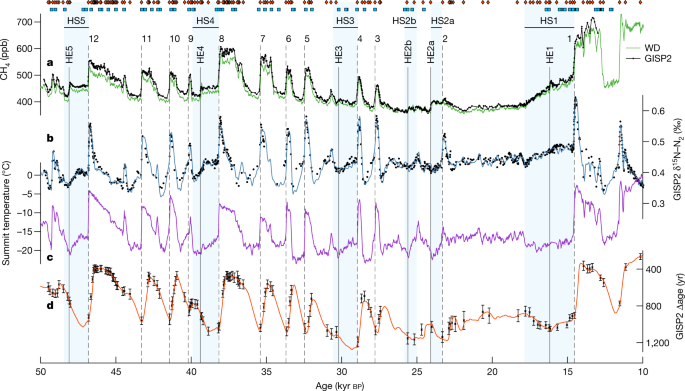
A new study suggests that Heinrich-type climate variability, characterized by massive detritus layers in the North Atlantic, may have a bipolar impact and phasing, affecting both hemispheres simultaneously. The study analyzed ice core records from Greenland and Antarctica and found evidence of synchronized warming and cooling events during Heinrich stadials. The findings challenge the traditional view of the bipolar seesaw, which suggests that climate changes in one hemisphere are offset by opposite changes in the other hemisphere.
Heinrich Events, massive iceberg discharges during the last ice age, had no impact on nearby Greenland, according to a new study from Oregon State University researchers. Instead, these events caused rapid warming in Antarctica, at the other end of the globe. The finding challenges the current understanding of global climate dynamics during these massive events and raises new questions for researchers. The ultimate goal is to better understand how the climate system is connected and how the components all interact.