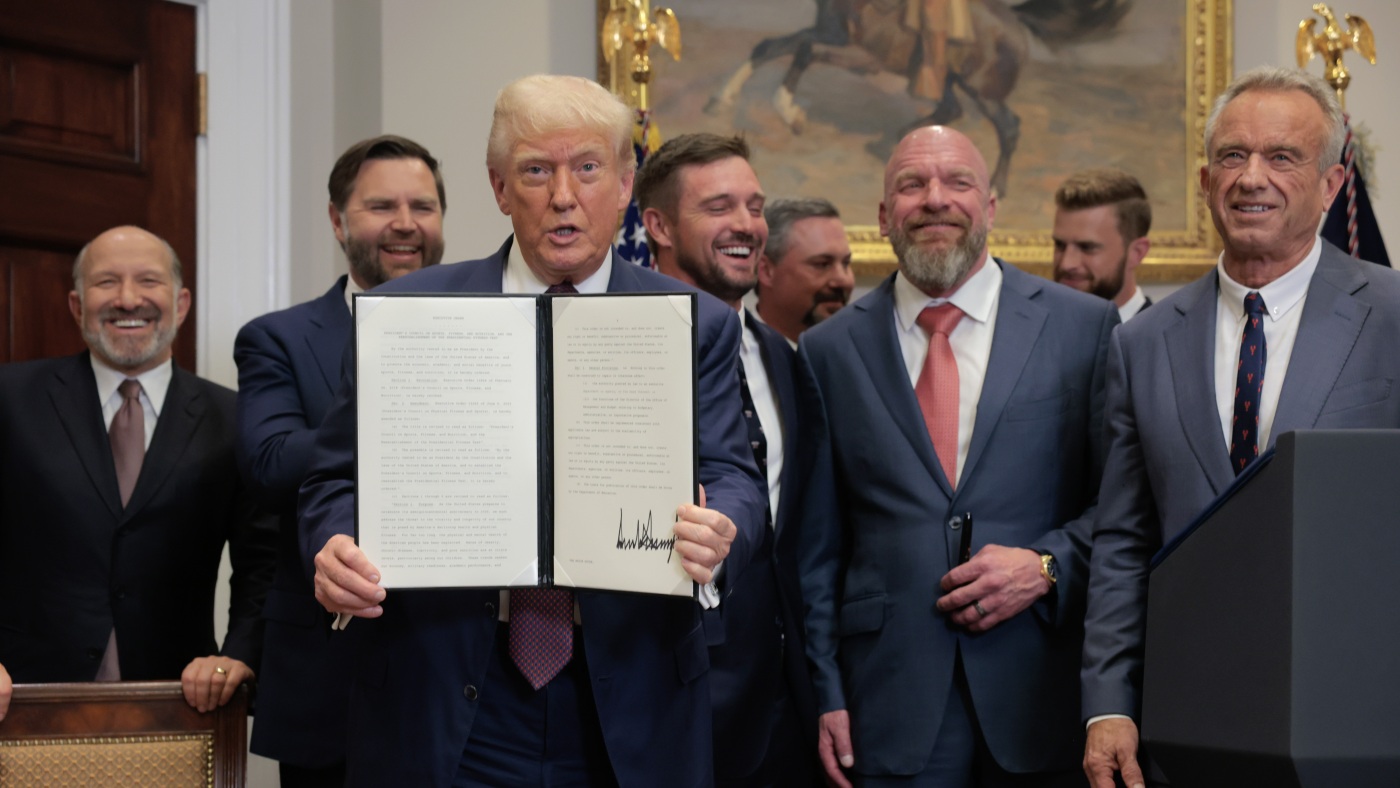
President Trump signed an executive order to revive the Presidential Fitness Test, a historic set of physical exercises for students, aiming to combat declining fitness levels among American children and promote lifelong healthy habits, though details of the new version are yet to be announced.
A new documentary titled "The Teen Brain" aims to shed light on the inner workings of teenagers' brains, featuring insights from neuroscientists and interviews with teens. The film explores the heightened emotions and unique experiences of adolescents, emphasizing the importance of understanding and supporting them. Produced by the mental health-focused nonprofit organization Mind Up, founded by actress Goldie Hawn, the documentary addresses the mental health challenges faced by teenagers, particularly in the context of the pandemic and social media usage. The 10-minute documentary will be available for free online starting April 15, offering valuable perspectives for teens, parents, and educators.
A new analysis of data on over 3,000 individuals suggests that staying longer in school is linked to living longer and experiencing slower aging at the cellular level. The study found that an extra two years of schooling correlated with a 2-3 percent slower biological aging, as measured by an epigenetic clock algorithm. The research aimed to understand the relationship between education and health, and found that upward educational mobility was associated with both a slower pace of aging and decreased risk of death. While the reasons for this link are not fully understood, the findings highlight the potential benefits of promoting further education for healthier aging, though more research is needed to confirm the association.
California is considering a ban on six artificial food dyes in public schools, citing concerns about their potential link to child development problems. The proposal, sponsored by Assemblymember Jesse Gabriel, aims to protect students from harmful chemicals and their impact on learning. While some in the food industry argue that there isn't enough scientific evidence to support the ban, supporters point to a 2021 report from the California Environmental Protection Agency linking food dyes to hyperactivity and behavioral issues in children. The bill would affect popular snacks like Doritos and M&Ms, and while some companies have already taken steps to remove artificial dyes from their products, critics argue that decisions about additives should be left to the FDA.
A new bill in California aims to ban food products containing artificial dyes, including those found in popular snacks like Flamin' Hot Cheetos, from public schools, citing potential harm to children's health and learning abilities. The legislation targets six synthetic food dyes and titanium dioxide commonly used in candy, drinks, and medications. The bill's sponsor emphasizes that it's not a ban on specific products but on the chemical ingredients, with the goal of encouraging manufacturers to use alternative, safer ingredients. The move has sparked debate between advocates for children's health and industry groups, with concerns raised about access to fresh foods in underserved communities and the potential impact on student fundraising.
California lawmaker Jesse Gabriel plans to introduce a bill to ban seven artificial food dyes, including those linked to hyperactivity and behavioral issues in children, from foods served in public schools. The bill, AB 2316, would also outlaw titanium dioxide, a whitening agent, and is supported by a comprehensive assessment from the state of California showing an association between synthetic food dyes and adverse neurobehavioral effects in children. The legislation aims to address the rising number of ADHD diagnoses and would go into effect at the beginning of 2025 if signed into law.
A systematic study has found that each year of education is linked to improved life expectancy, with the risk of mortality decreasing by 2% for every year of full-time education. Completing primary, secondary, and tertiary education is equivalent to a 34% reduction in the risk of death compared to those with no formal education. The study emphasizes the importance of education in improving health and reducing inequalities in global death rates, while also highlighting the potential impact of school attendance on future life expectancy.
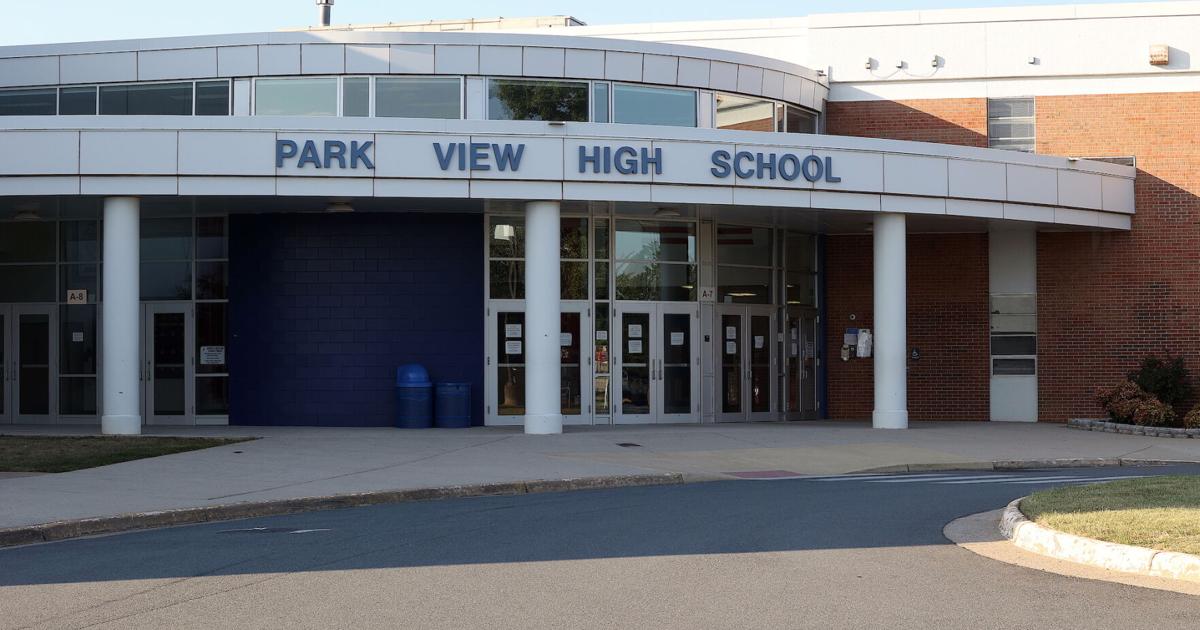
After nine suspected overdoses involving students at Park View High School, Governor Glenn Youngkin issued an Executive Order requiring parents to be notified of any school-connected overdose within 24 hours. The order also mandates educational programs on drug use for parents and students, as well as collaboration with law enforcement to prevent overdoses. The Governor criticized the Loudoun County Public School division for delaying the notification of parents. The school division reported a total of 10 suspected overdoses at six high schools this year, with four of the initial eight Park View overdoses occurring within the school. The incidents highlight the prevalence of fentanyl in schools and communities, prompting increased efforts to address the opioid crisis.