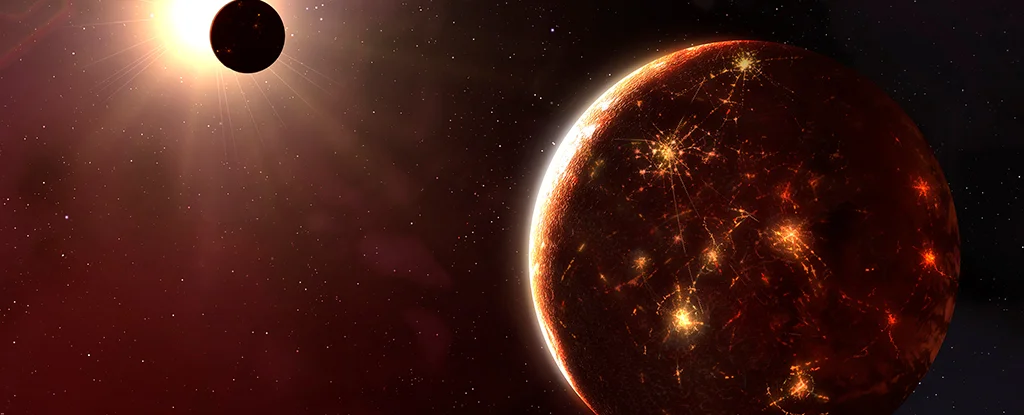
Recent research suggests that red dwarf star systems are unlikely to host advanced civilizations, challenging the focus of SETI efforts on these stars. The study highlights the rarity of Earth-like conditions around such stars and the timing of our existence in the universe, implying that Earth may be an outlier and that future searches should prioritize Sun-like stars. The findings raise questions about the likelihood of life around the most common stars in our galaxy.
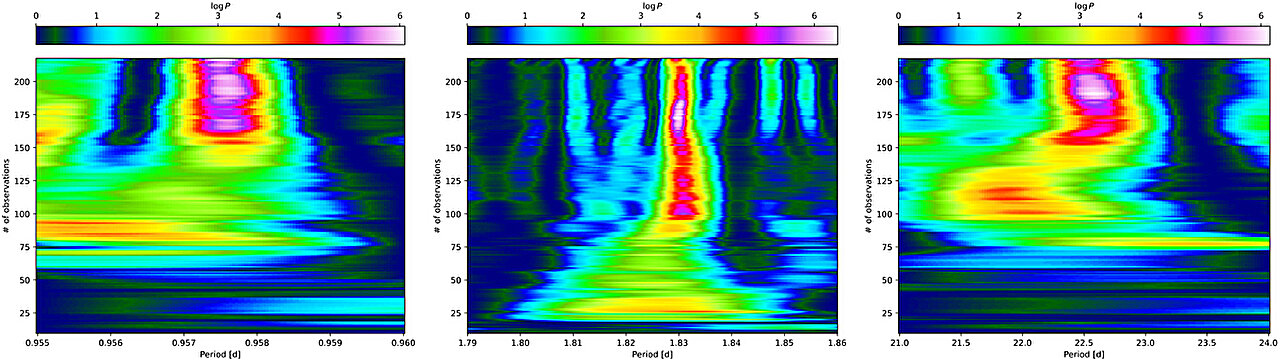
Recent research indicates that low-mass stars, particularly M-dwarfs, frequently host Earth-like planets, with four new exoplanets discovered, suggesting these stars are promising targets in the search for habitable worlds.
New research challenges the theory that planets like TRAPPIST-1 e were once too hot to support life, as previously believed. The study suggests that these planets may not have lost their atmospheres and water, making them potentially habitable. The findings have implications for the search for life around red dwarf stars, which make up the majority of the galaxy's sources of light. The TRAPPIST-1 system, with its seven rocky planets, is at the center of this debate. Further investigation is needed to confirm these findings and determine the potential for life in these systems.
A recent paper argues that the search for life in the Universe should be based on the potential for computation rather than the potential for habitability. The authors propose the concept of "computational zones" which require the capacity for computation, a raw form of energy, and a substrate for computation. This framework allows for the development of search strategies for life beyond our current understanding, such as artificial energy gathering structures and gas clouds around sub-stellar structures. The search for life in the Universe has only just begun, and it's important to keep an open mind.