The article recounts the courageous efforts of the Abuelas de Plaza de Mayo in Argentina, who tirelessly searched for their stolen grandchildren kidnapped during the brutal military dictatorship from 1976-1983, using innovative methods and DNA technology, while also highlighting Argentina's political history and US involvement in the region.
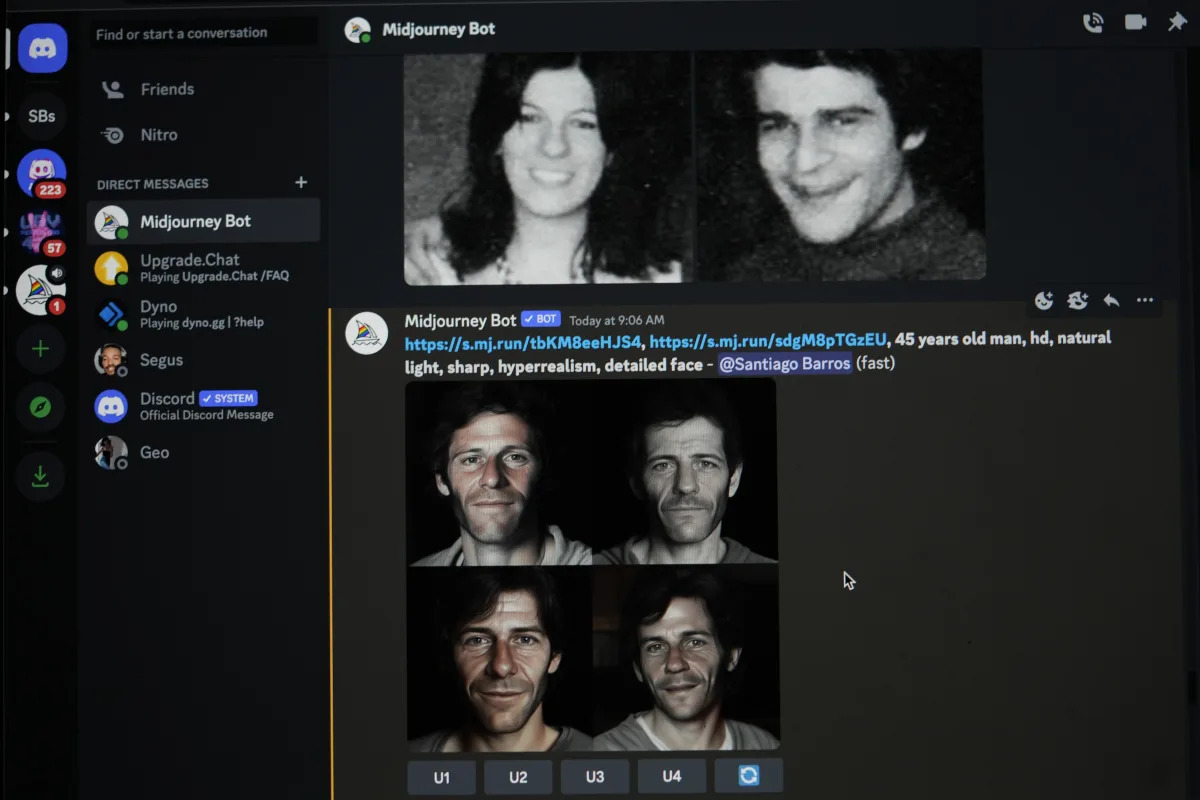
Santiago Barros, an Argentine publicist, is using artificial intelligence (AI) to create images of what the children of parents who disappeared during Argentina's military dictatorship might look like as adults. Barros uploads these images to an Instagram account called iabuelas, which aims to raise awareness about the stolen children. The project does not replace DNA testing efforts by the Grandmothers of Plaza de Mayo, who estimate that around 500 children were taken during the dictatorship. While some question the accuracy of the AI-generated images, others have found striking resemblances to their blood relatives. The Grandmothers group warns that DNA testing remains the only infallible tool for identifying these individuals.
Argentine publicist Santiago Barros is using artificial intelligence to create images of what the children of parents who disappeared during Argentina's military dictatorship might look like as adults. Barros uploads these images to an Instagram account called iabuelas, aiming to raise awareness and stir the conscience of those who may have doubts about their origin. The project does not replace DNA testing efforts by the Grandmothers of Plaza de Mayo, who estimate around 500 children were taken from their parents during the dictatorship. While the AI-generated images have received mixed responses, some families have found striking resemblances to their missing relatives. The Grandmothers group appreciates the initiative but emphasizes that DNA testing remains the most reliable tool for identification.