Tag

Goods

All articles tagged with #goods

economics1 year ago

"Rising Wholesale Prices and PPI Inflation Spark Concerns on Wall Street"

The Producer Price Index (PPI) for final demand services and finished core goods spiked in January, with services inflation jumping by 0.57% and finished core goods inflation increasing by 0.40%. This surge in inflation is concerning as it may lead to higher overall inflation measures, particularly due to services' significant weight in both producer and consumer inflation baskets. The sudden increase in inflation for services and core goods is a disconcerting development, potentially signaling a shift away from the previous disinflation momentum.

economics1 year ago

"Analyzing Inflation Trends: January 2024 CPI Report Revealed"

In January 2024, deflation has occurred in various categories of physical goods, with prices falling for items such as furniture, appliances, clothing, and electronics. Factors contributing to this deflation include normalized supply-demand dynamics, a strong U.S. dollar, and lower energy prices. However, services have not experienced deflation to the same extent, with inflation still up 5.4% since January 2023. Some deflationary dynamics are only reflected in data due to quality improvements over time, such as in electronics and health insurance.

economics2 years ago

"December 2023 Deflation: Price Drop Chart Revealed"

In December 2023, certain consumer categories in the US experienced deflation, with prices declining for items such as toys, college textbooks, televisions, men's suits, sporting goods, furniture, and computer software. The shift away from spending on goods to services has contributed to this trend, along with factors such as a strong US dollar, falling energy prices, and quality adjustments in price data. However, some deflationary dynamics are only reflected on paper due to quality improvements over time, and attacks on merchant ships may reverse some goods deflation.

economy2 years ago

Navigating Inflation's Impact on Fed Rate Cuts and Economic Stability

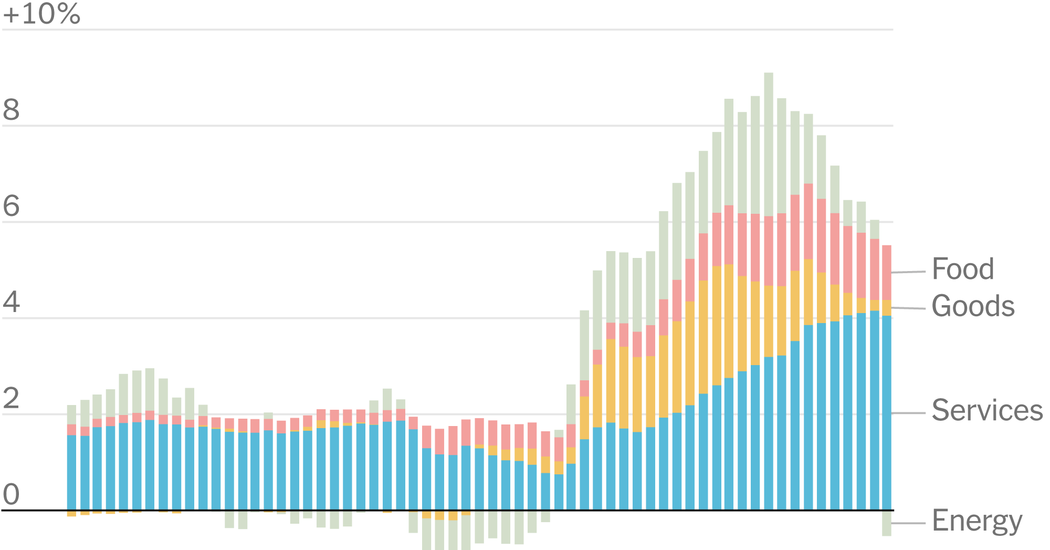
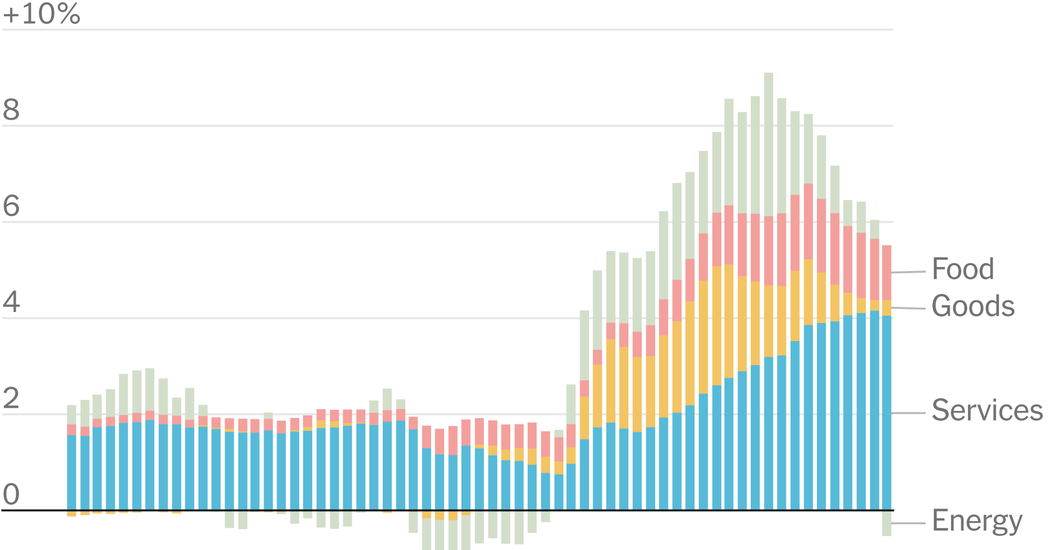
The Federal Reserve is cautious about cutting interest rates due to sticky inflation in the services sector, which has not slowed as much as the price of goods. While the cost of goods has remained flat or unchanged, the cost of services, such as recreation and transportation, has continued to rise. The biggest culprits are car insurance and repairs, as well as the cost of recreation, including cable and streaming TV. The Fed is banking on shelter costs decelerating in the coming months, but rising medical costs and high labor costs could further delay the return to the Fed's target inflation rate of 2%.

economics2 years ago

Inflation and Deflation: A Regional Analysis

While inflation has been a concern in the US economy, there has been a gradual decline in prices, known as disinflation, and some categories have actually experienced deflation. This deflationary trend is primarily seen in the "goods" side of the economy, where a stronger US dollar has made imported goods cheaper, supply chain disruptions have eased, and manufacturers have shifted production to lower-cost areas. Measurement quirks, such as quality improvements and variations in health insurance coverage, also impact price declines on paper rather than at the store.

business2 years ago

The Impact of Inflation on Trust and Prices

Inflation in the US has been high for two years, but the focus has shifted from goods to services. The pandemic and government response, combined with the war in Ukraine, caused the initial spike in prices. However, the current inflation is driven by stubborn price increases for services like airfare and child care. The Federal Reserve has responded by raising interest rates to slow down the economy and make it harder for firms to raise prices. Fed officials are now assessing whether the economy is slowing down enough to bring down the cost of critical services and whether inflation will return to normal.

business2 years ago

The Impact of Inflation on Trust and Prices

Inflation in the US has been high for two years, but the focus has shifted from goods to services. The pandemic and government response, combined with the war in Ukraine, caused the initial spike in prices. However, the current inflation is driven by stubborn price increases for services like airfare and child care. The Federal Reserve has responded by raising interest rates to slow down the labor market and make it harder for firms to raise prices. Fed officials must now assess whether the economy is slowing down enough to bring down the cost of critical services and whether inflation will return to normal.