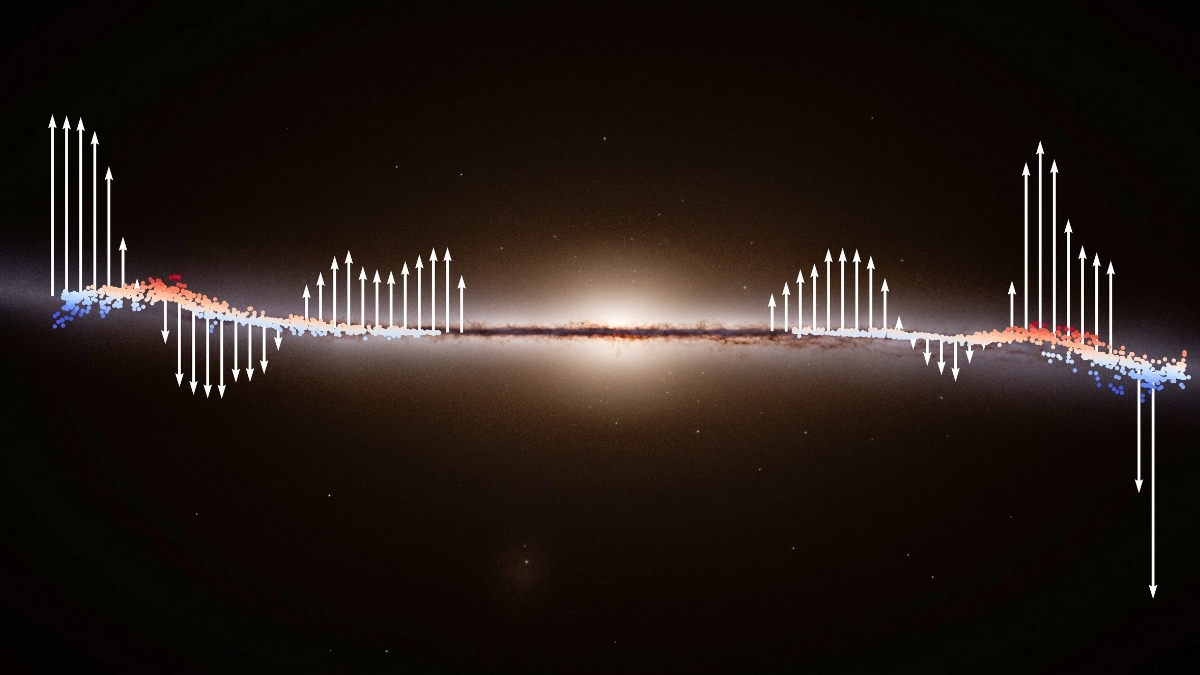
Astronomers using Gaia data have discovered a large wave-like ripple in the Milky Way's outer disk, likely caused by a past galactic encounter, such as with the Sagittarius dwarf galaxy, revealing the galaxy's dynamic and active nature.
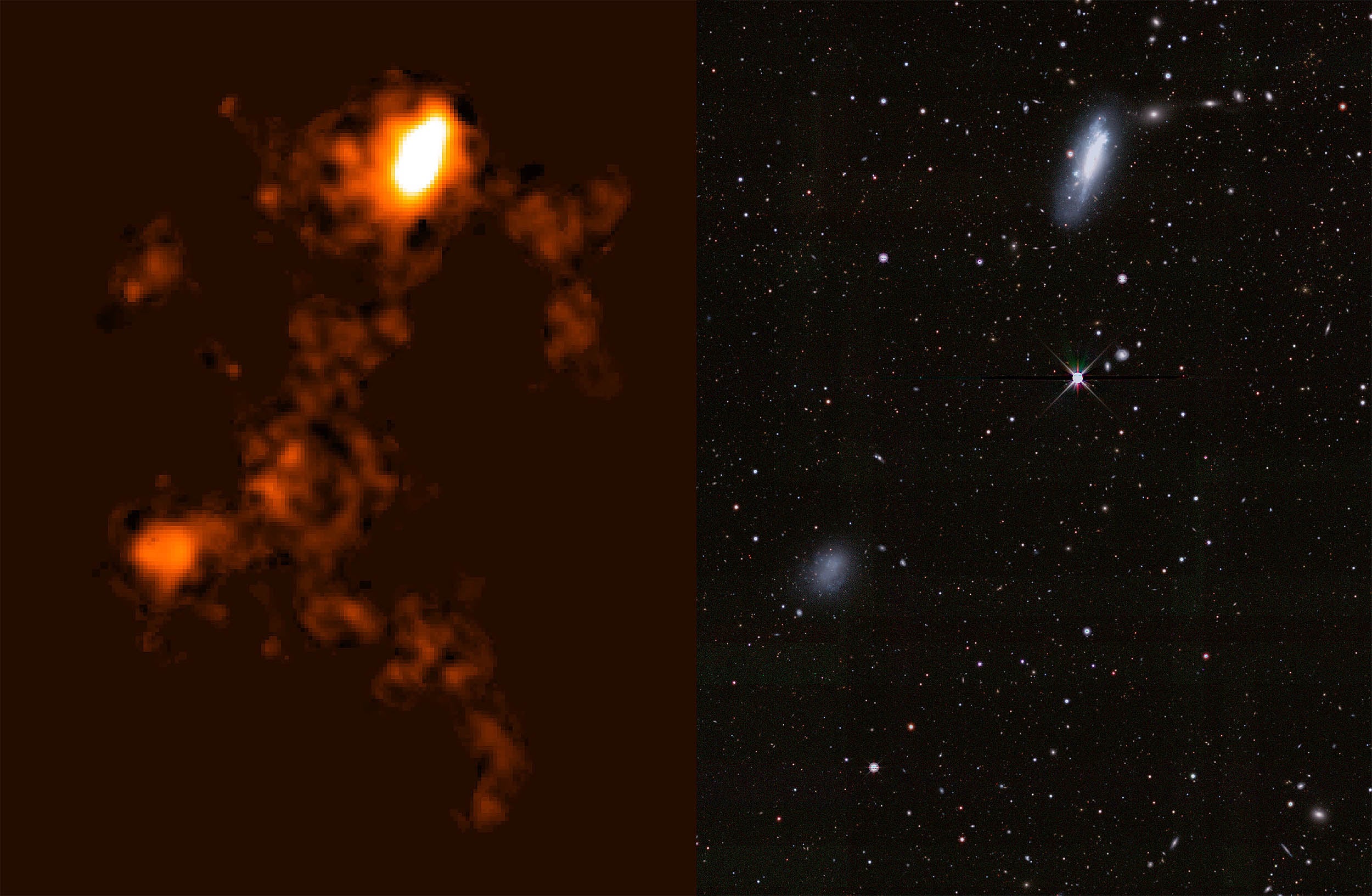
Astronomers have discovered the longest gas bridge ever observed, linking two galaxies, NGC 4532 and DDO 137, on the outskirts of the Virgo Cluster. This massive structure, extending 185,000 light-years, is formed by tidal forces and ram pressure from the hot gas surrounding the cluster, illustrating how galaxy environments influence their evolution and gas dynamics over billions of years.
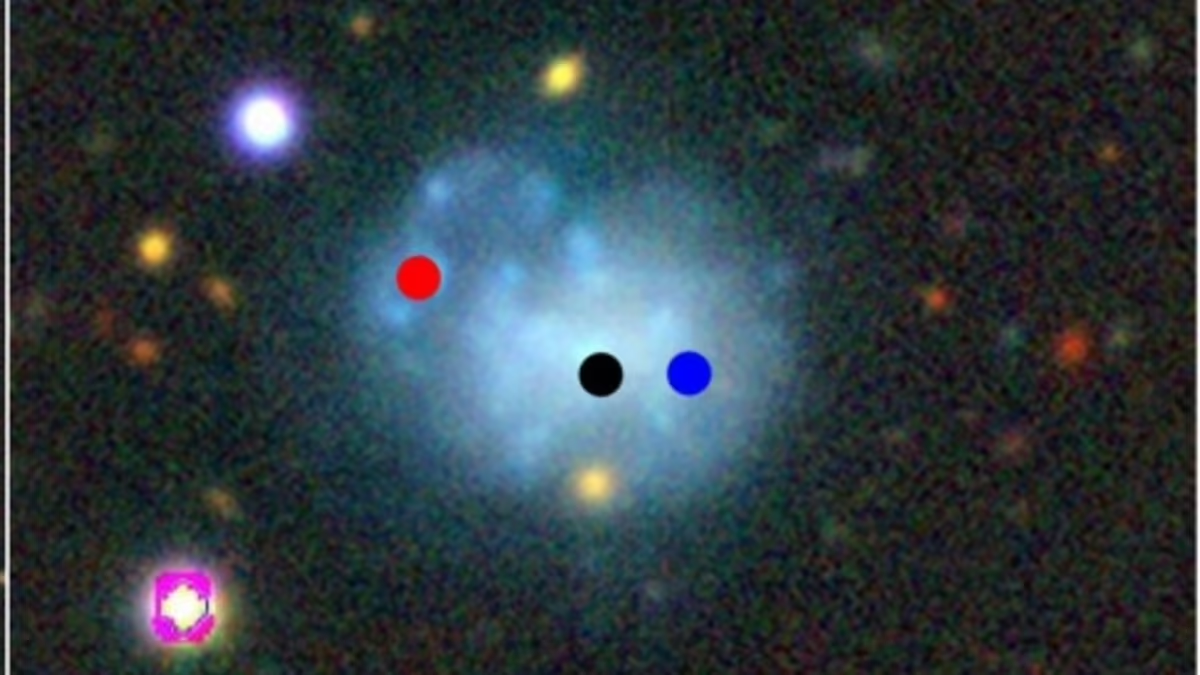
Astronomers have discovered a rare group of five interacting dwarf galaxies, located 117 million light years away, challenging the prevailing Lambda cold dark matter model of the universe. These galaxies, designated D1 to D5, are aligned in a straight line and show signs of mutual tidal interactions, with some sharing a common rotational direction. This unusual configuration raises questions about galaxy formation and evolution, potentially offering new insights into cosmological history. The findings were published in The Astrophysical Journal Letters.
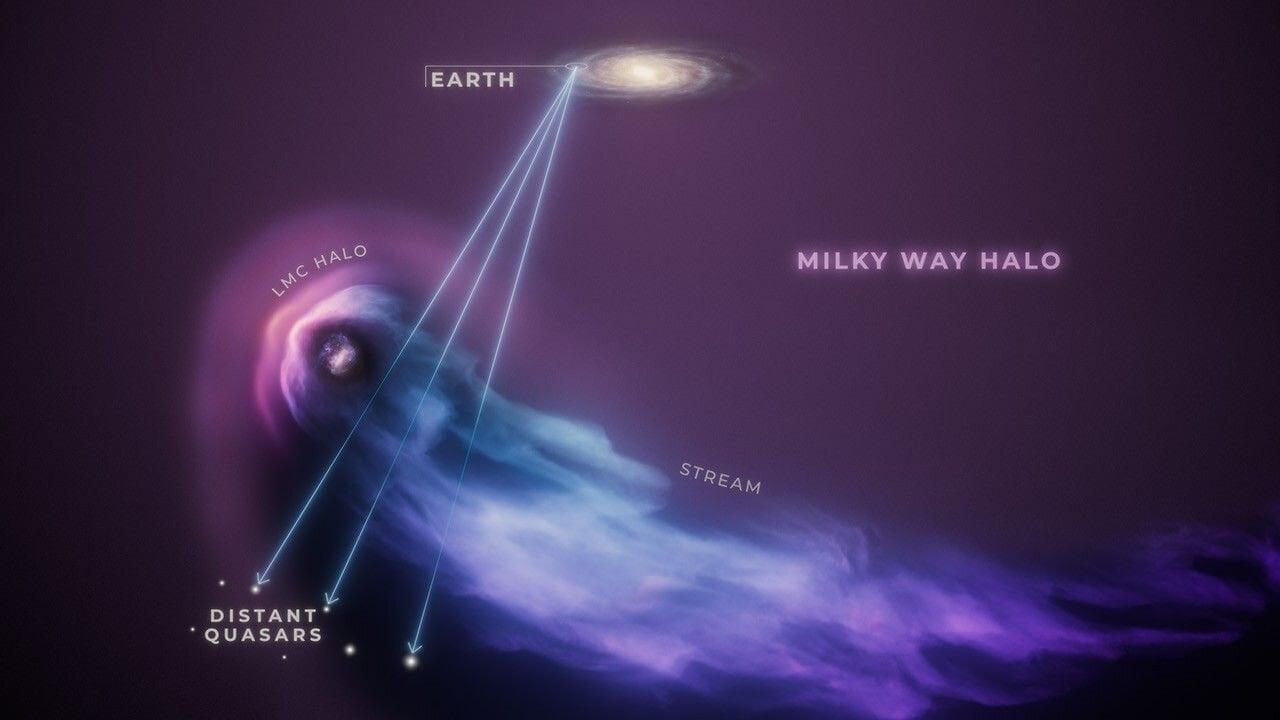
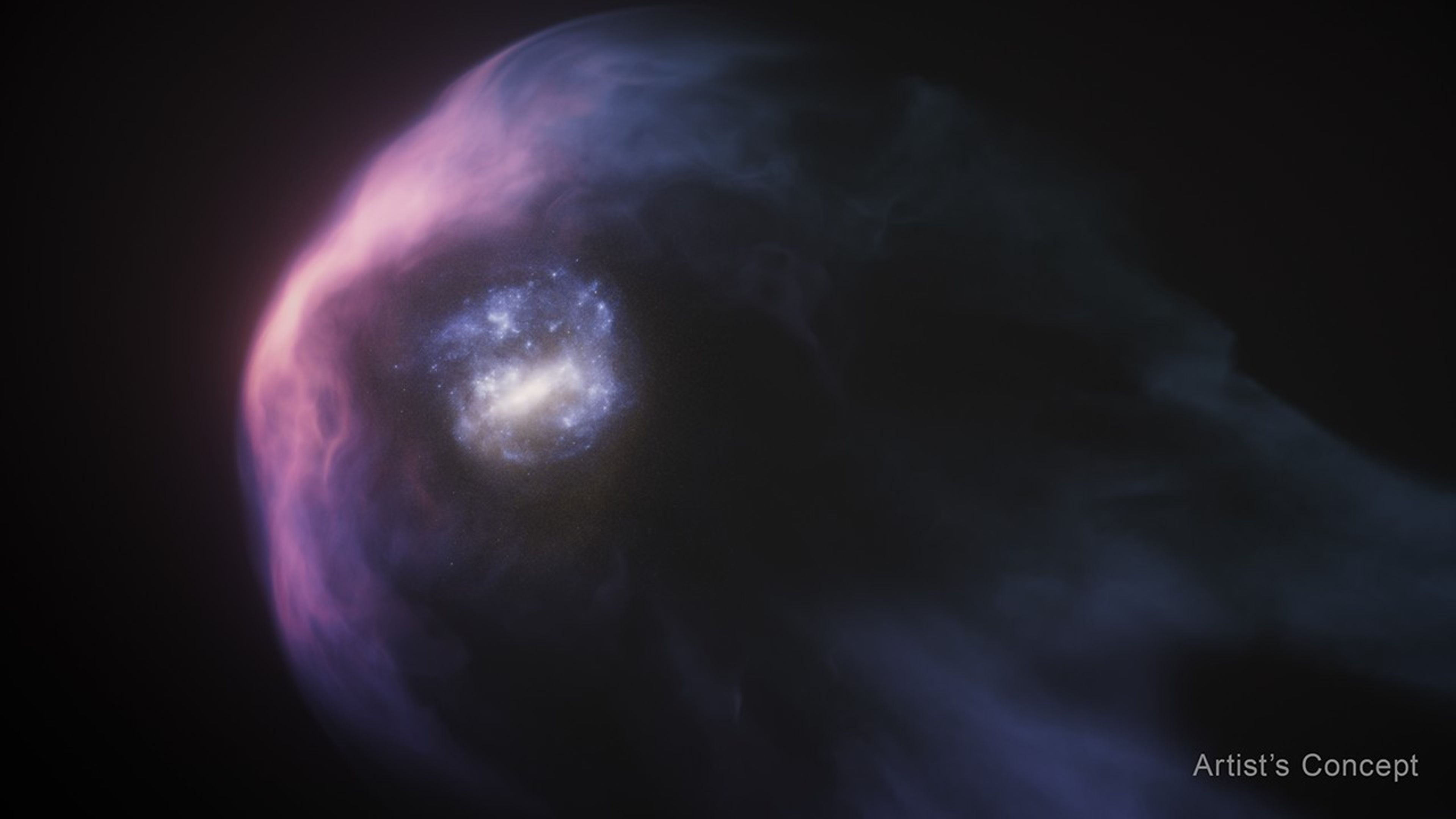
NASA's Hubble Space Telescope has observed the Large Magellanic Cloud (LMC) as it passes through the Milky Way's gaseous halo, resulting in most of the LMC's halo being stripped away due to ram-pressure stripping. Despite this, the LMC retains a compact halo, allowing it to continue forming new stars. This interaction provides insights into galaxy dynamics and the early universe. The study, using Hubble's Cosmic Origins Spectrograph, highlights the LMC's resilience and its role as a unique astrophysical laboratory.
NASA's Hubble Space Telescope has observed the Large Magellanic Cloud (LMC), a dwarf galaxy, as it interacts with the Milky Way. The LMC, which recently made its closest approach to the Milky Way, has lost much of its gaseous halo due to ram-pressure stripping, a process likened to a 'giant hairdryer' effect from the Milky Way. Despite this, the LMC retains enough mass to continue forming new stars. This study, utilizing Hubble's unique capabilities, provides insights into galaxy interactions and the early universe.