
Tag

Final Parsec Problem

All articles tagged with #final parsec problem

"Unveiling the Universe's Heaviest Black Hole Binary: A 28 Billion Solar Mass Marvel"

Originally Published 1 year ago — by ScienceAlert

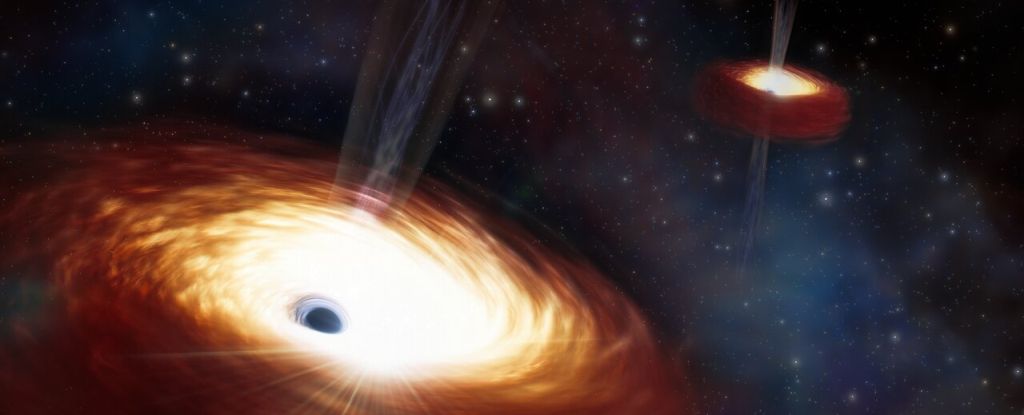
Featured image for "Unveiling the Universe's Heaviest Black Hole Binary: A 28 Billion Solar Mass Marvel"
Source: ScienceAlert

Astronomers have discovered a galaxy hosting the heftiest pair of supermassive black holes ever seen, with a combined mass of 28 billion times that of the Sun. The binary black holes, located in a galaxy called B2 0402+379, exhibit peculiar properties that are helping scientists understand the process of black hole growth. The discovery suggests a potential solution to the final parsec problem, as the orbital decay of the binary has stalled due to the lack of nearby stars and gas to transfer orbital momentum. Further investigations will focus on determining whether the supermassive black holes can eventually merge or will remain stranded as a binary.
"Unveiling the Dark Matter Solution to Black Hole's Final Parsec Problem"

Originally Published 2 years ago — by Phys.org

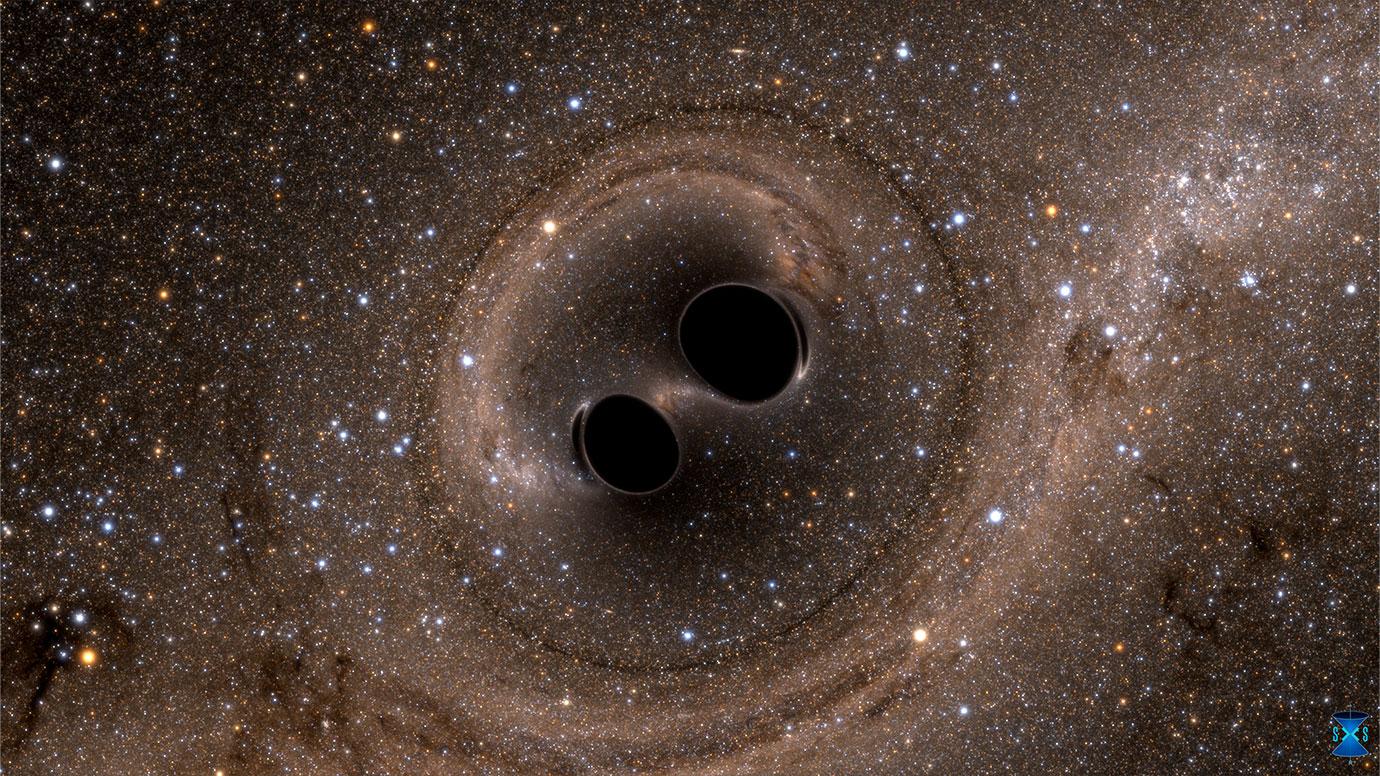
Featured image for "Unveiling the Dark Matter Solution to Black Hole's Final Parsec Problem"
Source: Phys.org

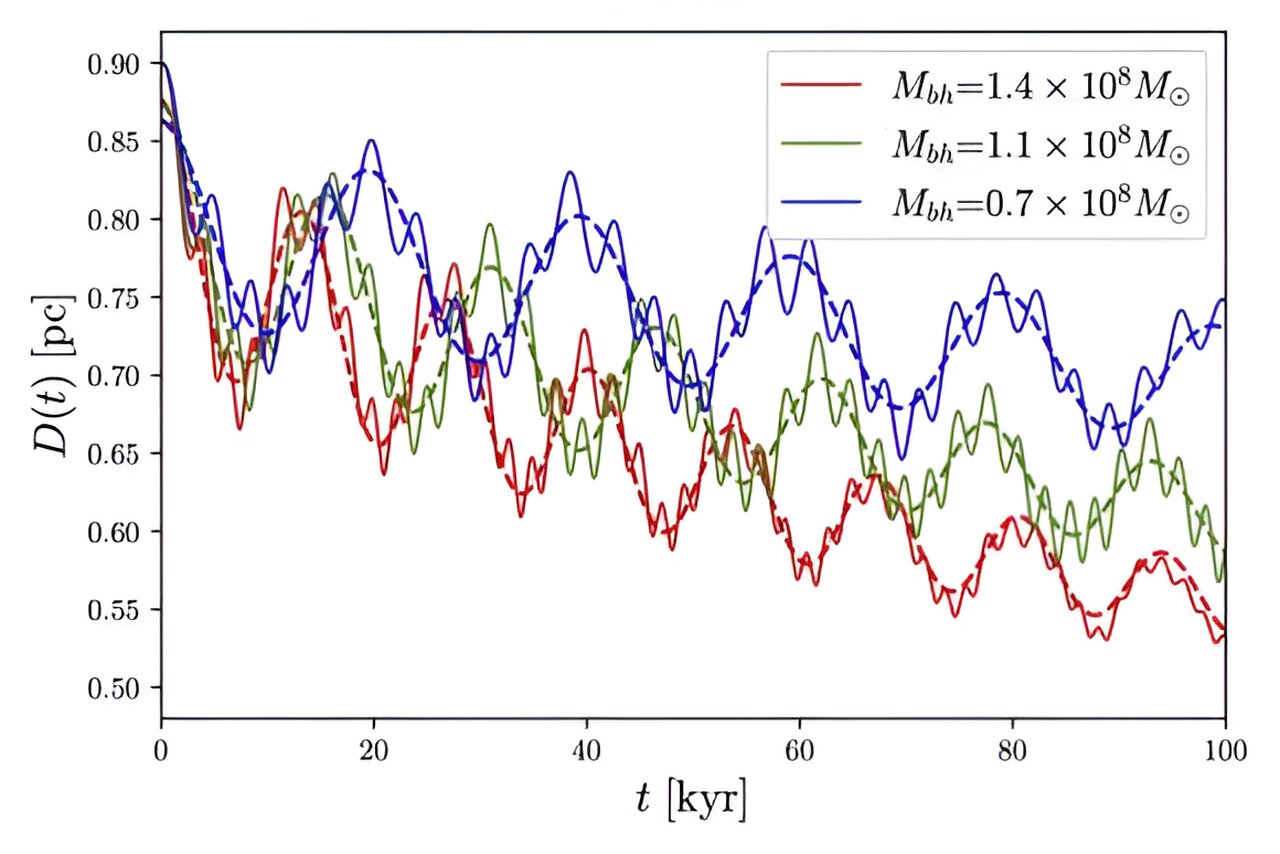
A new study suggests that fuzzy dark matter, a variation of dark matter made of low-mass scalar particles, could help solve the final parsec problem of black hole mergers. Simulations using regular dark matter and general relativity alone have failed to explain the details of how black holes merge. Fuzzy dark matter, with its more "fuzzy" distribution, could increase the rate of orbital decay for black holes, particularly supermassive ones. Direct observations of supermassive black holes are needed to confirm this hypothesis. Future observations from NANOGrav and the planned LISA gravitational wave observatory may provide the necessary evidence.

Unveiling the Dark Matter Solution to Black Hole's Final Parsec Problem

Originally Published 2 years ago — by Universe Today

Featured image for Unveiling the Dark Matter Solution to Black Hole's Final Parsec Problem
Source: Universe Today

A new study suggests that fuzzy dark matter, a variation of standard cold dark matter made of low-mass scalar particles, could potentially help solve the final parsec problem of black hole mergers. Computer simulations currently fail to show black holes merging, instead stabilizing when they are about a parsec apart. Fuzzy dark matter, with its more "fuzzy" distribution, could increase the rate of orbital decay for black holes, particularly supermassive ones. However, further observations of supermassive black holes are needed to confirm or rule out this idea.