The US Department of Labor has filed a complaint against Hyundai and two Alabama companies for employing a 13-year-old child in an assembly plant. The investigation revealed the child worked 50-60 hours per week operating machines for auto parts. The complaint names Hyundai Motor Manufacturing Alabama LLC, SMART Alabama LLC, and Best Practice Service, LLC, alleging they willfully violated child labor laws.

The U.S. Department of Labor will implement new overtime rules starting this summer, making millions of salaried workers earning $43,888 or less annually eligible for overtime pay. The threshold will increase again in 2025 and 2027, with future adjustments every three years. The changes are expected to affect 4 million workers, though some professions and states with higher thresholds are exempt.
The U.S. Department of Labor will implement new overtime rules starting July 1, 2023, making salaried employees earning $43,888 or less annually eligible for overtime pay. The threshold will increase again in 2025 and 2027, potentially qualifying 4 million more workers for overtime. Some professions and states with higher thresholds are unaffected.
The U.S. Department of Labor will implement new overtime rules starting July 1, 2024, making salaried employees earning $43,888 or less annually eligible for overtime pay. This threshold will increase to $58,656 on January 1, 2025, and will be adjusted every three years thereafter. The changes are expected to make 4 million more workers eligible for overtime, though certain professions and states with higher thresholds are unaffected.
The U.S. Department of Labor will implement new overtime rules starting this summer, making salaried employees earning $43,888 or less annually eligible for overtime pay. The threshold will increase again in 2025 and 2027, potentially qualifying 4 million more workers for overtime. Some professions and states with higher thresholds are unaffected.
The U.S. Department of Labor will implement new overtime rules starting this summer, making millions of salaried workers earning $43,888 or less annually eligible for overtime pay. The threshold will increase again in 2025 and 2027, with future adjustments every three years. The changes are expected to affect 4 million workers, though some professions and states with higher thresholds are exempt.
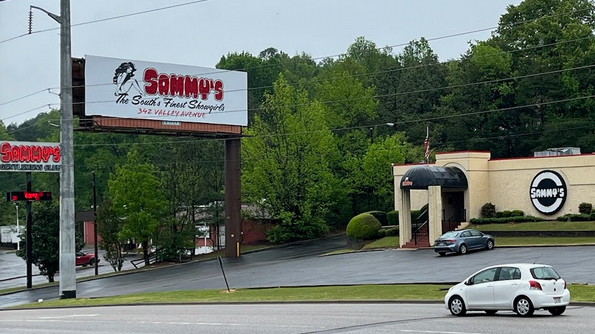
Dancers at Sammy's Gentleman's Club in Birmingham have filed a lawsuit alleging violations of the Fair Labor Standards Act, including failure to provide minimum wage pay and overtime, illegal tip sharing, and requiring dancers to pay kickbacks. The suit seeks at least $100,000 in damages and restitution for unpaid wages, misappropriated tips, and "house fees" on behalf of all dancers employed by the club over the last three years.
Tuff Torq Corporation, a Tennessee manufacturer, has been ordered to pay nearly $300,000 in fines and turn over profits after allegedly employing children under 18 in hazardous jobs, violating child labor laws. The U.S. Department of Labor found that at least one minor was operating a power-driven hoisting apparatus, deemed particularly hazardous for those under 18. Tuff Torq has entered into a consent decree with the Department of Labor, agreeing to take steps to prevent future violations, including regular training, establishing an anonymous tip line, and allowing unannounced facility searches. The company is also prohibited from retaliating against employees who file complaints or testify.
Senator Bernie Sanders has introduced a bill to reduce the standard workweek in the U.S. from 40 hours to 32 hours, arguing that technological advancements allow for more time off without cutting pay and benefits. Critics fear the proposal could harm productivity and small businesses. While some studies show positive effects of a shorter workweek on employee well-being and revenue, opposition from Republicans and potentially some Democrats makes it unlikely for the bill to pass in the Senate. The 40-hour workweek standard was established in 1938 with the Fair Labor Standards Act, following a long history of labor-union efforts to limit working hours.
Senator Bernie Sanders has introduced a bill to reduce the standard workweek from 40 hours to 32 hours, arguing that companies can afford to give employees more time off without cutting their pay and benefits due to advances in technology. Critics argue that a mandated shorter week could force companies to hire additional workers or lose productivity. A recent study of British companies that adopted a 32-hour workweek found that employees were less stressed and more focused, while revenues remained steady or increased. However, opposition from Republicans and potentially some Democrats makes it unlikely for Sanders' proposal to advance in the Senate. The Fair Labor Standards Act, signed into law in 1938, established the 40-hour workweek after a century of labor-union efforts seeking protections for overworked individuals.
Sen. Bernie Sanders has introduced a bill in the U.S. Senate to establish a 32-hour workweek over a four-year period, aiming to improve the quality of life for workers without a loss of pay. Sanders argues that the economy has fundamentally changed since the 40-hour workweek was established in 1940 and believes it's time to update the Fair Labor Standards Act. He is joined by Sen. Laphonza Butler and Rep. Mark Takano in this effort.
The Department of Labor's new rule change under the Fair Labor Standards Act, set to take effect on March 11, aims to curb misclassification of independent contractors. The rule uses an economic realities test with six metrics to determine worker classification, reverting to a pre-2021 emphasis. It applies to workers paid less than the federal minimum wage and overtime, allowing them to file claims if they believe they've been misclassified and denied proper wages.
The US Department of Labor has announced a final rule to clarify the classification of workers as employees or independent contractors under the Fair Labor Standards Act, aiming to combat employee misclassification and protect workers' rights. The rule aligns with longstanding judicial precedent and restores a multifactor analysis to determine a worker's status, addressing factors such as opportunity for profit or loss, degree of control by the employer, and the worker's skill and initiative. The new rule will take effect on March 11, 2024, and rescinds the 2021 Independent Contractor Rule that the department believes is not consistent with the law and longstanding judicial precedent.
The Biden administration is implementing a new labor regulation to prevent employers from misclassifying workers as independent contractors to avoid minimum wage and overtime obligations. The rule, effective March 11, aims to crack down on employee misclassification, particularly in industries like transportation, construction, health care, and technology. The regulation outlines criteria for determining independent contractor status and is more restrictive for employers than the previous Trump-era rule. The move is seen as a return to Obama-era policies and is expected to face legal challenges from business groups.
Plaza Azteca, a Mexican chain restaurant with three locations in the Pittsburgh area, has agreed to pay $11.4 million in back wages and damages to over 1,000 employees after an investigation by the U.S. Department of Labor. The investigation found that the restaurant had paid some employees predetermined amounts, resulting in them not receiving minimum wage or overtime pay. The company is also accused of failing to maintain accurate records of work hours and wages. The settlement resolves litigation at more than 40 Plaza Azteca restaurants owned by Ruben Leon in seven states.