Japanese astronomers using ALMA captured images of a distant young star, Sh 2-283-1a SMM1, revealing episodic jets, complex organic molecules, and unique chemical compositions in the outer galaxy, providing insights into universal star formation processes across diverse cosmic environments.
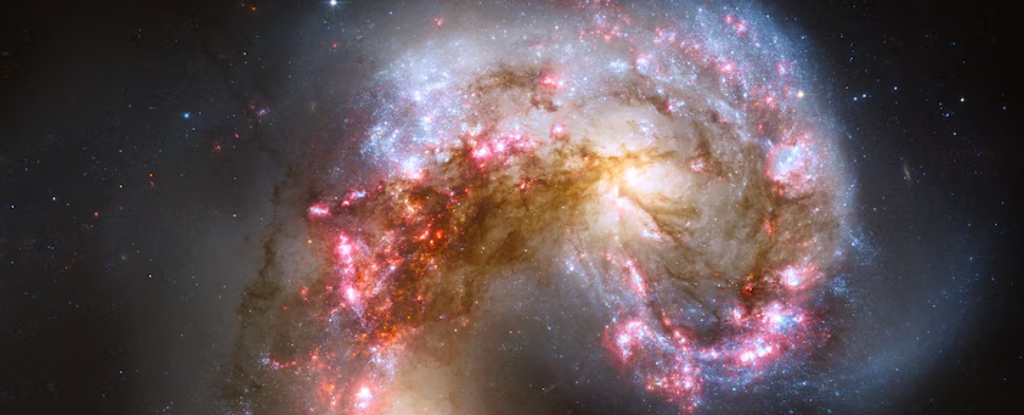
Astrophysicists have uncovered how massive elliptical galaxies form, using data from the Atacama Large Millimeter/submillimeter Array (ALMA). Contrary to previous beliefs that these galaxies evolved from rotating discs, the study found that early star-forming galaxies were already spherical. This transformation is attributed to intense, short-lived star formation episodes driven by cold gas streams and galaxy mergers. The findings, published in Nature, enhance our understanding of galaxy formation and evolution, with future observations expected to provide further insights.
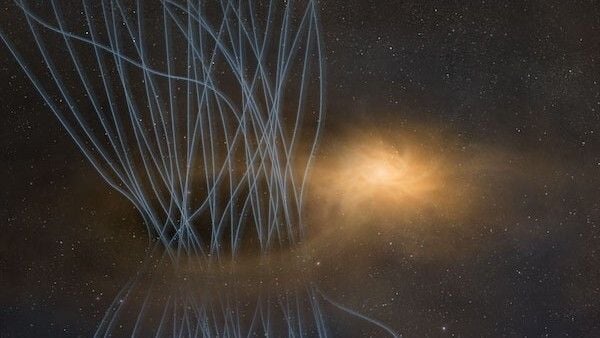
Astronomers have observed a baby star in the Taurus constellation "sneezing" out dust, gas, and magnetic energy, shedding most of its magnetic energy early in its evolution. This shedding mechanism prevents the star's high-spinning profile from breaking apart. The discovery, made using the ALMA observatory, suggests that such sneezing events could be a common method by which stars evolve. The expelled material may remain in interstellar space for eons, and further research will investigate the impact of these events on planet formation.
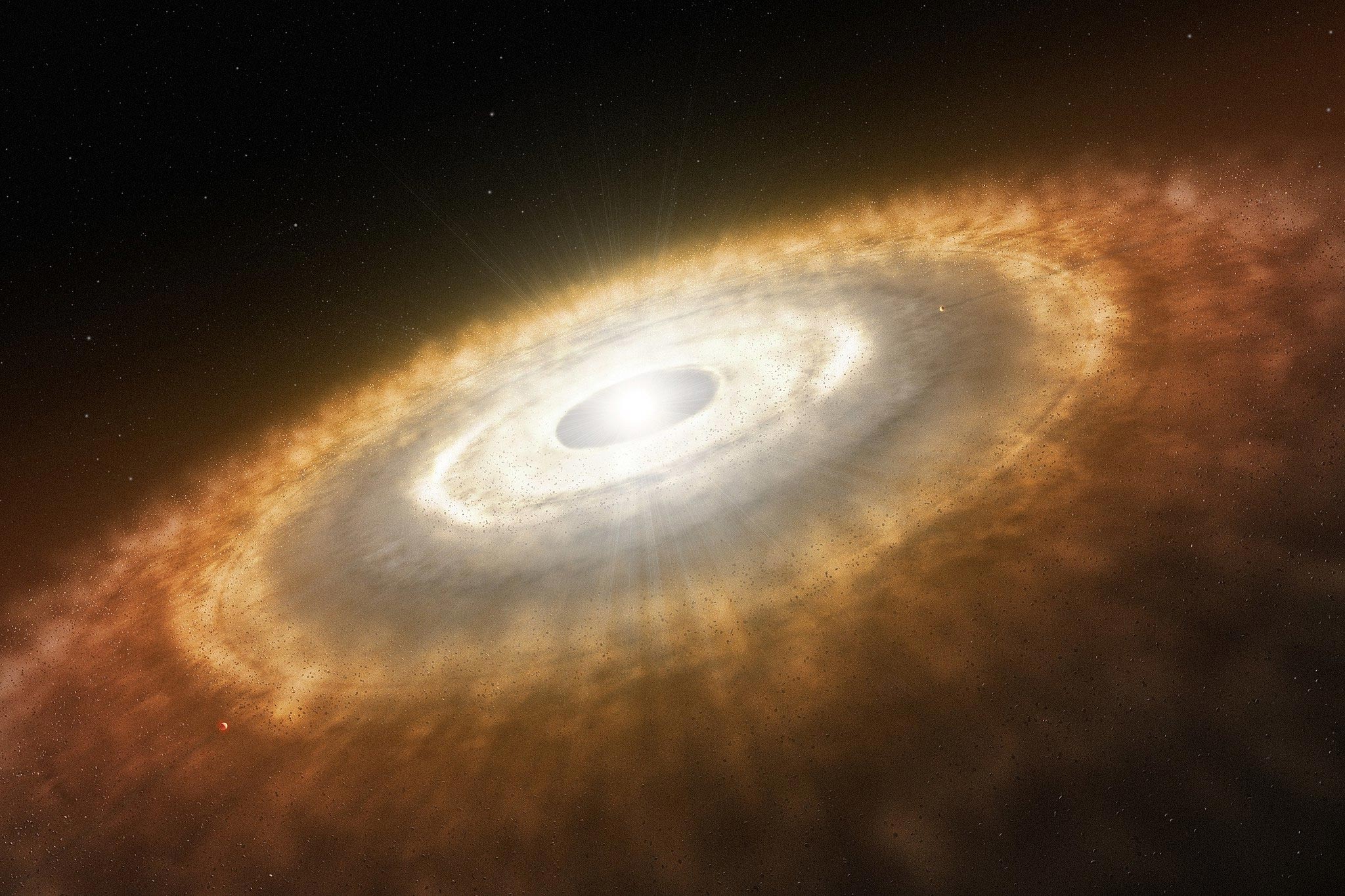
Water vapor has been detected in the disc around a young star, HL Tauri, where planets are likely forming, revealing its potential impact on planet composition. The discovery, made using the ALMA observatory, is significant as water is crucial for life and plays a key role in planet formation. The findings provide detailed images and spatially resolve water vapor at a distance of 450 light-years from Earth, shedding light on the distribution of water in a stable, cool disc, which offers favorable conditions for planet formation. This discovery has implications for understanding planet formation and the role water plays in it, with future upgrades at ALMA and the Extremely Large Telescope set to provide even clearer insights.
Astronomers have made a groundbreaking discovery by detecting a rotating disk around a high-mass star in the Large Magellanic Cloud, marking the first-ever observation of a circumstellar disc beyond the Milky Way. This finding provides valuable insights into the star formation process in different galaxies, highlighting the differences in dust and metal content between the Large Magellanic Cloud and our own galaxy. The discovery was made using the ALMA observatory and has significant implications for understanding stellar origins in diverse galactic environments.