A wave of new studies identifies rare transitional microbes, such as Lokiarchaeum ossiferum, that bridge simple cells and complex eukaryotic cells, offering clues to how cells with nuclei and mitochondria evolved about two billion years ago.
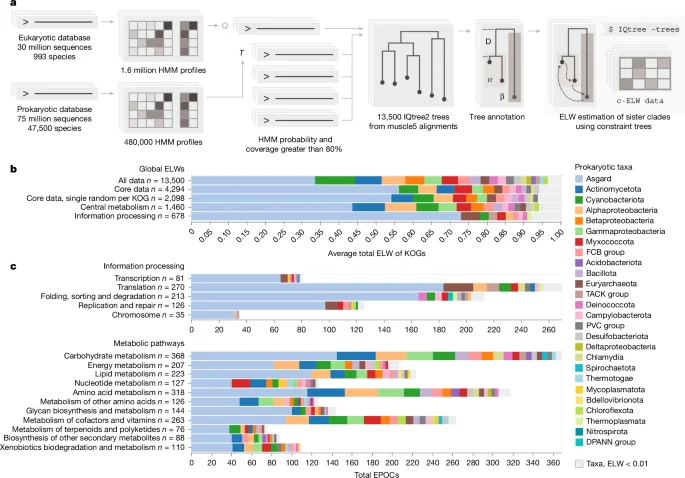
A comprehensive phylogenomic analysis shows Asgard archaea contributed the majority of core eukaryotic genes traced to LECA, with Alphaproteobacteria providing mainly mitochondrial-related components and energy metabolism; other bacteria contributed sporadically without clear patterns. This supports a model where key eukaryotic features—cytoskeleton and endomembrane system—evolved in the Asgard lineage before LECA, with mitochondria acquired later and additional bacterial genes entering gradually via HGT. The study uses soft-core pangenomes and constrained trees to minimize late HGT and test origins, though conclusions depend on the current sampling of Asgard and bacterial genomes.
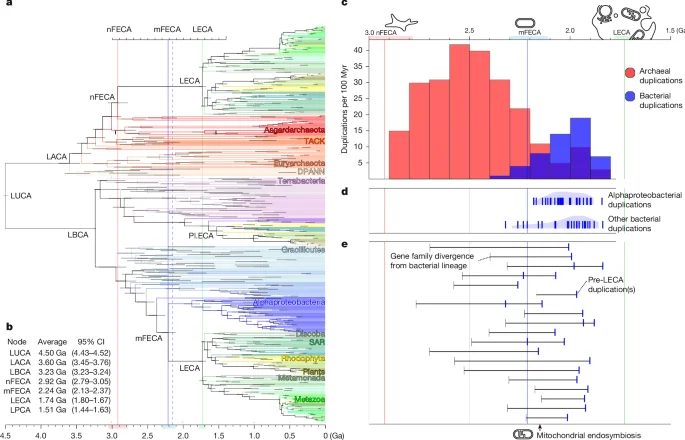
The article uses molecular clock analyses of gene duplications to establish a timeline for eukaryotic cell evolution, suggesting that key features like the nucleus, cytoskeleton, and endomembrane system developed before mitochondrial endosymbiosis, with the divergence of eukaryotic lineages occurring around 1.8 billion years ago.
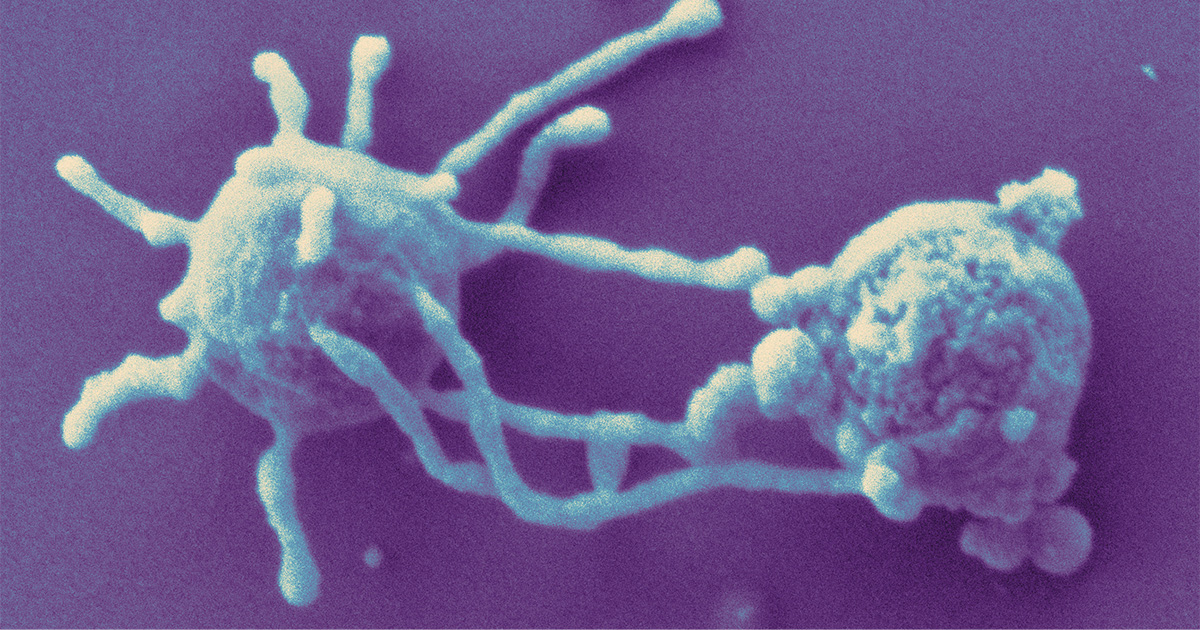
The study of Asgard archaea, a group of microbes that may be the closest living relatives of eukaryotes, is shedding light on the origins of complex life. Researchers have cultivated two species of Loki, a type of Asgard archaea, and found that they have tentacle-like filaments made of a protein called Lokiactin, which closely resembles the actin used by eukaryotic cells to build supportive cytoskeletons. This adds plausibility to the inside-out model of eukaryogenesis, which proposes that the first eukaryotes were born after a simple ancestral cell extended protrusions past its cell walls and closed around a symbiotic bacterium, turning it into a proto-mitochondrion.