Tag

Electron Behavior

All articles tagged with #electron behavior

Scientists Uncover Molecular Secrets by Making Light Disappear in Liquids

Originally Published 21 hours ago — by Indian Defence Review

Featured image for Scientists Uncover Molecular Secrets by Making Light Disappear in Liquids
Source: Indian Defence Review

Researchers have used high-harmonic spectroscopy to observe ultrafast electron dynamics in liquids, revealing how specific molecular interactions, like hydrogen bonding, can disrupt electron motion and suppress light emission, with potential implications for chemistry and biology.


Quantum Tunneling Mystery Solved After a Century with a Surprising Collision

Originally Published 5 months ago — by ScienceDaily

Featured image for Quantum Tunneling Mystery Solved After a Century with a Surprising Collision
Source: ScienceDaily

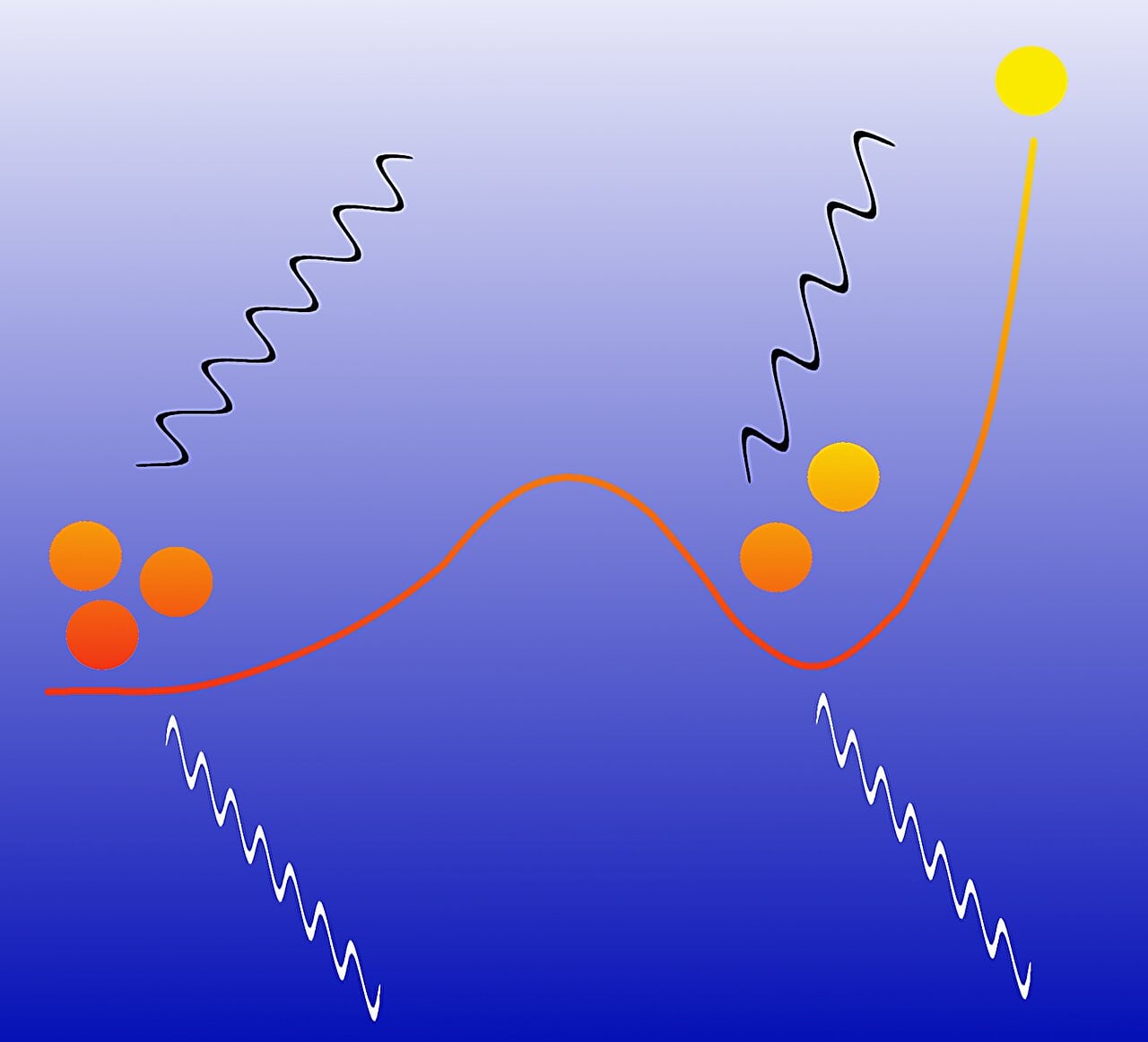
Professor Kim Dong Eon and his team have experimentally unraveled the long-standing mystery of electron tunneling in quantum mechanics, discovering that electrons collide with the atomic nucleus inside the barrier, a process they named 'under-the-barrier recollision,' which could lead to advancements in semiconductors and quantum technologies.

Scientists Unveil Inside the Electron’s Quantum Tunnel

Originally Published 5 months ago — by SciTechDaily

Featured image for Scientists Unveil Inside the Electron’s Quantum Tunnel
Source: SciTechDaily

Scientists have experimentally observed that electrons collide with the atomic nucleus inside a quantum tunnel, a process called 'under-the-barrier recollision,' challenging previous beliefs and opening new possibilities for controlling electron behavior in quantum technologies.

Quantum Scars Unveil Order in Chaos with Graphene Insights

Originally Published 1 year ago — by Phys.org

Featured image for Quantum Scars Unveil Order in Chaos with Graphene Insights
Source: Phys.org

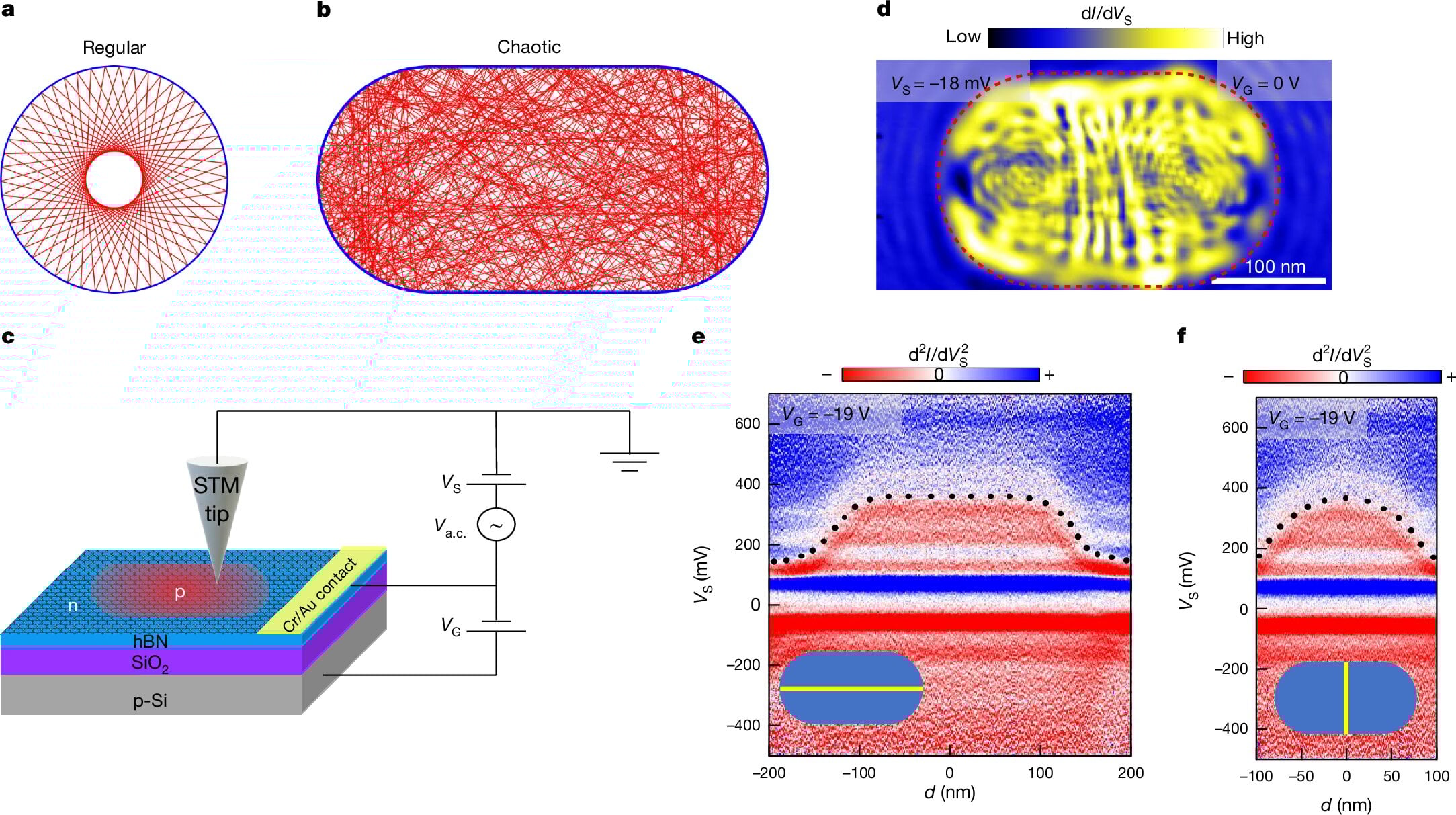
An international team of physicists, co-led by Jairo Velasco, Jr. from UC Santa Cruz, has experimentally confirmed the existence of 'quantum scars'—patterns in the chaotic movement of electrons confined in quantum spaces. Using advanced imaging techniques on graphene, the researchers observed electrons following predictable paths, known as unique closed orbits, rather than chaotic trajectories. This discovery, based on a theory proposed 40 years ago, has significant implications for developing more efficient electronic devices by utilizing these quantum phenomena to enhance information processing.

"Discovery of Electron-Immobile Crystal Baffles Physicists"

Originally Published 1 year ago — by ScienceAlert

Featured image for "Discovery of Electron-Immobile Crystal Baffles Physicists"
Source: ScienceAlert

Physicists from Rice University have discovered a strange form of crystal, a pyrochlore, where electrons are unable to move freely in a three-dimensional lattice due to quantum interference effects. This phenomenon, previously observed in 2D materials, could lead to the development of new materials with unique electronic properties, potentially shedding light on phenomena such as superconductivity. The discovery provides a new tool for studying unconventional electron behavior and could lead to the identification of materials with similar properties.

Unveiling the Dynamic Nature of Electrons in Molten Salts

Originally Published 2 years ago — by SciTechDaily

Featured image for Unveiling the Dynamic Nature of Electrons in Molten Salts
Source: SciTechDaily

Researchers have discovered three distinct states of electron behavior in molten zinc chloride salt, which is crucial for understanding the impact of radiation on future salt-fueled nuclear reactors. The findings provide insights into the reactivity of molten salts under radiation and will drive further research in this area. The study's computational simulations shed light on how electrons interact with the ions of molten salt, forming different states with varying properties. This understanding is important for predicting the performance of salt-fueled reactors and designing future reactor systems.

Cracking the Secrets of Attoseconds: Nobel Prize-winning Research Explained

Originally Published 2 years ago — by The Conversation

Featured image for Cracking the Secrets of Attoseconds: Nobel Prize-winning Research Explained
Source: The Conversation

Attosecond pulses, which last for 0.000000000000000001 of a second, have revolutionized the study of electrons and chemical reactions. By providing shorter snapshots of atoms and molecules, attosecond spectroscopy has allowed researchers to understand electron behavior in single molecules, track the real-time breaking of chemical bonds, and study electron behavior in various materials. The ability to generate attosecond pulses has opened up new possibilities for studying the fundamental particles that make up matter.

Expanding the Reach of Moiré Materials: New Research

Originally Published 2 years ago — by Chemistry World

Featured image for Expanding the Reach of Moiré Materials: New Research
Source: Chemistry World

Researchers have discovered that layered 2D materials, such as graphene and boron nitride, can exhibit a wide range of electron behaviors and even quasicrystal patterns when stacked at specific angles. These moiré materials have allowed scientists to observe the Hofstadter butterfly, a theoretical concept from the 1970s, in experimental data for the first time. The discovery of quasicrystals in these materials opens up new possibilities for studying electron behavior and potentially finding applications in areas such as superconductivity. Additionally, researchers have found that twisting a thin film of graphite can create a hybrid 2D-3D structure with altered electron behavior, further blurring the boundary between dimensions.

"Groundbreaking Prediction Unveils Exciting New Property of Hydrogen"

Originally Published 2 years ago — by Phys.org

Featured image for "Groundbreaking Prediction Unveils Exciting New Property of Hydrogen"
Source: Phys.org

Physicists from Kiel and Dresden have predicted a new property of hydrogen, revealing that under high pressure, hydrogen exhibits an unusual "roton-like behavior" similar to exotic Bose fluids. This behavior is observed when hydrogen is irradiated with X-ray light, causing electrons to come unusually close to each other and even form pairs, despite their repulsion. Computer simulations have provided exact predictions for observing this behavior, and now experimental physicists will work to confirm it.