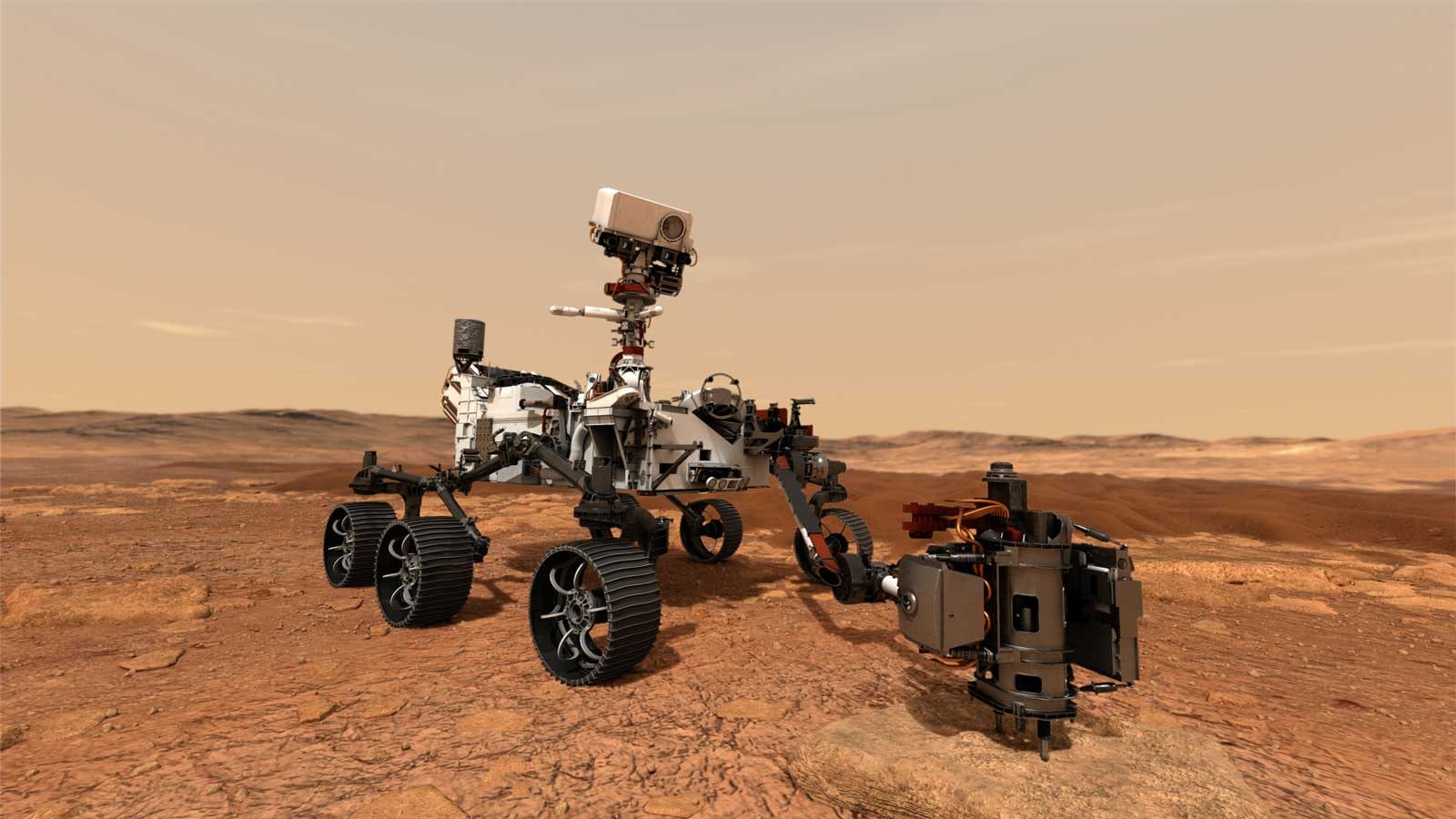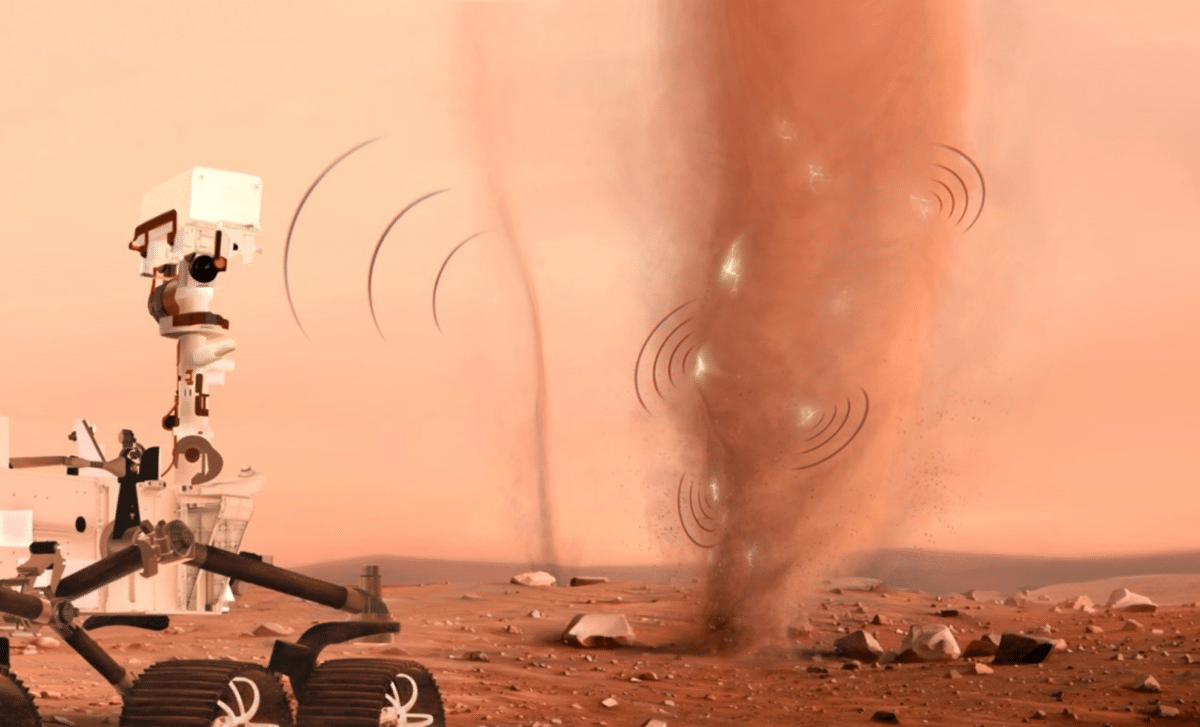
NASA's Perseverance rover detected unexpected electrical activity in Martian dust devils using its microphone, revealing that electrical discharges are common on Mars and may influence atmospheric chemistry, including methane breakdown, with significant implications for future missions and our understanding of the planet.
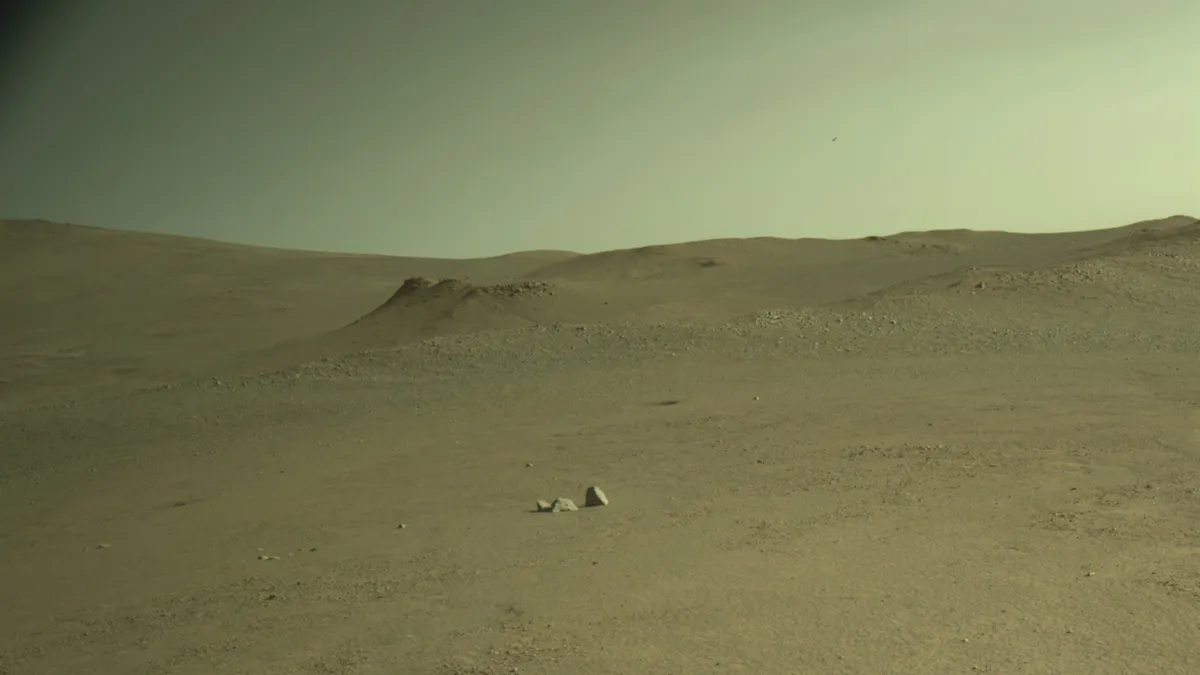
NASA's Perseverance rover on Mars has recorded evidence of lightning, a first for the planet, primarily associated with dust devils and dust storm fronts, through electromagnetic and acoustic signatures. Additionally, studies of Martian caves suggest past liquid water activity, revealing new insights into the planet's geology.
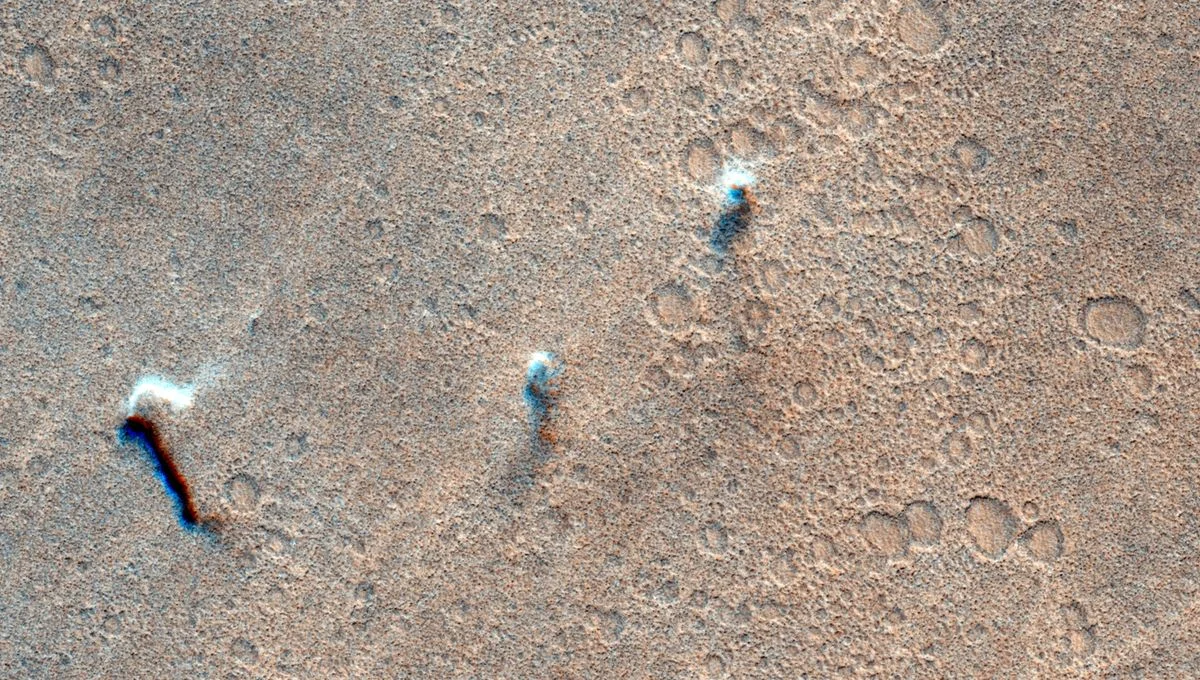
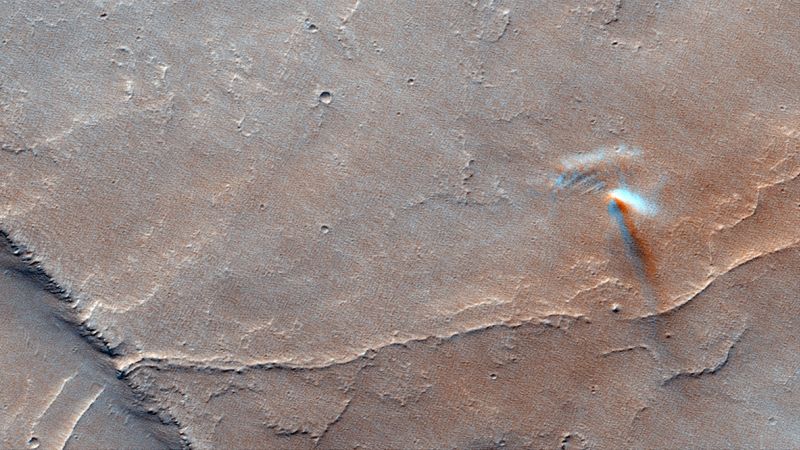
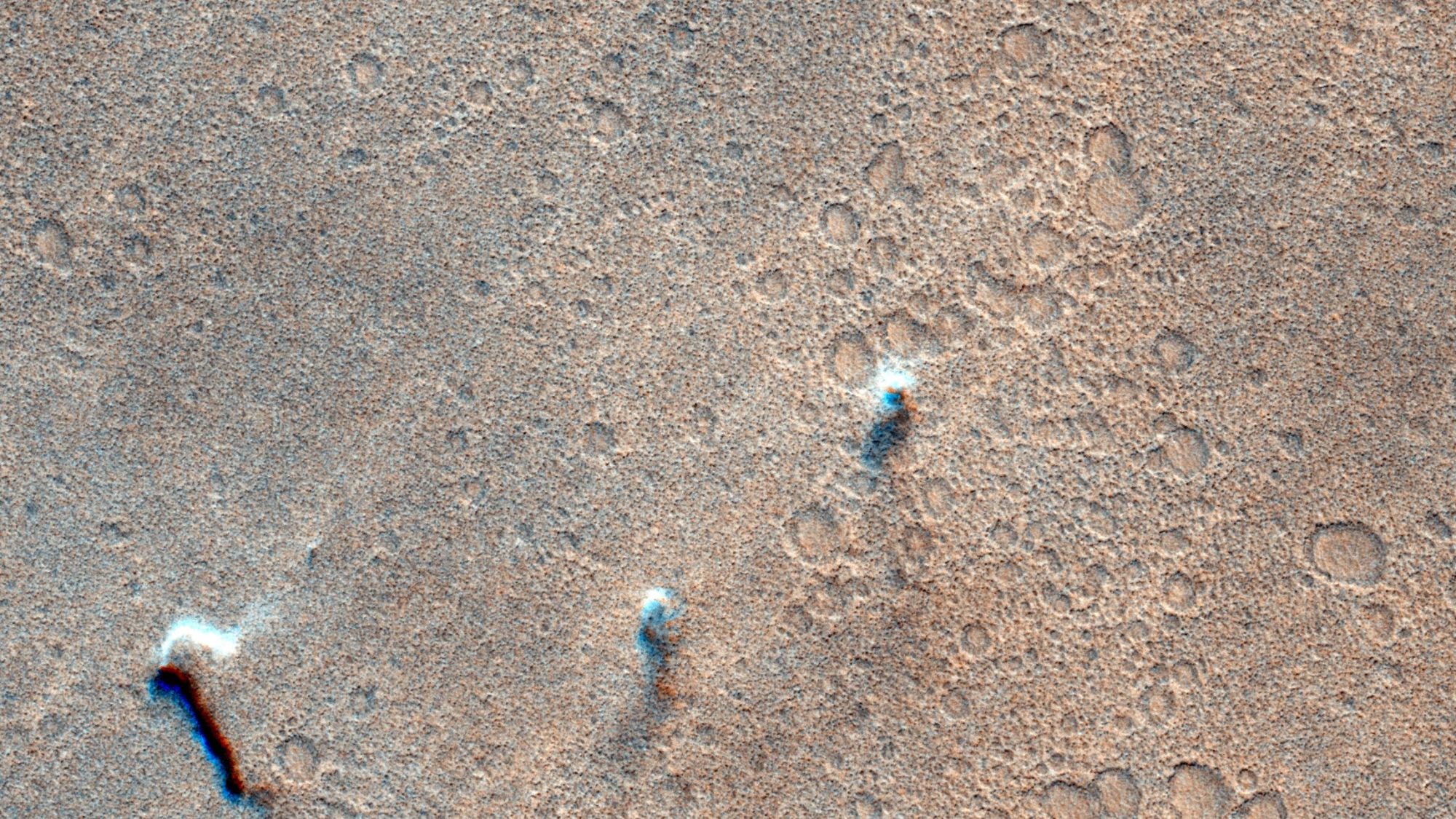
Analysis of over 1,000 dust devil events on Mars using data from ESA orbiters reveals that surface winds can reach speeds of up to 160 km/h, much faster than previously thought, providing new insights into Martian wind dynamics and dust lifting processes.
Twenty years of orbital imagery reveal that dust devils on Mars are faster and more abundant than previously thought, with winds reaching up to 99 mph, significantly impacting the planet's dust cycle and climate modeling, which is crucial for future exploration missions.
A new study using 20 years of ESA satellite data reveals that dust devils on Mars can reach speeds up to 98 mph, far faster than previously thought, and provides insights into Martian wind patterns and dust behavior, which are crucial for future missions and climate understanding.
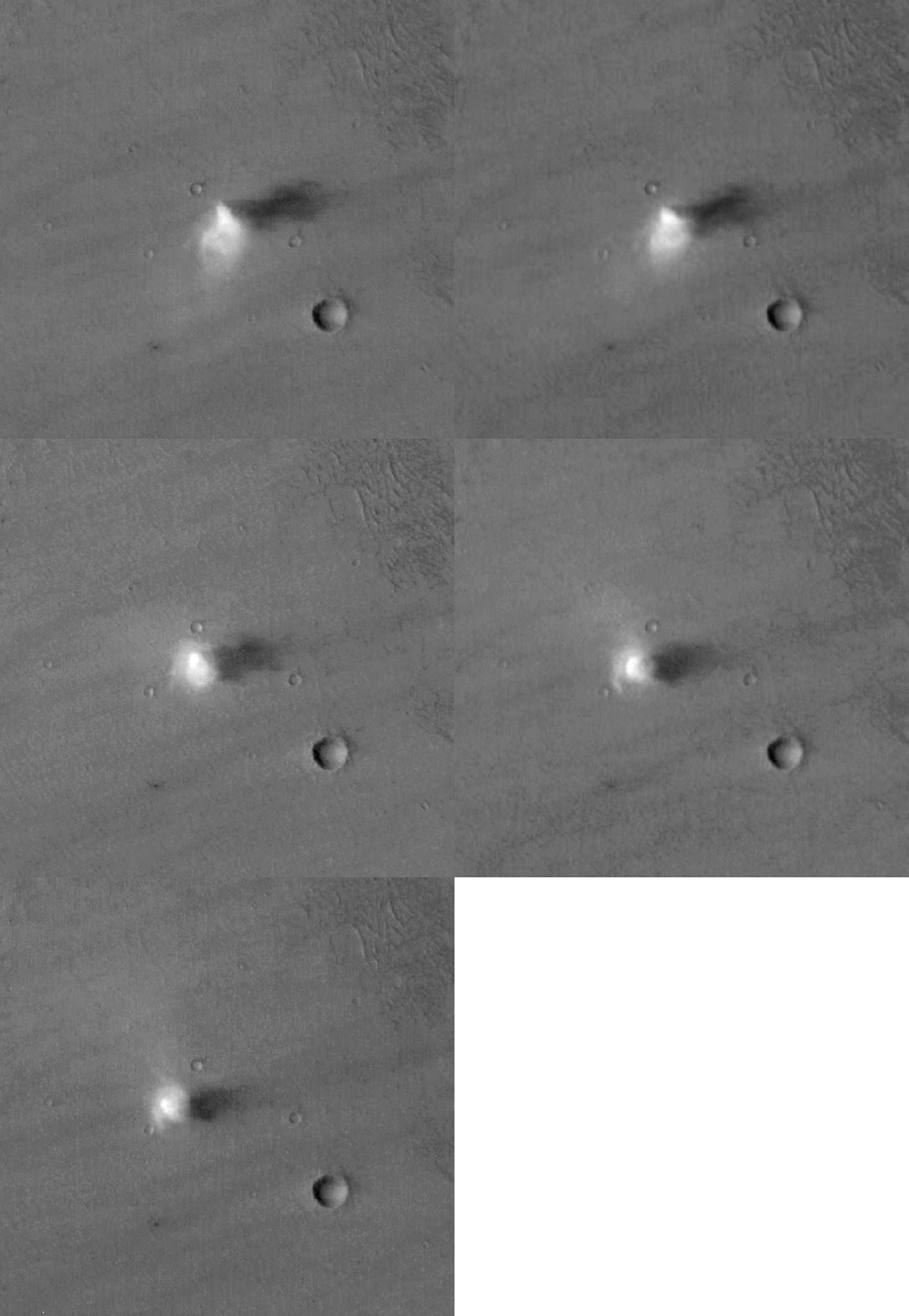
Scientists analyzed 20 years of images from ESA's Mars Express and ExoMars TGO to track 1039 dust devils on Mars, revealing that wind speeds are faster than previously thought and providing new insights into the planet's weather and climate, which will aid future missions and climate models.
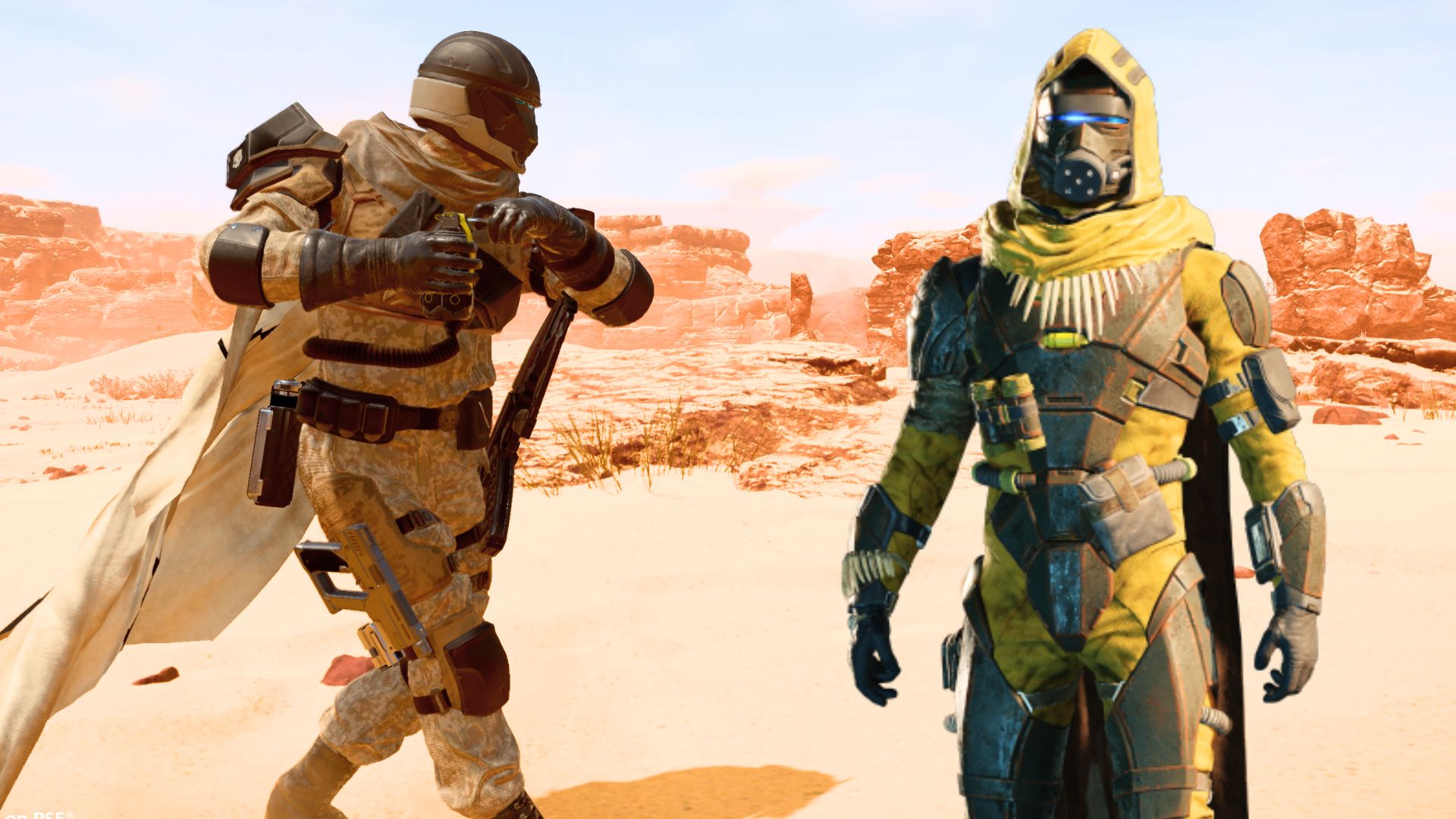
Helldivers 2 is releasing new weapons, armor, and content with the Dust Devils Warbond on September 4th, following the September 2nd 'Into the Unjust' update that introduces terrifying new enemies and exploration of Hive Worlds.
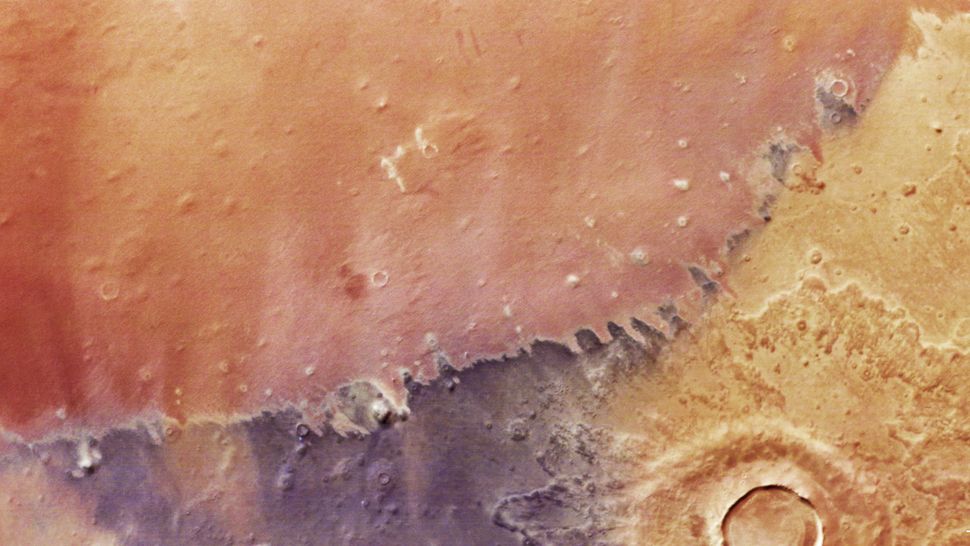
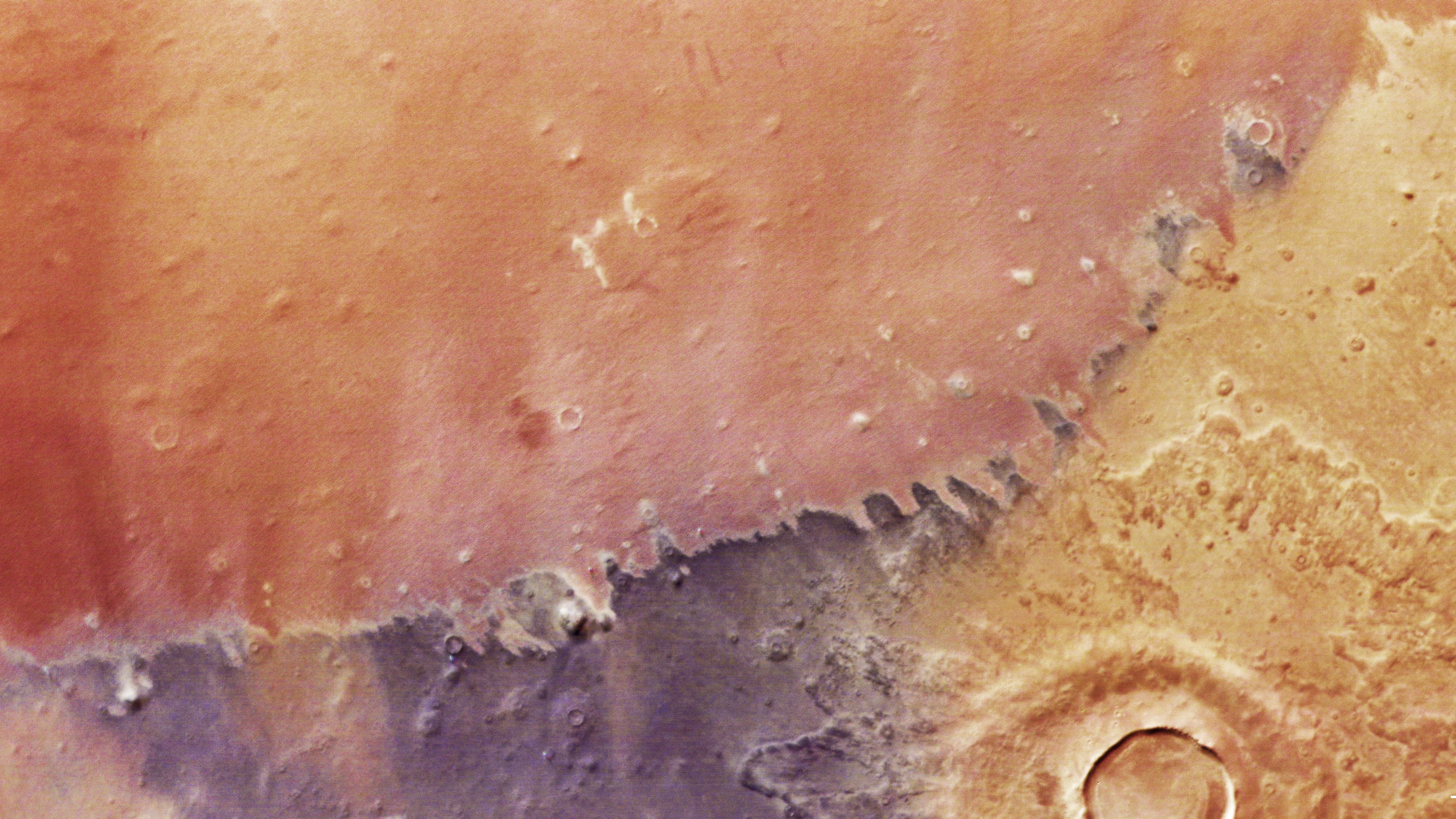
A new high-resolution satellite image from ESA reveals the colorful surface of Mars's Arcadia Planitia, showcasing impact craters, dust devils, and wind-eroded features, with colors indicating different mineral compositions and surface properties.
NASA's Perseverance Rover detected a high-amplitude electromagnetic signal during a dust devil on Mars, suggesting that these dust storms may generate lightning-like discharges due to electrified dust, which has significant implications for future Mars exploration missions.
Dust devils on Mars may generate lightning due to charge buildup in dust particles, posing potential risks to rovers like NASA's Perseverance, while also offering new insights into Martian atmospheric phenomena. The study uses computer models to explore how dust particle size and charge distribution could lead to electrical discharges, with recent evidence suggesting lightning might have been observed by the rover's microphone.
A new high-resolution satellite image from ESA's Mars Express orbiter reveals the colorful terrain of Arcadia Planitia on Mars, showcasing impact craters, dust devils, and diverse surface compositions, highlighting the planet's geological history and potential for future exploration.
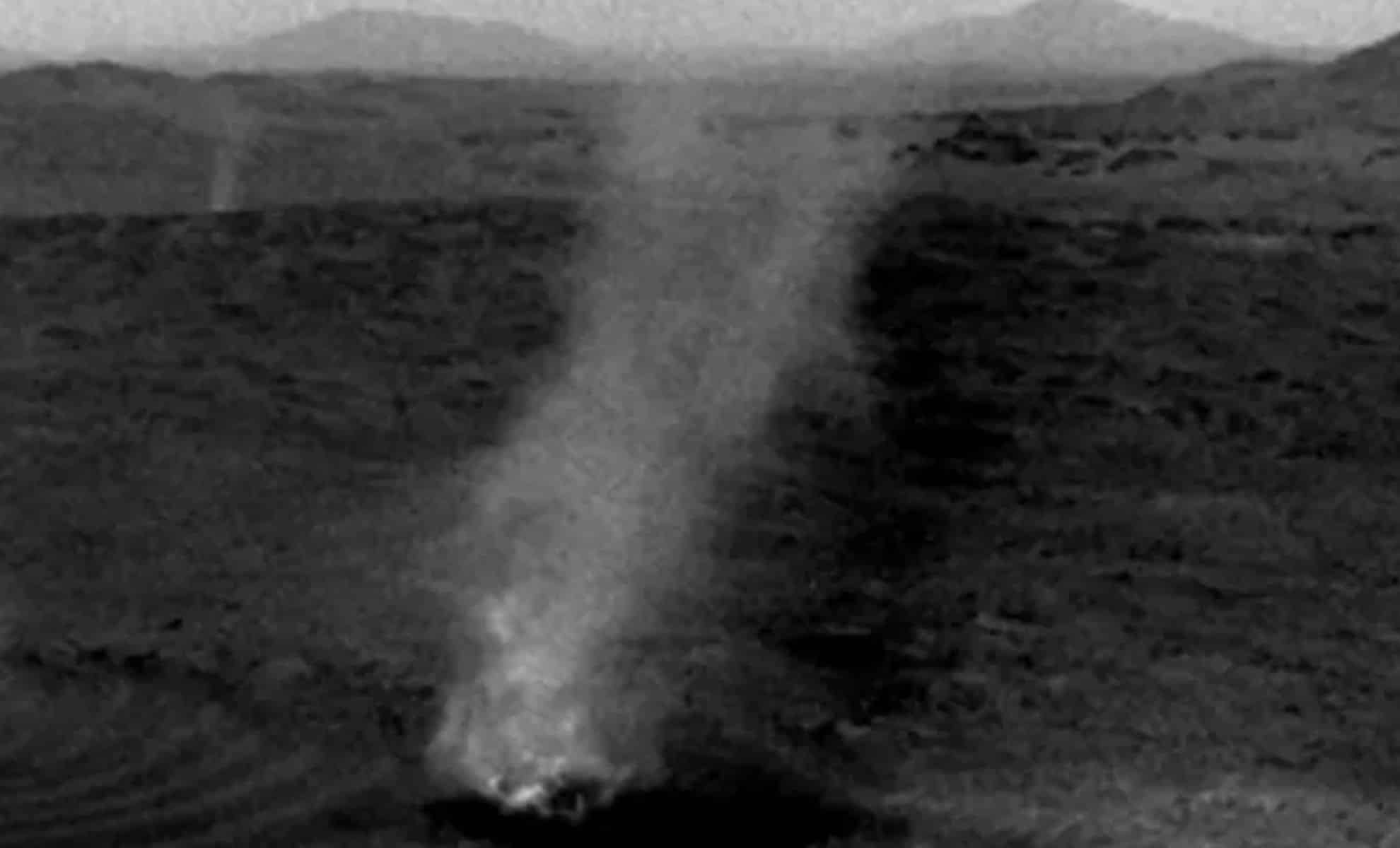
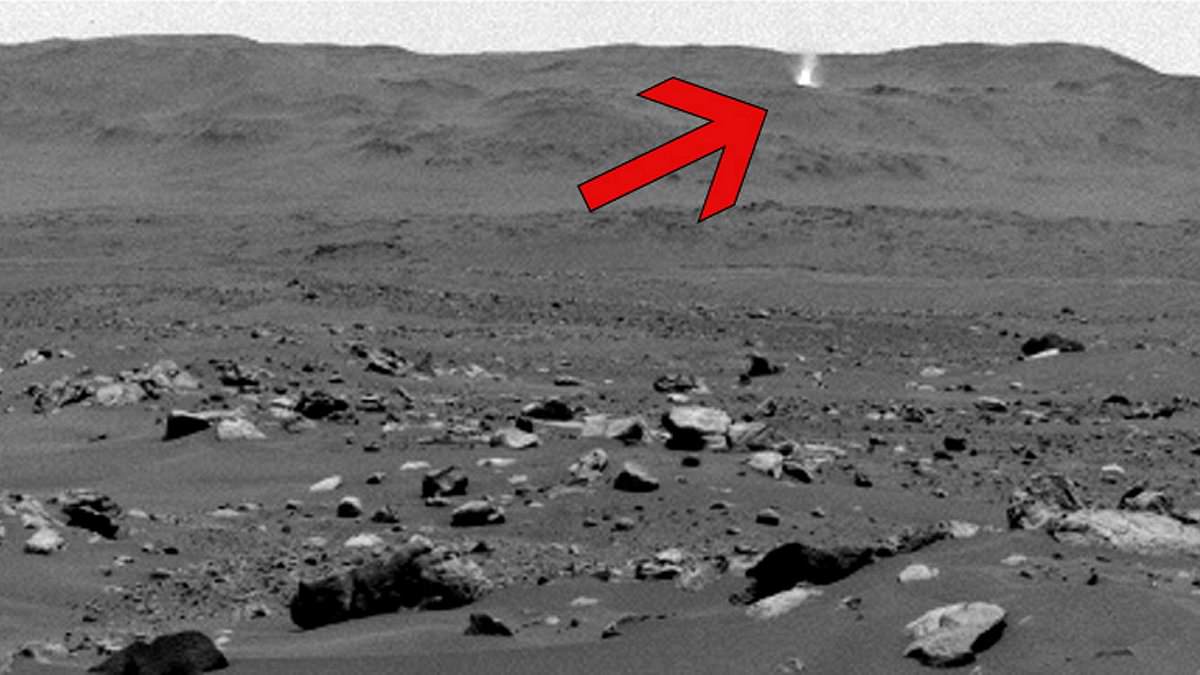
NASA's Perseverance rover captured footage of a 1.2 mile-high dust devil on the Martian surface as it moved across Thorofare Ridge. The dust devil was estimated to be about 2 kilometers in height based on its shadow. Dust devils are a common weather phenomenon on Mars, and Perseverance's ability to observe them from a distance helps scientists study the planet's weather. The rover's main objective is to search for signs of ancient life, collect rock samples, and gather data on Martian weather conditions.